In curling only one team scores in each End: One round of a game: both teams deliver all their stones, one at a time and in turn, and then only one team scores, or nobody. All terms: it gets one point for each of its Stone: What a player slides along the ice towards the house. Each player of a four-player team delivers two in each end. All terms in the House: The target of rings at the far end of the ice. Only stones in or touching it can score. All terms that is closer to the Tee: The centre of the house. The team with the stone closest to it scores the end. All terms, the centre of the house, than any stone of the other team. Each team delivers eight stones in an end, two by each of its four players. A game has 10 ends, the team with more points wins, and a level game goes to an Extra end: An end played when the score is level after the last end. The first team to score in it wins, and a blank extra end is followed by another. All terms, where the first team to score wins.
This page plays one game through under The Rules of Curling of World Curling, in the edition of 1 September 2026, on a MaestroScores scoreboard. Each step shows the board at that moment. You tap the points of each end on your phone, and the board moves the Hammer: The last stone of an end, and with it the better chance to score. The team that scores delivers first in the next end, so the other team gets the hammer; after a blank end it stays. All terms, counts the ends and starts an extra end by itself.
How curling scoring works
Curling is scored end by end. In an end both teams deliver all their stones, one at a time and in turn, towards the house, the target of rings at the far end of the ice. When the last stone has stopped, the team with the stone closest to the tee scores. It gets one point for each of its stones in or touching the house that is closer to the tee than the other team's closest stone. The other team scores nothing in that end. These are the basic rules of a game:
- A team has four players, and each player delivers two stones in each end, so each team delivers eight stones.
- Only one team scores in an end, from 1 to 8 points.
- An end with no stone in or touching the house is a Blank end: An end with no stone in or touching the house after the last stone: nobody scores, and the team with the hammer keeps it. All terms: nobody scores.
- The team that scores delivers first in the next end, so the other team has the hammer, the last stone of the end.
- Until the sixth stone of an end has been delivered, a stone may not knock an opponent's stone out of play from the Free guard zone: The area between the hog line and the house at the far end. Until the sixth stone of an end, an opponent's stone there may not be knocked out of play: a stone that does it is taken out, and the moved stones are put back. All terms, the area between the Hog line: A line across the ice in front of the house at each end of the sheet. The free guard zone lies between it and the house. All terms and the house. If it does, the delivered stone is taken out and the moved stones are put back where they were.
- A game has 10 ends. If the score is level after the last end, the teams play an extra end, and the first team to score wins.
The start of the game: who has the hammer
The team that delivers the last stone of an end has the hammer, and with it the better chance to score. In championship curling a Last Stone Draw: How championship curling decides the hammer in the first end: players of each team deliver stones as close to the centre of the house as they can, and the distances are measured. All terms decides the hammer in the first end: players of each team deliver stones as close to the centre of the house as they can, and the distances are measured. Without a Last Stone Draw, a coin toss decides which team delivers first. On the board you tap the team that delivers first in the first end, and the board marks the other team with the hammer.
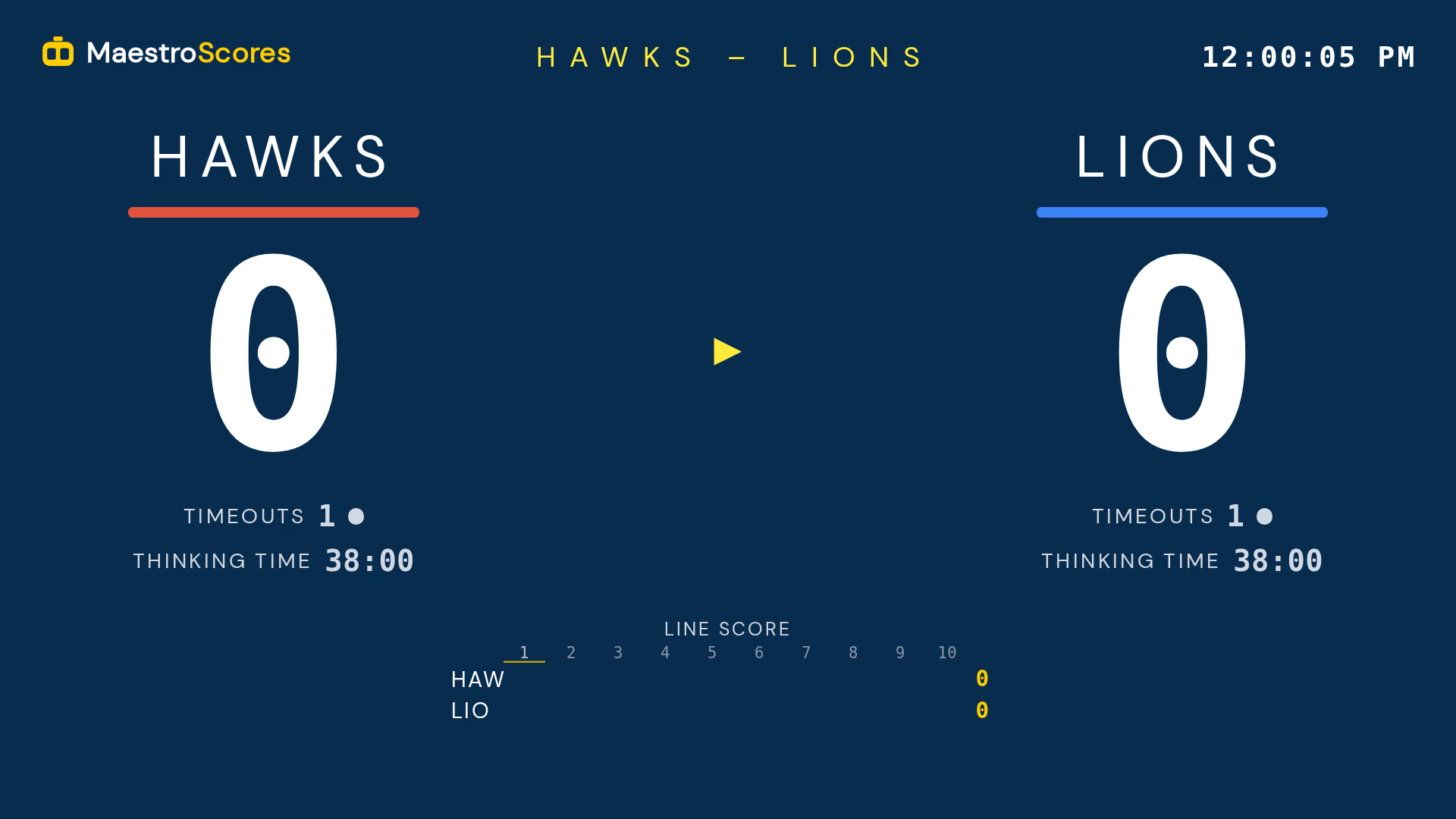
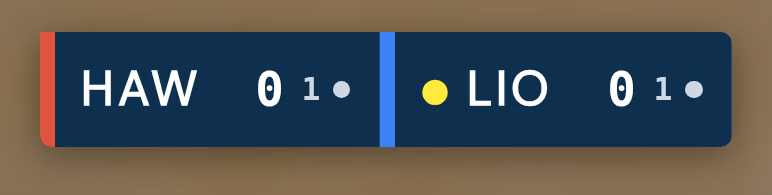
The ruleThe team that delivers the last stone of an end has the hammer; in the first end a Last Stone Draw or a coin toss decides it.
Scoring an end
When all the stones of an end have been delivered, the Skip: The player who leads a team. At the end of each end the two skips agree on the score. All terms agree on the score. On the board you tap the points under the team that scored, from +1 to +8. The board adds them to the score, and because the scoring team delivers first in the next end, it gives the hammer to the other team by itself.
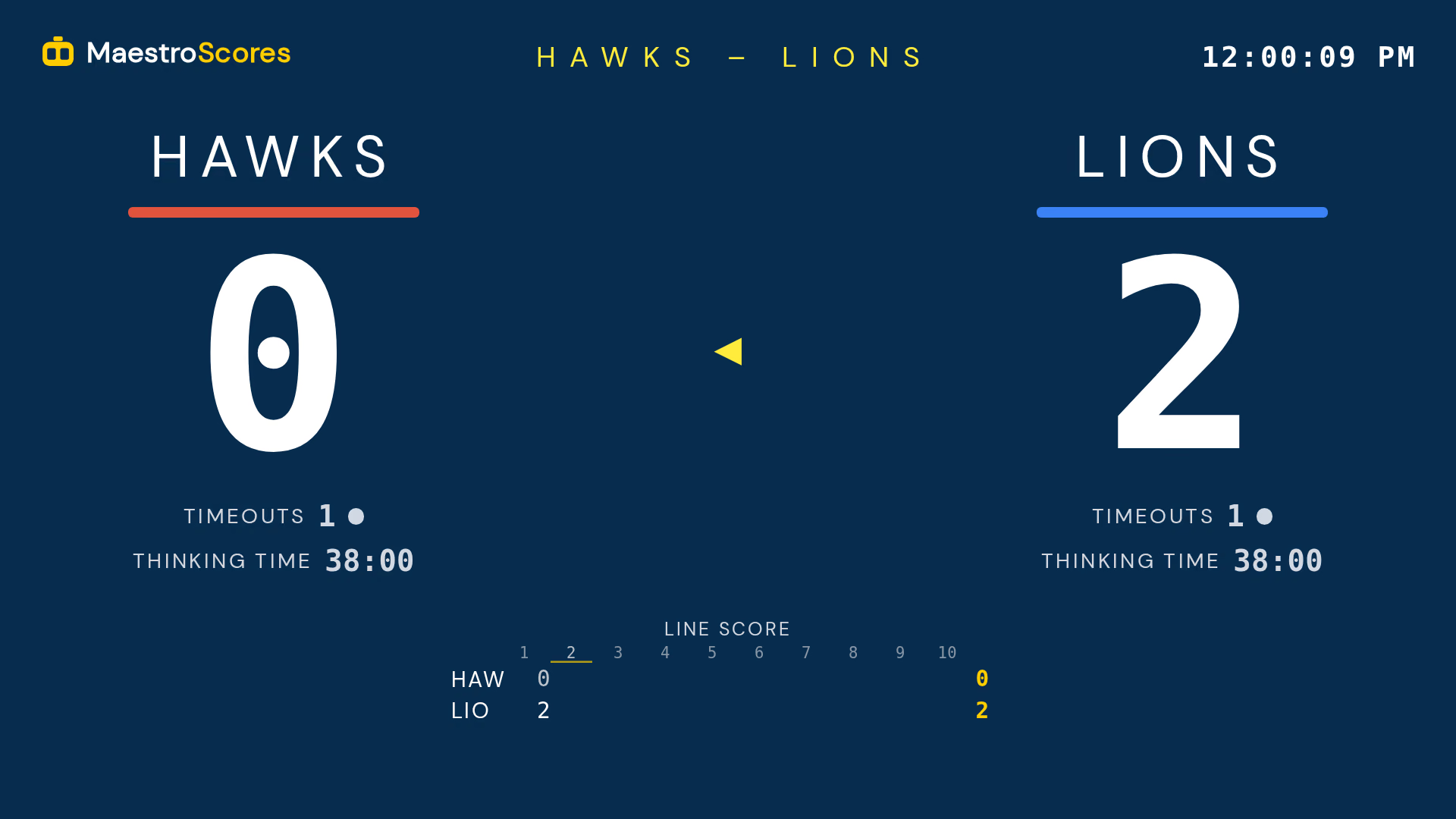

The ruleOnly one team scores in an end, and the team that scores delivers first in the next end, so the other team gets the hammer.
A blank end: the hammer stays
When no stone is in or touching the house after the last stone, nobody scores and the end is blank. The team with the hammer keeps it for the next end, so teams sometimes blank an end on purpose rather than score a single point. On the board you tap Blank end: the end counts as played, and the hammer stays where it is. The Arena design shows every end in its Line score: The score written end by end: for each end, the points of the team that scored it, and nothing for either team in a blank end. All terms.
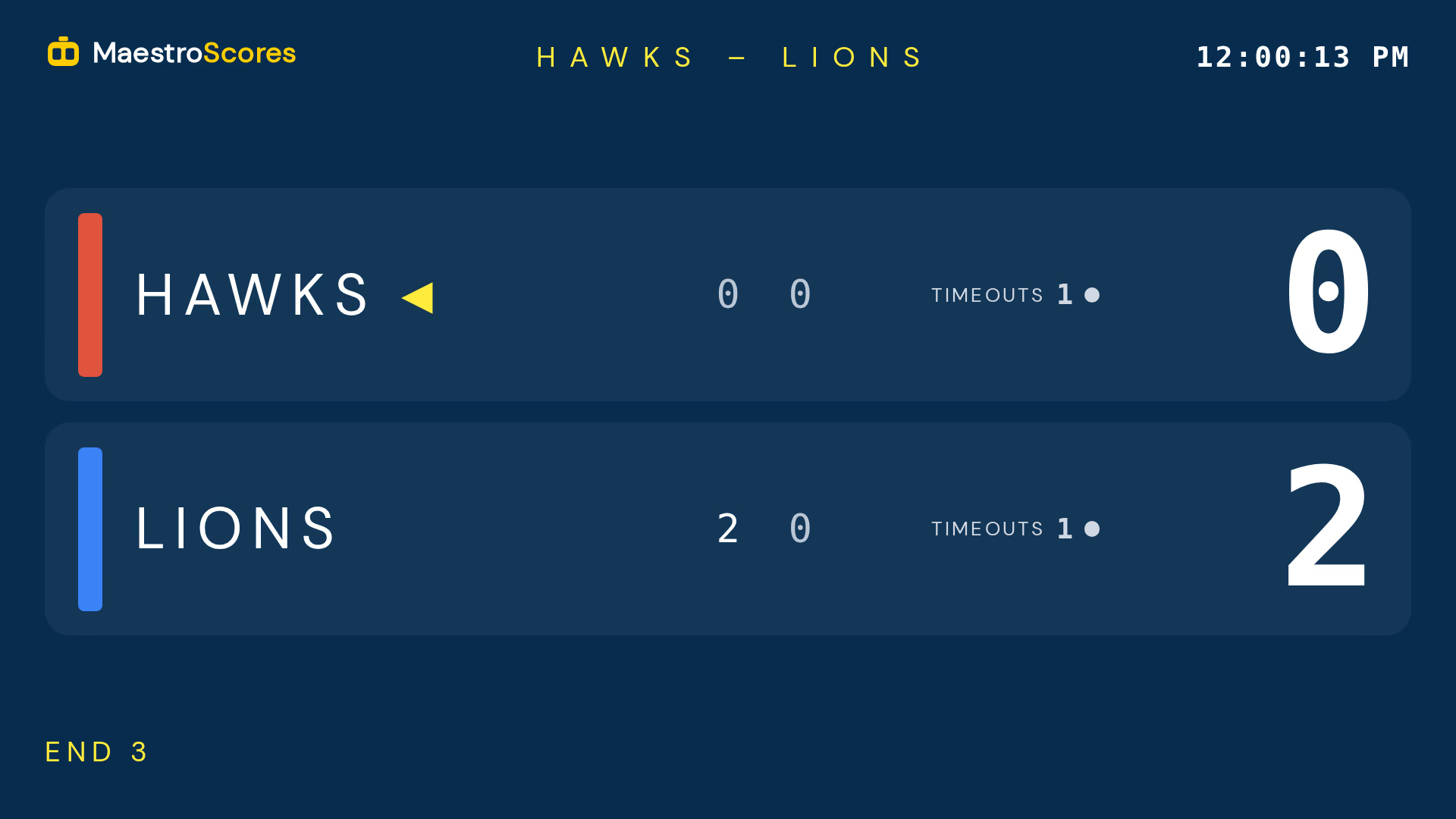

The ruleWhen no stone is in or touching the house, nobody scores, and the team with the hammer keeps it.
Level after 10 ends: the extra end
The team with more points after 10 ends wins the game. When the score is level, the teams play an extra end, and the first team to score in it wins. A blank extra end is followed by another one. For each extra end every team gets 4 minutes 30 seconds of Thinking time: Each team's clock, which runs while it is that team's turn to deliver. At World Curling events it is 38 minutes a team in a game of 10 ends. All terms and one more 60-second Time-out: A 60-second break a team may call: one in a game, and one more for each extra end. All terms. The board starts the extra end by itself when the score is level after the tenth end.
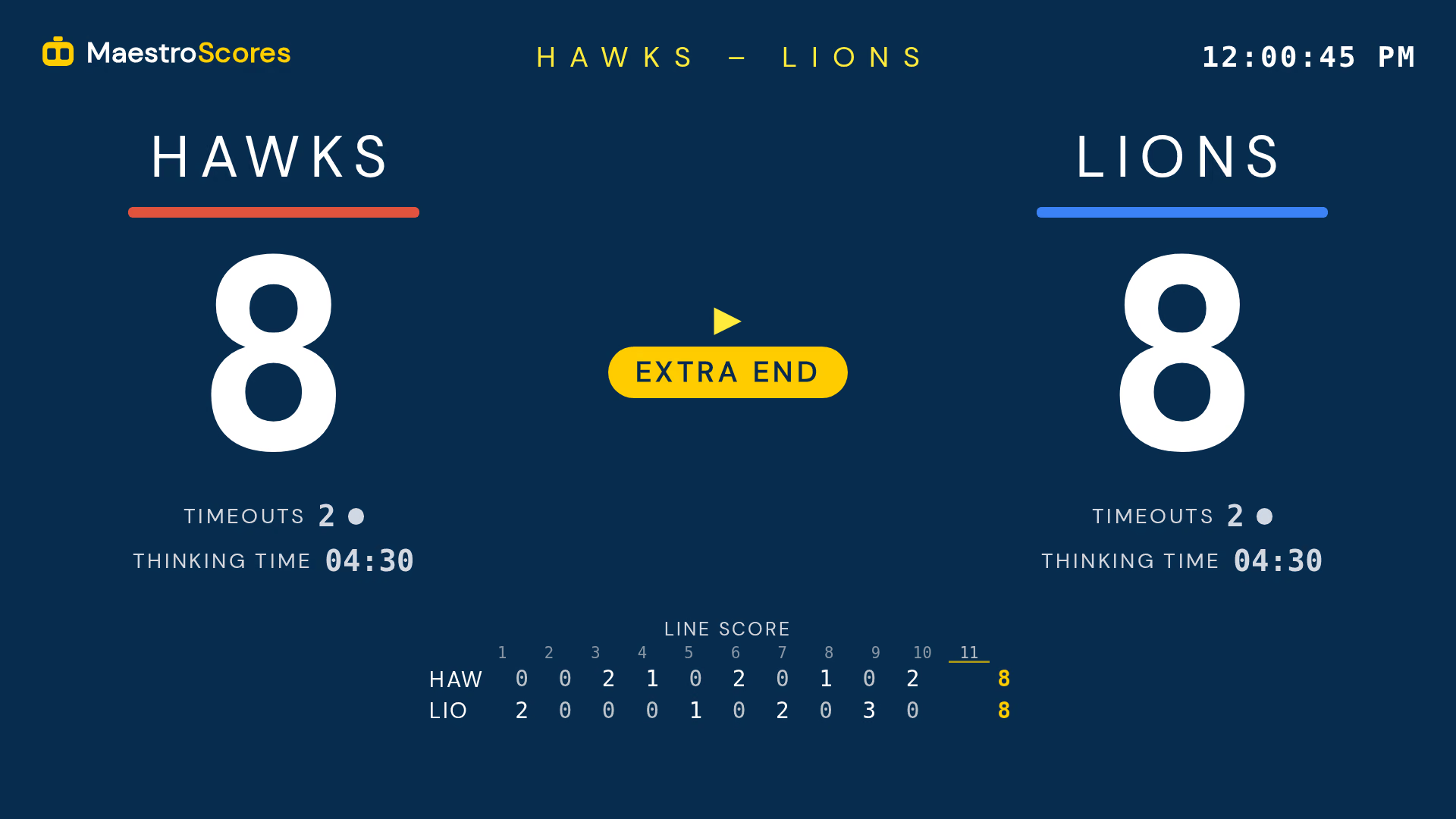

The ruleA game that is level after 10 ends goes to an extra end, and the first team to score in it wins.
Winning the game
A game ends when the last end is complete and one team leads, or when a team scores in an extra end. A team may also Concession: A team ending the game before the last end by giving it up. It is allowed only once 6 ends are complete, or 8 in a play-off game of 10 ends. All terms before the last end, but only once 6 ends are complete, or 8 in a play-off game of 10 ends. On the board the Concession keys appear once the rules allow a concession.
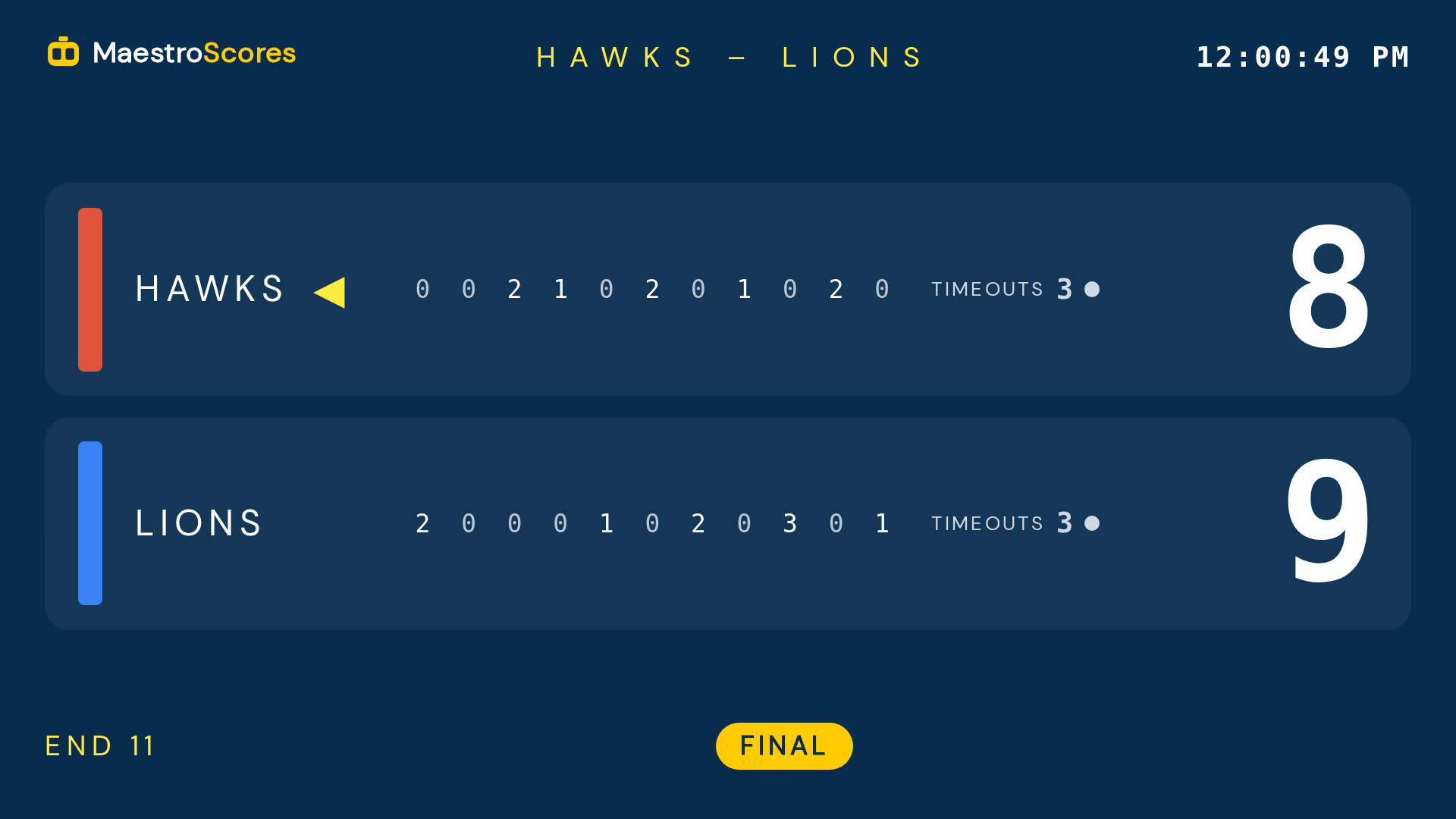

The ruleA game ends when the last end is complete and one team leads, or when a team scores in an extra end.
Thinking time and time-outs
At World Curling events each team has 38 minutes of thinking time in a game of 10 ends. A team's clock runs while it is that team's turn to deliver. Each team may also call one 60-second time-out in a game. The Classic Scoreboard shows each team's thinking time, and the Clock only screen shows the thinking time on its own.
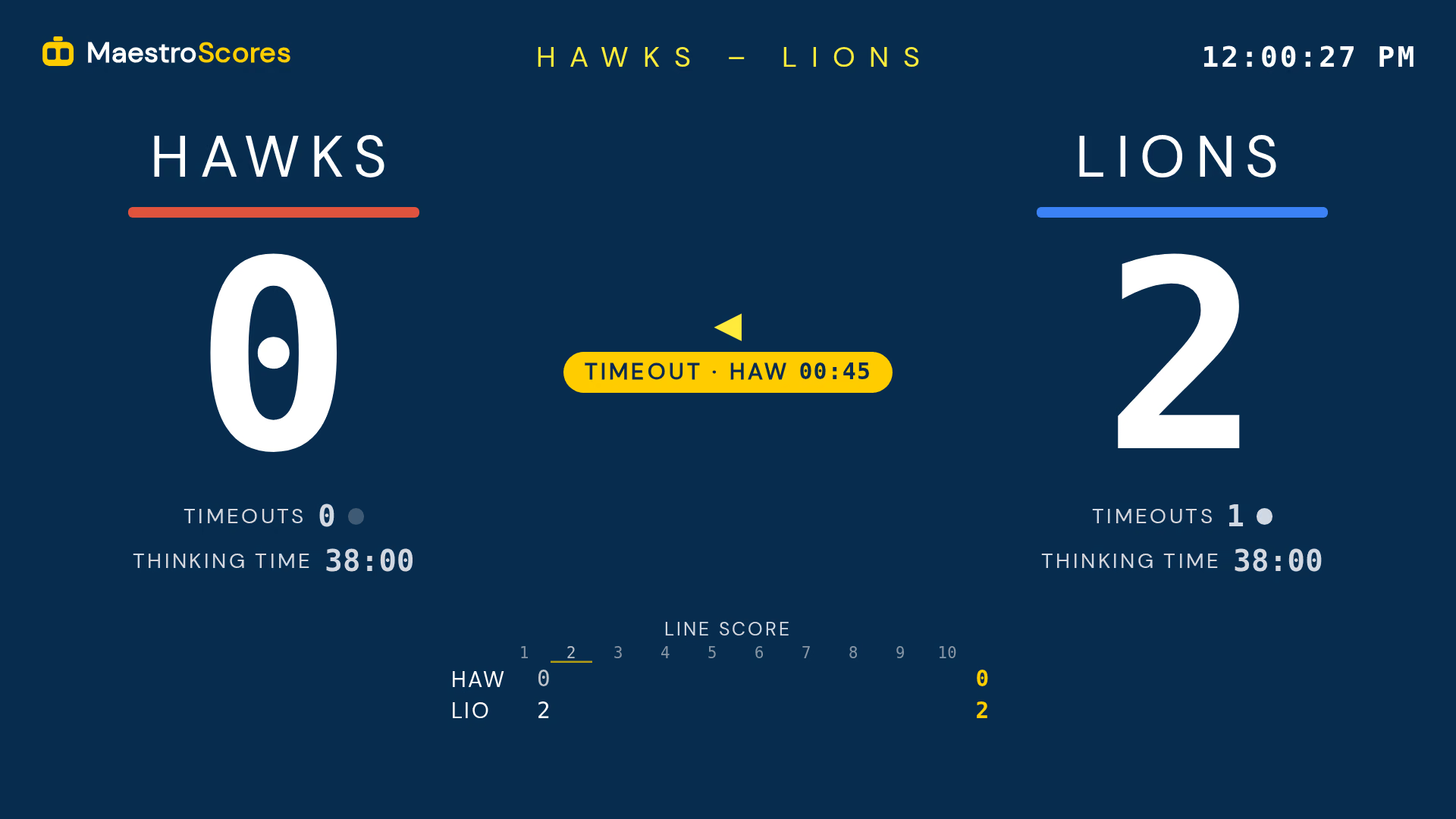

The ruleEach team has 38 minutes of thinking time in a game of 10 ends, and may call one 60-second time-out.
Olympic curling rules: the four medal events
Curling is an Olympic and Paralympic winter sport, with medal events for women's, men's, Mixed doubles: Curling for teams of one man and one woman, with 5 stones each in an end and one positioned stone, over 8 ends. All terms and wheelchair teams. The rules of play at World Curling competitions are the current rules of World Curling. The events differ in this way:
- Women's and men's teams: four players, eight stones each in an end, 10 ends and 38 minutes of thinking time.
- Mixed doubles: one man and one woman a team, 5 stones each in an end and one Positioned stone: In mixed doubles, the stone each team places on the ice before the end starts, instead of delivering it. All terms placed before the end starts, 8 ends and 22 minutes of thinking time. A team can score up to 6 points in an end, a blank end passes the hammer to the other team, and each team has one Power play: In mixed doubles, an option each team may use once in a game, when it decides where the positioned stones go: they are then placed to one side of the sheet instead of on the centre line. All terms in a game.
- Wheelchair curling: four players, 8 ends and 38 minutes of thinking time. Sweeping is not allowed.
Other formats: games of 8 ends and club curling
Many competitions play 8 ends instead of 10, with 30 minutes of thinking time for each team. On MaestroScores you choose the rules when you create the board. A new curling board starts on World Curling's 10 ends, and in the United States, the United Kingdom and Australia on the club rules: 8 ends, with a clock that counts the playing time up. Some clubs settle a level game with a draw to the instead of an extra end, and the club rules on the board do the same.
FAQ
How does curling scoring work?
Only one team scores in each end. It gets one point for each of its stones in or touching the house that is closer to the tee than the other team's closest stone.
What is the hammer in curling?
The hammer is the last stone of an end. The team that scores delivers first in the next end, so the hammer passes to the other team, and after a blank end it stays with the same team.
How many ends are in a curling game?
10 ends in women's and men's games at World Curling events. Mixed doubles and wheelchair games, and many club games, have 8 ends.
What happens if a curling game is tied?
The teams play an extra end, and the first team to score wins the game. A blank extra end is followed by another one.
How long is a curling game?
Each team has 38 minutes of thinking time in a game of 10 ends. A championship game lasts up to about three hours.
Keep curling score on a board
Create a curling board with the rules you play, tap the points of each end on your phone, and open the Scoreboard link on any screen at the rink.
Curling terms
- Blank end
- An end with no stone in or touching the house after the last stone: nobody scores, and the team with the hammer keeps it.
- The smallest circle of the house, around the tee. Some clubs settle a level game with a draw to the button instead of an extra end.
- Concession
- A team ending the game before the last end by giving it up. It is allowed only once 6 ends are complete, or 8 in a play-off game of 10 ends.
- End
- One round of a game: both teams deliver all their stones, one at a time and in turn, and then only one team scores, or nobody.
- Extra end
- An end played when the score is level after the last end. The first team to score in it wins, and a blank extra end is followed by another.
- Free guard zone
- The area between the hog line and the house at the far end. Until the sixth stone of an end, an opponent's stone there may not be knocked out of play: a stone that does it is taken out, and the moved stones are put back.
- Hammer
- The last stone of an end, and with it the better chance to score. The team that scores delivers first in the next end, so the other team gets the hammer; after a blank end it stays.
- Hog line
- A line across the ice in front of the house at each end of the sheet. The free guard zone lies between it and the house.
- House
- The target of rings at the far end of the ice. Only stones in or touching it can score.
- Last Stone Draw
- How championship curling decides the hammer in the first end: players of each team deliver stones as close to the centre of the house as they can, and the distances are measured.
- Line score
- The score written end by end: for each end, the points of the team that scored it, and nothing for either team in a blank end.
- Mixed doubles
- Curling for teams of one man and one woman, with 5 stones each in an end and one positioned stone, over 8 ends.
- Positioned stone
- In mixed doubles, the stone each team places on the ice before the end starts, instead of delivering it.
- Power play
- In mixed doubles, an option each team may use once in a game, when it decides where the positioned stones go: they are then placed to one side of the sheet instead of on the centre line.
- Skip
- The player who leads a team. At the end of each end the two skips agree on the score.
- Stone
- What a player slides along the ice towards the house. Each player of a four-player team delivers two in each end.
- Tee
- The centre of the house. The team with the stone closest to it scores the end.
- Thinking time
- Each team's clock, which runs while it is that team's turn to deliver. At World Curling events it is 38 minutes a team in a game of 10 ends.
- Time-out
- A 60-second break a team may call: one in a game, and one more for each extra end.
- The Rules of Curling and Rules of Competition (World Curling)worldcurling.org
- What is curling? - World Curlingworldcurling.org