An ice hockey game is played by two teams over three Period: One of the three parts of a game, each of 20 minutes of playing time under the IIHF and NHL rules. The clock runs only while the puck is in play. All terms of 20 minutes of playing time. Each team starts with five Skater: A player on the ice other than the goalkeeper. Each team starts a game with five skaters and a goalkeeper. All terms and a goalkeeper on the ice. A team scores a goal when the puck goes completely over the Goal line: The line at each end of the rink between the goal posts. A goal counts when the whole puck has crossed it, between the posts and under the crossbar. All terms, between the posts and under the crossbar, and the team with more goals at the end of the third period wins.
This page plays one game through under the IIHF Official Rulebook 2026/27, from the opening Face-off: The referee drops the puck between the sticks of two opposing players, to start each period and to restart play after a whistle. All terms to the end of the third period, on a MaestroScores scoreboard: the goals, a penalty and its Power play: The time a team has more players on the ice than the other, while an opponent serves a penalty. All terms, the Intermission: The break between two periods, 15 minutes under the IIHF Rulebook. The teams change ends after it. All terms and the result. Each step shows the board at that moment. You tap each goal and each penalty on your phone, and every screen shows it at once.
How ice hockey scoring works
Ice hockey has one way to score: the goal, and each goal counts one. A goal is scored when the puck has gone between the goal posts, below the crossbar and entirely across the goal line. These are the basic rules of a game under the IIHF Rulebook:
- Two teams, each starting with five skaters and one goalkeeper on the ice.
- Three periods of 20 minutes of actual play: the clock runs only while the puck is in play.
- An intermission of 15 minutes after the first and after the second period.
- One time-out of 30 seconds for each team in a game.
- The team with more goals after the three periods wins. A tied game goes to Overtime: Extra play after a game tied at the end of regulation. Its length and form depend on the rules. All terms and, in a Round robin: The stage of a tournament in which each team plays every other team in its group, before the playoff games. Under the IIHF Rulebook a game tied there plays the short overtime, then a shootout. All terms game, to a Shootout: Shots taken alternately, one shooter against the goalkeeper, that decide a game still tied after overtime. The winning team is given one goal more than its opponent in the final score. All terms if no one scores.
The start of the game: the opening face-off
A face-off starts each period: the referee drops the puck between the sticks of two opposing players. Before the opening face-off, the board shows 0-0 in the first period and the full 20 minutes of the period on a clock that counts down. You start the clock at the face-off and stop it at each whistle, because only the time while the puck is in play counts.
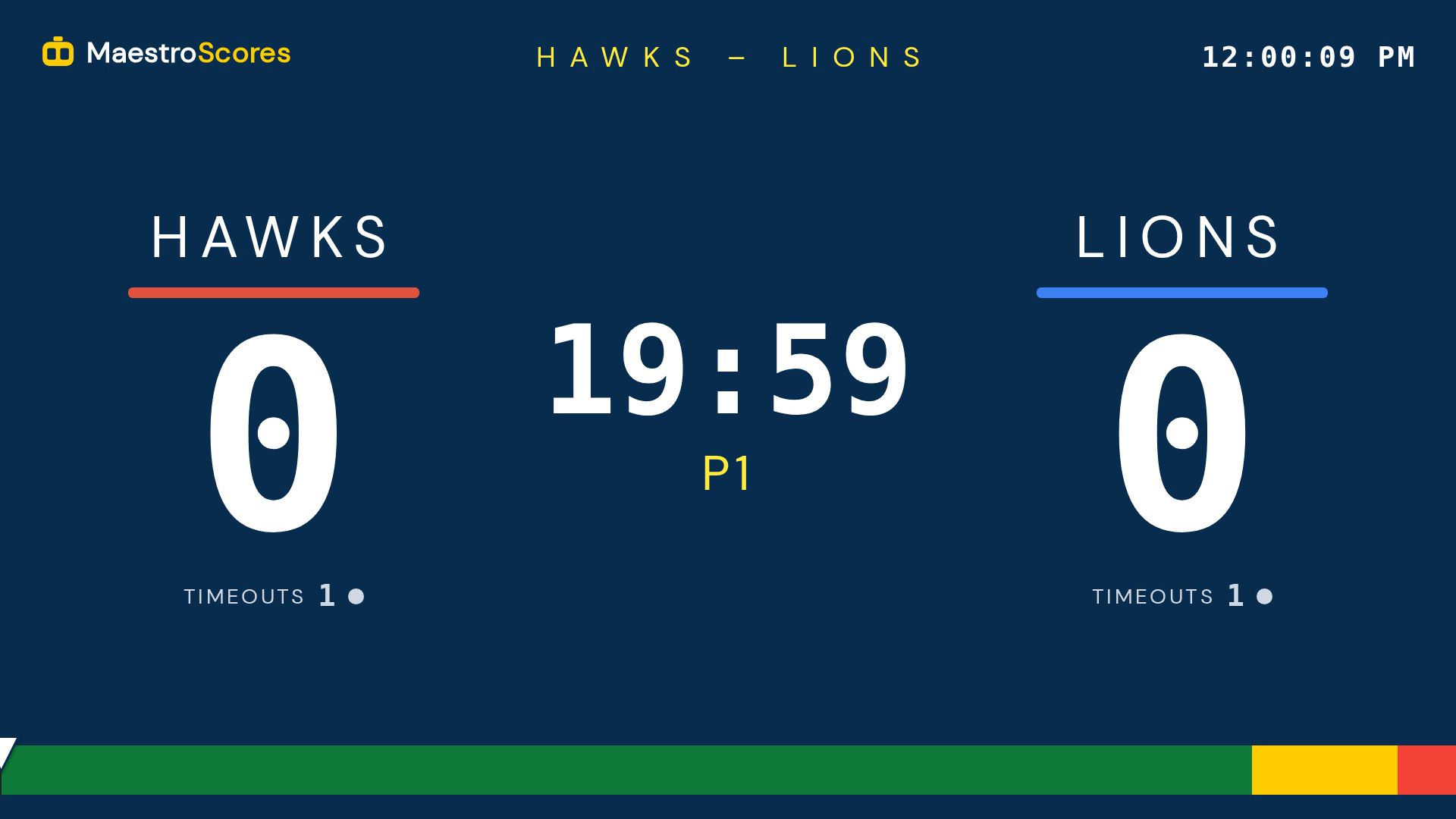

The ruleA face-off starts each period, and the clock runs only while the puck is in play.
A goal: the whole puck over the goal line
A goal counts only when the whole puck has crossed the goal line between the posts. A puck that a defending player sends into their own goal also counts, for the attacking team. On the Scorekeeper page you tap Goal under the team that scored, and the Scoreboard and the Scorebug show the new score at the same moment.
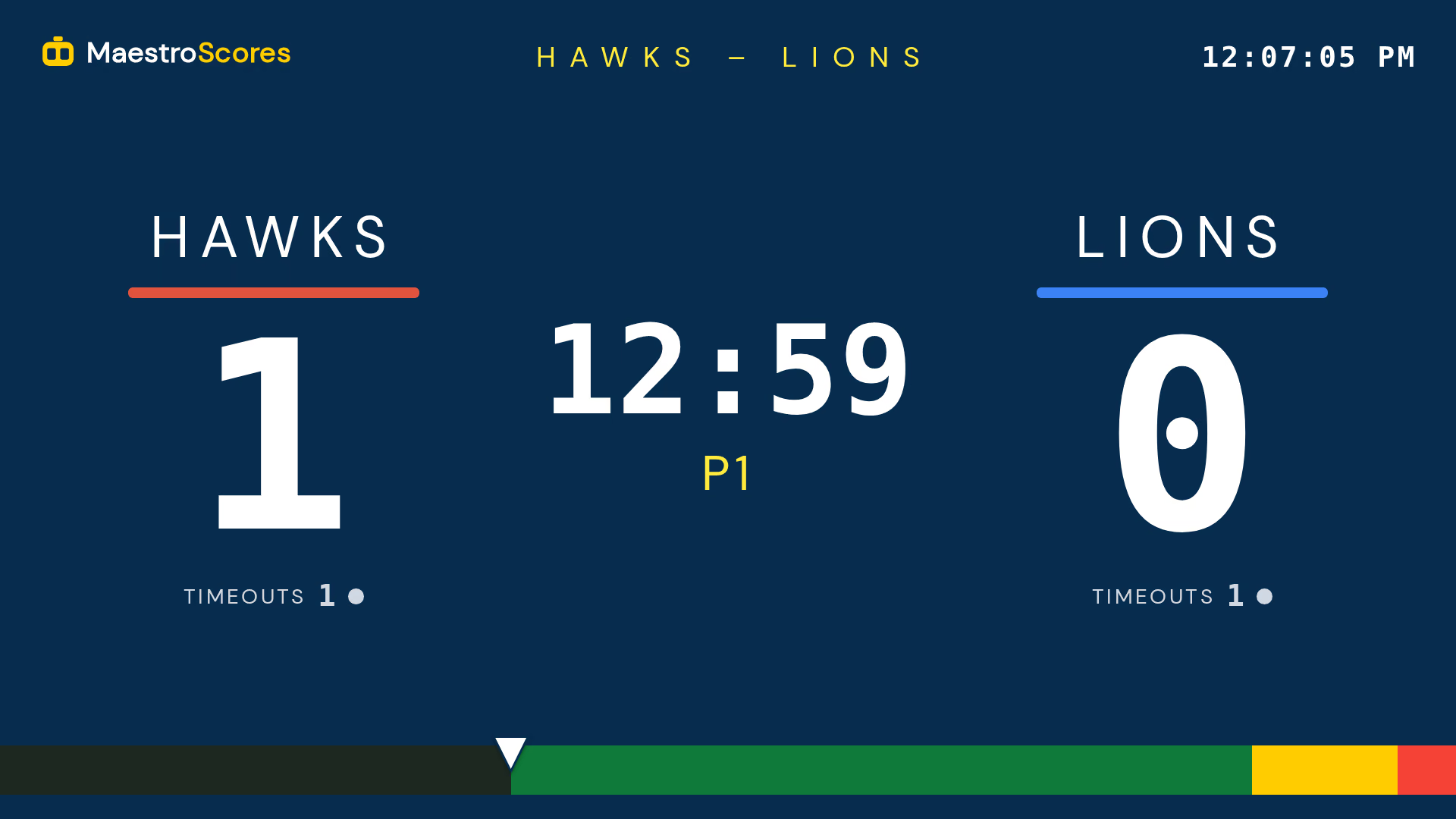

The ruleA goal counts only when the whole puck has crossed the goal line between the posts, and each goal counts one.
Penalties and the power play
A player who breaks a rule can be sent to the Penalty box: Where a penalized player sits out the penalty's time, while the team plays with one skater fewer. All terms, and the team then plays Short-handed: Playing with fewer skaters on the ice than the other team, because of a penalty. All terms, with one skater fewer, until the penalty ends. A Minor penalty: A penalty of 2 minutes under the IIHF and NHL rules. It ends early when the other team scores on the power play. All terms lasts 2 minutes and a Major penalty: A penalty of 5 minutes, which runs its full time even if the other team scores. Fighting is a major penalty. All terms 5 minutes. A Misconduct penalty: A penalty of 10 minutes for the player alone: a substitute replaces the player at once, so the team keeps its strength. All terms lasts 10 minutes, but a substitute replaces the player at once, so the team keeps its strength. The team with more players on the ice has the power play.
Fighting is a major penalty. Under the IIHF and USA Hockey rules a player who fights also gets a Game misconduct penalty: A penalty that ends the game for the player. Under the IIHF and USA Hockey rules a player who fights also gets one. All terms, which ends the game for that player. NHL rules give a major penalty to any player who fights. When the player who broke the rule is on the team without the puck, the referee raises an arm to signal a Delayed penalty: A penalty the referee signals with a raised arm when the team that broke the rule does not have the puck. Play goes on until that team gains control of the puck; if the other team scores first, a signalled minor penalty is not given. All terms, and play goes on until that team gains control of the puck. If the other team scores in the meantime, a signalled minor penalty is not given, so you tap only the goal, while a major penalty is still given. On the board you tap the kind of penalty under the team that took it. Its time counts down with the game clock, and the screens show Power play for the other team.
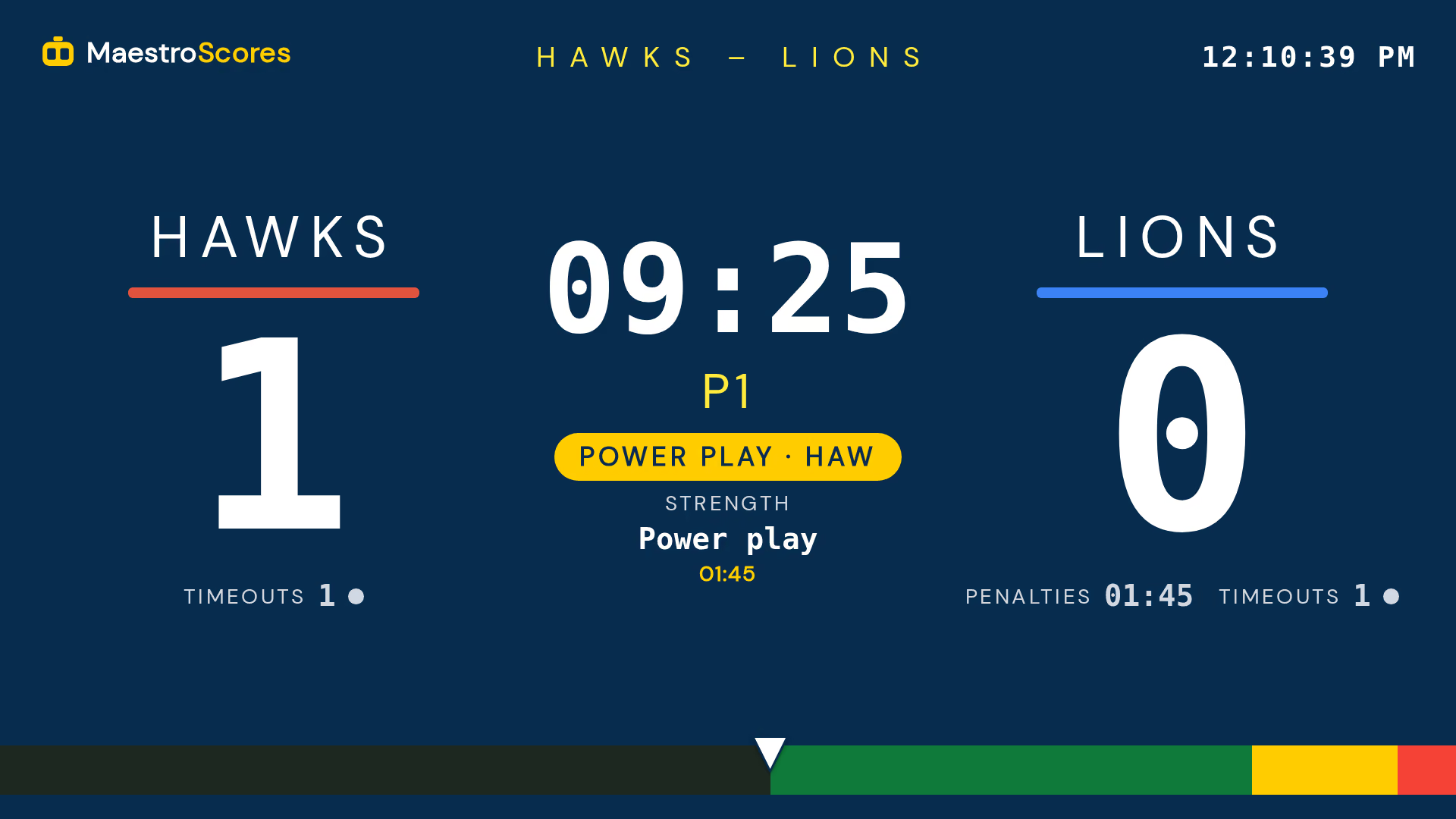

The ruleA penalized player goes to the penalty box, and the other team has the power play until the penalty ends.
A power-play goal ends a minor penalty
A minor penalty ends early when the team on the power play scores: the first minor penalty of the short-handed team then ends, and the player may return to the ice. A goal does not end a major penalty or a misconduct, which run their full time. On the board you tap Goal as for any goal, and the board ends the minor penalty by itself.
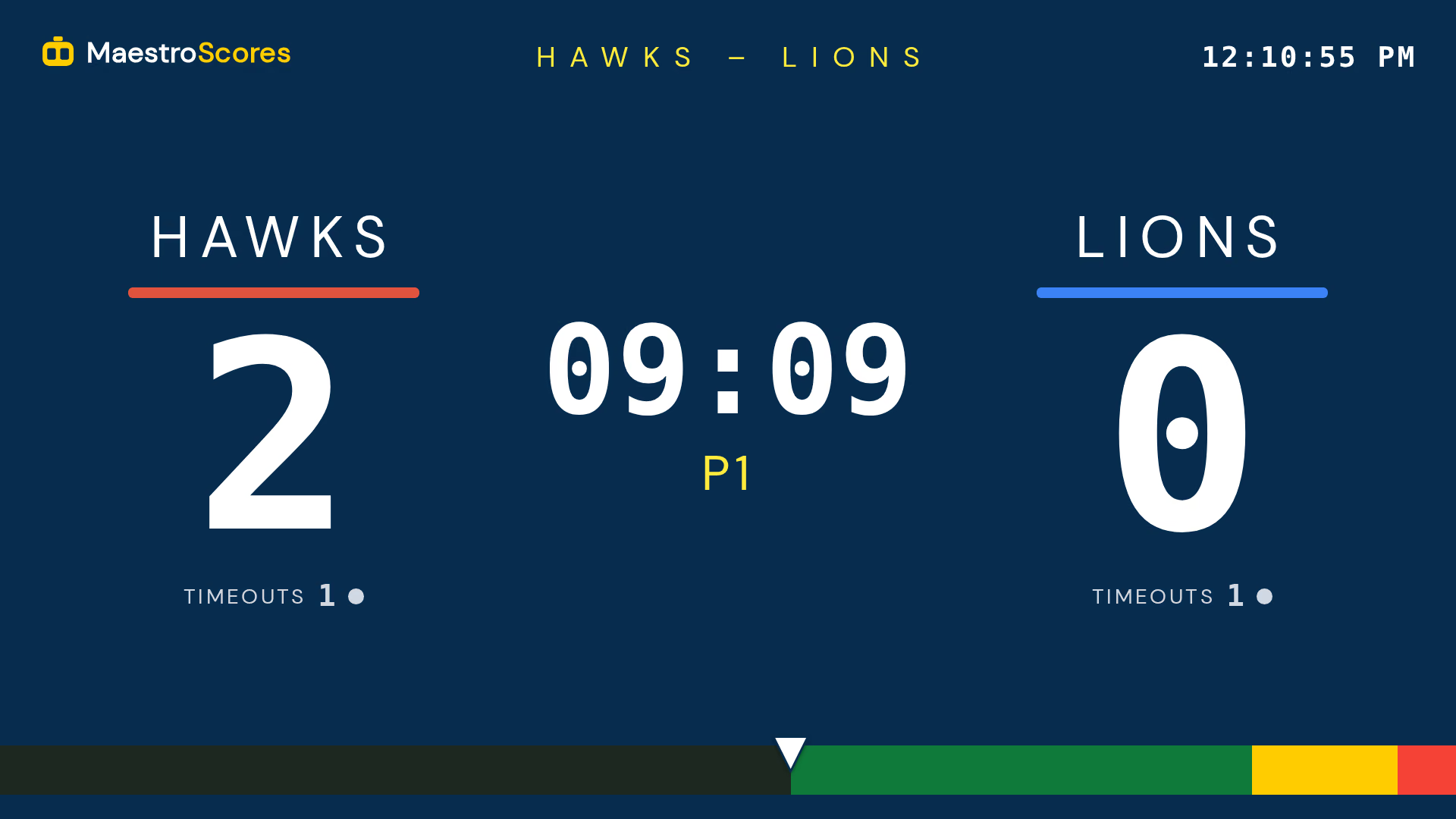

The ruleA goal on the power play ends the short-handed team's first minor penalty; a major or a misconduct runs its full time.
The end of a period and the intermission
A period ends when its 20 minutes of playing time have run out. Under the IIHF Rulebook the intermission then lasts 15 minutes, and the teams change ends for the next period. On the board you tap Next period at the end of the period, and the screens show the break and count the intermission down. You start the clock again at the face-off of the second period.
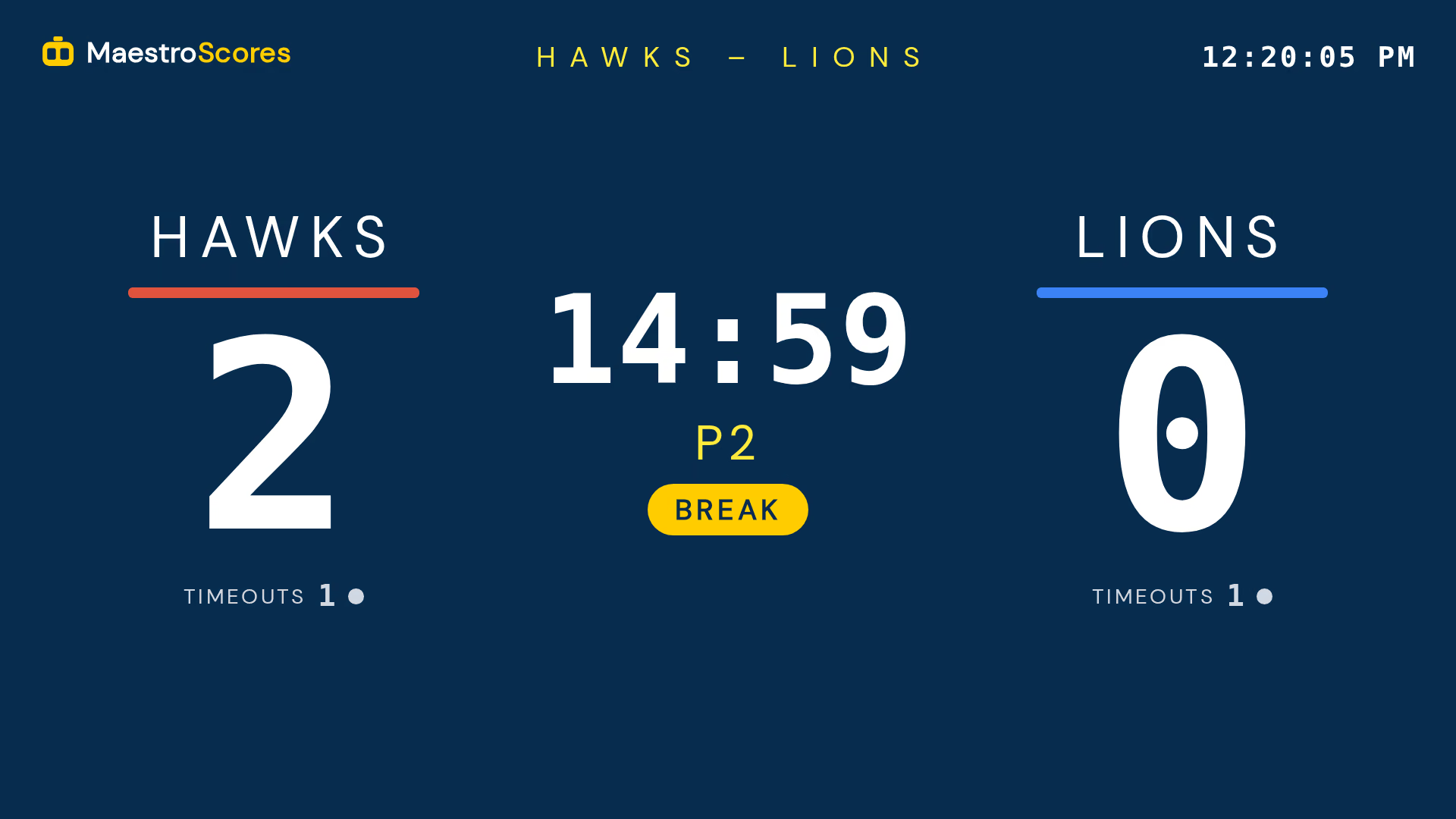

The ruleA period ends when its 20 minutes of playing time have run out, and under the IIHF Rulebook an intermission of 15 minutes follows.
The end of the game: a win, or overtime
The game ends when the time of the third period has run out, and the team that scored more goals in the three periods wins. On the board you tap Final, and every screen shows the result.
A game that is tied after the three periods is not over. In an IIHF round-robin or preliminary-round game it goes to Sudden death: Play that ends at the first goal: the team that scores first wins. College and USA Hockey rules call it sudden victory. All terms overtime of up to 5 minutes, played with three skaters and a goalkeeper a side, and the first goal wins. If no one scores, a shootout decides the game. The NHL plays its regular-season games the same way.
Playoff games play on for longer. IIHF playoff games have up to 10 minutes of overtime, and an IIHF gold medal game, like an NHL playoff game, has no shootout: the teams play overtime periods until one of them scores. The page on ice hockey overtime rules plays each of these through.
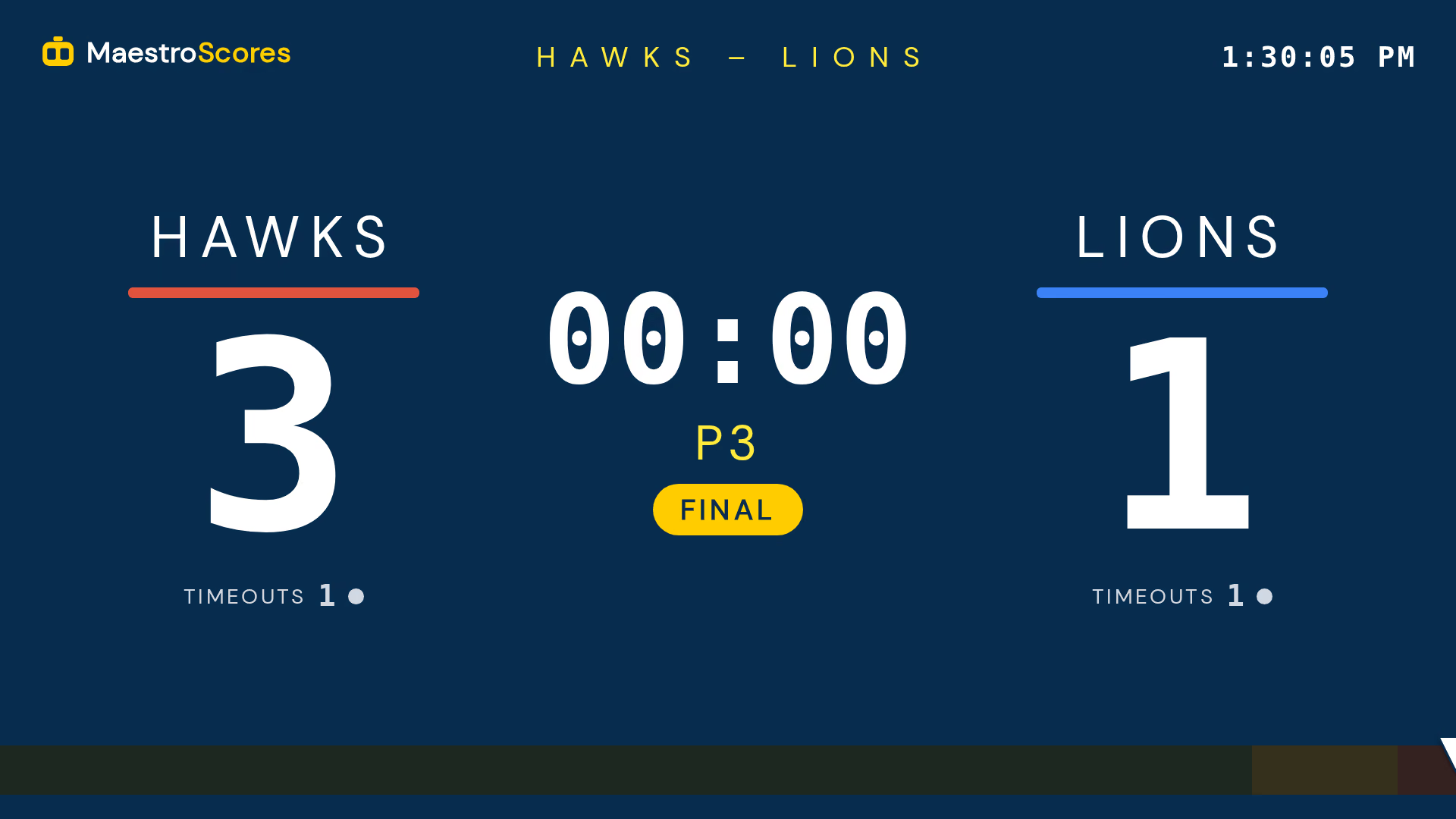

The ruleThe team that scored more goals in the three periods wins; a tied game goes to overtime.
The icing rule and the offside rule
Icing: Shooting the puck from the team's own half of the ice beyond the opponent's goal line while at equal or greater strength. The face-off then takes place in the end zone of the team that iced it. All terms is called when a team shoots the puck from its own half of the ice beyond the opponent's goal line while it plays at equal or greater strength. The center red line divides the ice into the two halves. The linesperson decides, no later than when the first player reaches the end zone face-off dots, which player would touch the puck first: icing is called if it would be a defending player. The face-off then takes place in the end zone of the team that iced the puck, and that team may not change players before it. A short-handed team may ice the puck without a call.
Offside: Attacking players entering the attacking zone before the puck: a player is offside when both skates are completely over the blue line as the puck crosses it. All terms is called when attacking players enter the attacking zone before the puck. The skates decide: a player is offside when both skates are completely over the Blue line: One of the two lines that divide the rink into three zones; the attacking zone begins beyond the opponent's blue line. All terms as the puck crosses it. The linesperson stops play for a face-off, or delays the call while the defending team can bring the puck out of its zone.
Neither call changes the score, so the board has no key for them. You stop the clock at the whistle and start it again at the face-off.
Other ice hockey rules: NHL, college, USA Hockey and inline
The NHL also plays three periods of 20 minutes, and its minor, major and misconduct penalties also last 2, 5 and 10 minutes. Each team has one 30-second time-out. College hockey (NCAA) plays three 20-minute periods as well, with one one-minute time-out for each team.
USA Hockey's amateur and youth rules allow at most three periods of 20 minutes, and leagues often play shorter ones. A minor penalty then lasts 1:30 in periods of more than 12 and less than 17 minutes, and 1:00 in periods of 12 minutes or less. Each team has one time-out of 60 seconds, and a tied game can end as a tie unless it must have a winner. When you create the board, you choose these shorter periods, and the minor penalties follow them.
Inline hockey under the World Skate rules is played with four skaters and a goalkeeper a side, in two periods of 20 minutes with a five-minute rest at half-time. Each team has one one-minute time-out in each period. You choose the rule set when you create the board.
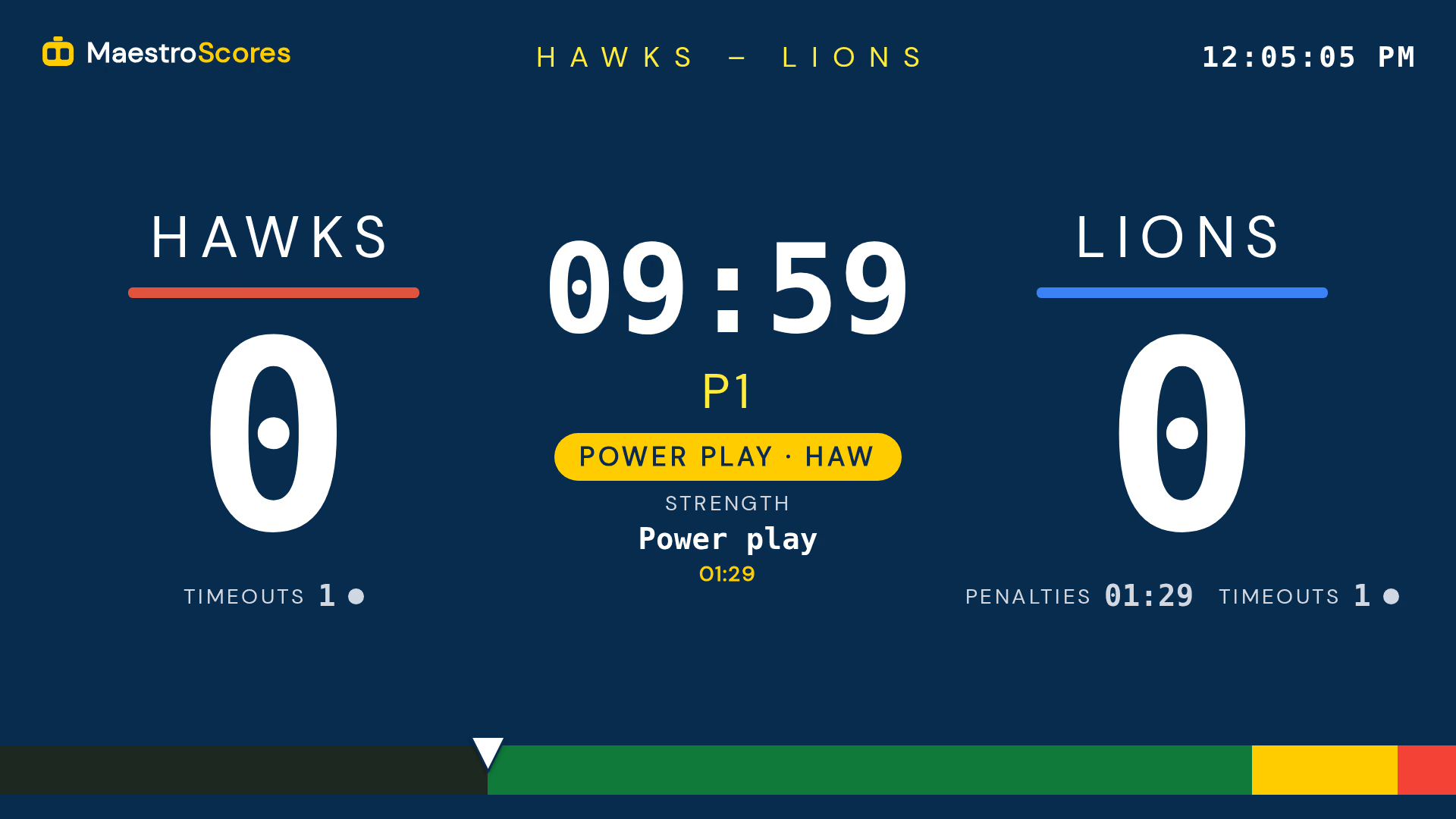

The ruleUnder USA Hockey's rules a minor penalty lasts 1:30 in periods of more than 12 and less than 17 minutes.
FAQ
How long is an ice hockey game?
Three periods of 20 minutes of playing time, 60 minutes in all. The clock stops at every whistle, and under IIHF rules there is an intermission of 15 minutes after the first and after the second period.
What is icing in ice hockey?
Icing is a puck shot from a team's own half of the ice beyond the opponent's goal line while the team is not short-handed. Play stops when a defending player would reach the puck first, and the face-off takes place in the end zone of the team that iced it.
How long is a penalty in ice hockey?
A minor penalty lasts 2 minutes and ends early if the other team scores on the power play. A major penalty lasts 5 minutes and a misconduct 10 minutes, and both run their full time.
What is the penalty for fighting in ice hockey?
A player who fights gets a major penalty of 5 minutes. Under the IIHF and USA Hockey rules the player also gets a game misconduct penalty and takes no further part in the game.
What happens if an ice hockey game is tied?
In an IIHF round-robin game, as in the NHL regular season, the teams play up to 5 minutes of sudden-death overtime, three skaters and a goalkeeper a side, and a shootout decides the game if no one scores. IIHF playoff games have up to 10 minutes of overtime, and an IIHF gold medal game or an NHL playoff game has no shootout and goes on until a goal.
Keep ice hockey score on a board
Create an ice hockey board with the rules you play, tap each goal and penalty on your phone, and open the Scoreboard link on any screen at the rink.
Ice hockey terms
- 3-on-3
- Overtime played with three skaters and a goalkeeper a side instead of five skaters and a goalkeeper.
- Blue line
- One of the two lines that divide the rink into three zones; the attacking zone begins beyond the opponent's blue line.
- Delayed penalty
- A penalty the referee signals with a raised arm when the team that broke the rule does not have the puck. Play goes on until that team gains control of the puck; if the other team scores first, a signalled minor penalty is not given.
- Face-off
- The referee drops the puck between the sticks of two opposing players, to start each period and to restart play after a whistle.
- Game misconduct penalty
- A penalty that ends the game for the player. Under the IIHF and USA Hockey rules a player who fights also gets one.
- Goal line
- The line at each end of the rink between the goal posts. A goal counts when the whole puck has crossed it, between the posts and under the crossbar.
- Icing
- Shooting the puck from the team's own half of the ice beyond the opponent's goal line while at equal or greater strength. The face-off then takes place in the end zone of the team that iced it.
- Intermission
- The break between two periods, 15 minutes under the IIHF Rulebook. The teams change ends after it.
- Major penalty
- A penalty of 5 minutes, which runs its full time even if the other team scores. Fighting is a major penalty.
- Minor penalty
- A penalty of 2 minutes under the IIHF and NHL rules. It ends early when the other team scores on the power play.
- Misconduct penalty
- A penalty of 10 minutes for the player alone: a substitute replaces the player at once, so the team keeps its strength.
- Offside
- Attacking players entering the attacking zone before the puck: a player is offside when both skates are completely over the blue line as the puck crosses it.
- Overtime
- Extra play after a game tied at the end of regulation. Its length and form depend on the rules.
- Penalty box
- Where a penalized player sits out the penalty's time, while the team plays with one skater fewer.
- Period
- One of the three parts of a game, each of 20 minutes of playing time under the IIHF and NHL rules. The clock runs only while the puck is in play.
- Power play
- The time a team has more players on the ice than the other, while an opponent serves a penalty.
- Regulation
- The three periods of a game, before any overtime.
- Round robin
- The stage of a tournament in which each team plays every other team in its group, before the playoff games. Under the IIHF Rulebook a game tied there plays the short overtime, then a shootout.
- Shootout
- Shots taken alternately, one shooter against the goalkeeper, that decide a game still tied after overtime. The winning team is given one goal more than its opponent in the final score.
- Short-handed
- Playing with fewer skaters on the ice than the other team, because of a penalty.
- Skater
- A player on the ice other than the goalkeeper. Each team starts a game with five skaters and a goalkeeper.
- Sudden death
- Play that ends at the first goal: the team that scores first wins. College and USA Hockey rules call it sudden victory.
- IIHF Official Rulebook 2026/27blob.iihf.com
- National Hockey League Official Rules 2026-2027media.nhl.com
- 2026-27 and 2027-28 NCAA Men's and Women's Ice Hockey Rules and Interpretationsncaaorg.s3.amazonaws.com
- 2025-29 Official Rules of Ice Hockey (USA Hockey)cdn2.sportngin.com
- Rulebook Inline Hockey 2027 (World Skate)worldskate.org