A pickleball game is played to 11 points and must be Win by 2: A game ends only when a team has reached the points the game is played to and leads by at least 2. All terms. Under Standard scoring: Pickleball's usual way of scoring, also called side-out scoring: only the serving team can score a point. All terms only the Serving team: The team whose player serves the rally. Under standard scoring it is the only team that can score a point. All terms can score a point. In Doubles: A game of two players a side, in which both partners serve in turn before the serve passes to the other team. All terms the score is called as three numbers: the serving team's score, the Receiving team: The team that returns the serve. Under standard scoring a rally it wins scores no point: the serve moves instead. All terms's score and the Server number: In doubles, the last number of the score call: 1 while the team's first server serves, 2 once the partner serves. All terms.
This page follows one doubles match under the 2026 USA Pickleball rules, from the first serve to the last point, on a MaestroScores scoreboard. Each step shows the board at that moment. The board keeps the score for you: you tap the team that won the Rally: The play from the serve until a fault ends it. The team that did not commit the fault wins the rally. All terms, and it moves the serve, the server number and the games by itself.
How pickleball scoring works
In standard pickleball scoring, a team scores a point only when it serves and wins the rally. When the receiving team wins a rally, nobody scores. The serve moves instead: to the server's partner, or to the other team. These are the rules of a standard doubles game:
- Only the serving team scores a point.
- A game is played to 11 points and must be won by 2.
- A match is usually the Best of three: The standard match: the first team to win two games wins the match. All terms games.
- Both partners serve before the serve passes to the other team, except at the start of each game.
The serve, the two-bounce rule and the kitchen
Three rules shape every rally: how the ball is served, the Two-bounce rule: The serve and the return of serve must each bounce before they are hit; only after that may players volley. All terms and the Non-volley zone: The area of the court next to the net on each side, which players call the kitchen. Every volley must be hit from outside it; a player may stand in it to play a ball that has bounced. All terms, which players call the kitchen. A player who breaks one of them commits a fault, and the other team wins the rally. Outside these rules, a player also loses the rally by hitting the ball so that it lands outside the other team's side of the court, by hitting it into the net so that it does not cross, or by letting it bounce twice before hitting it.
- The serve: the server stands behind the baseline and serves diagonally across the net, to the Service court: The right or left half of each end of the court, between the non-volley zone and the baseline. The serve must land in the one diagonally opposite the server. All terms opposite. The serve is underhand: either hit out of the air with the paddle moving upward and the ball no higher than the waist (a Volley: A hit of the ball before it bounces. All terms serve), or hit after the ball is dropped and has bounced (a drop serve). The ball must clear the non-volley zone and land in the correct service court.
- The two-bounce rule: the serve and the return of serve must each bounce before they are hit. The receiver lets the serve bounce, then the serving team lets the return bounce; after that, players may volley, hitting the ball before it bounces.
- The kitchen: the non-volley zone is the area of the court 7 feet (2.13 m) deep on each side of the net. A player may not volley while touching it, or let the momentum of a volley carry them into it, even after the ball is dead. At any other time a player may stand in it, for example to play a ball that has bounced.
The start of a game: 0-0-2
Every doubles game starts with the call 0-0-2: The score call that starts every doubles game: no points for either team, and the first server counts as the second server. All terms. The first two numbers are the serving team's score and the receiving team's score. The third number is the server number. The first server of the game counts as the Second server: The partner who serves after the first server of the team loses a rally. The team's serve ends when the second server loses a rally too. All terms, so the team that serves first loses the serve after its first lost rally.
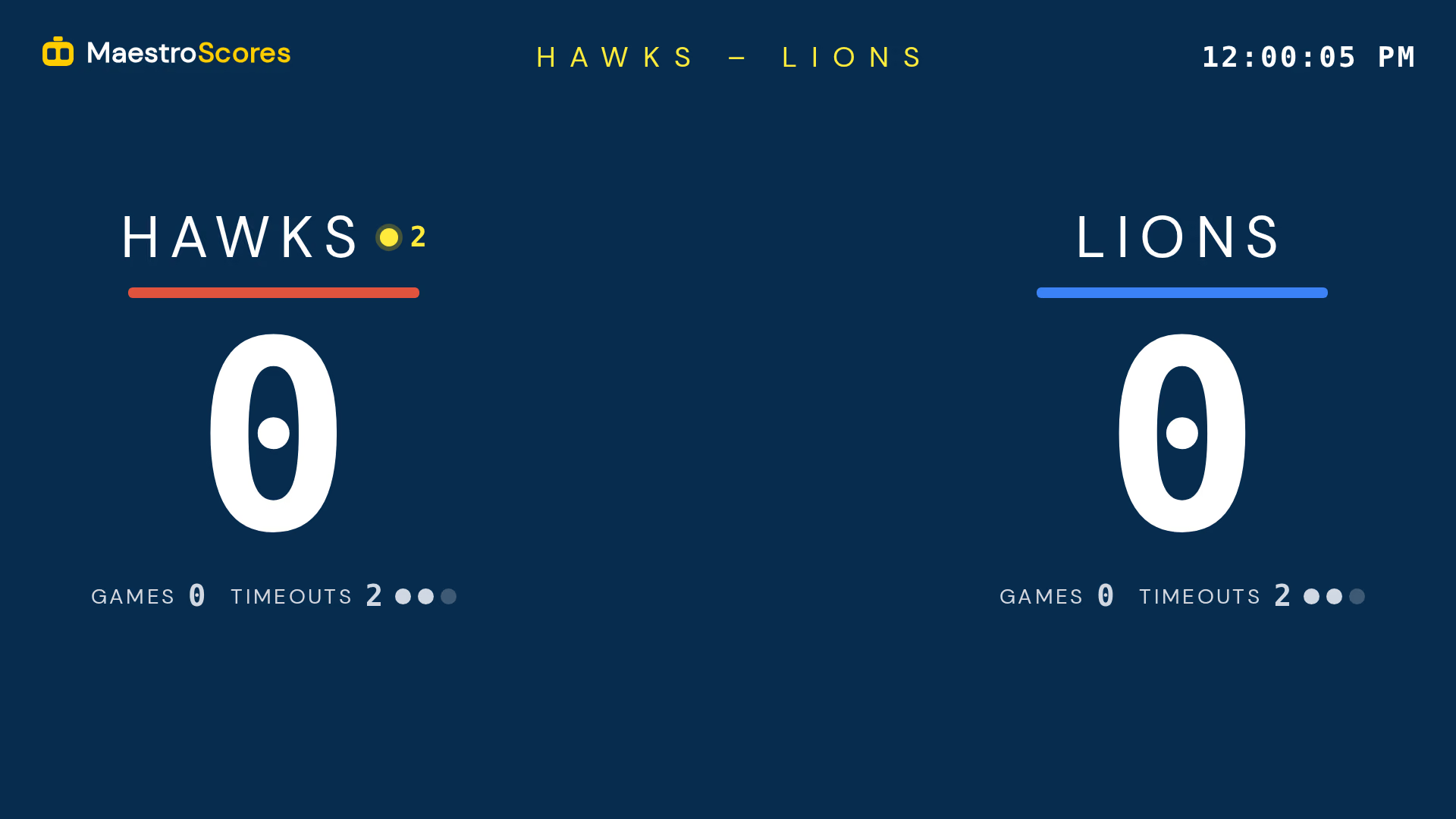

The ruleEvery doubles game starts at 0-0-2: the first server of the game counts as the second server.
A point, then a side out
The serving team scores when it wins the rally, and the same player serves again. When the serving team loses a rally on the second server, it is a Side out: The serve passing to the other team, when the serving team loses a rally on its last server. All terms: the serve goes to the other team, whose first server starts. The score is always called from the serving team's side, so after a side out the numbers swap. The server switches between the right and left sides after each point won, so the partner who started the game on the right is on the right whenever the team's score is even, so where the players stand is a check on the score.
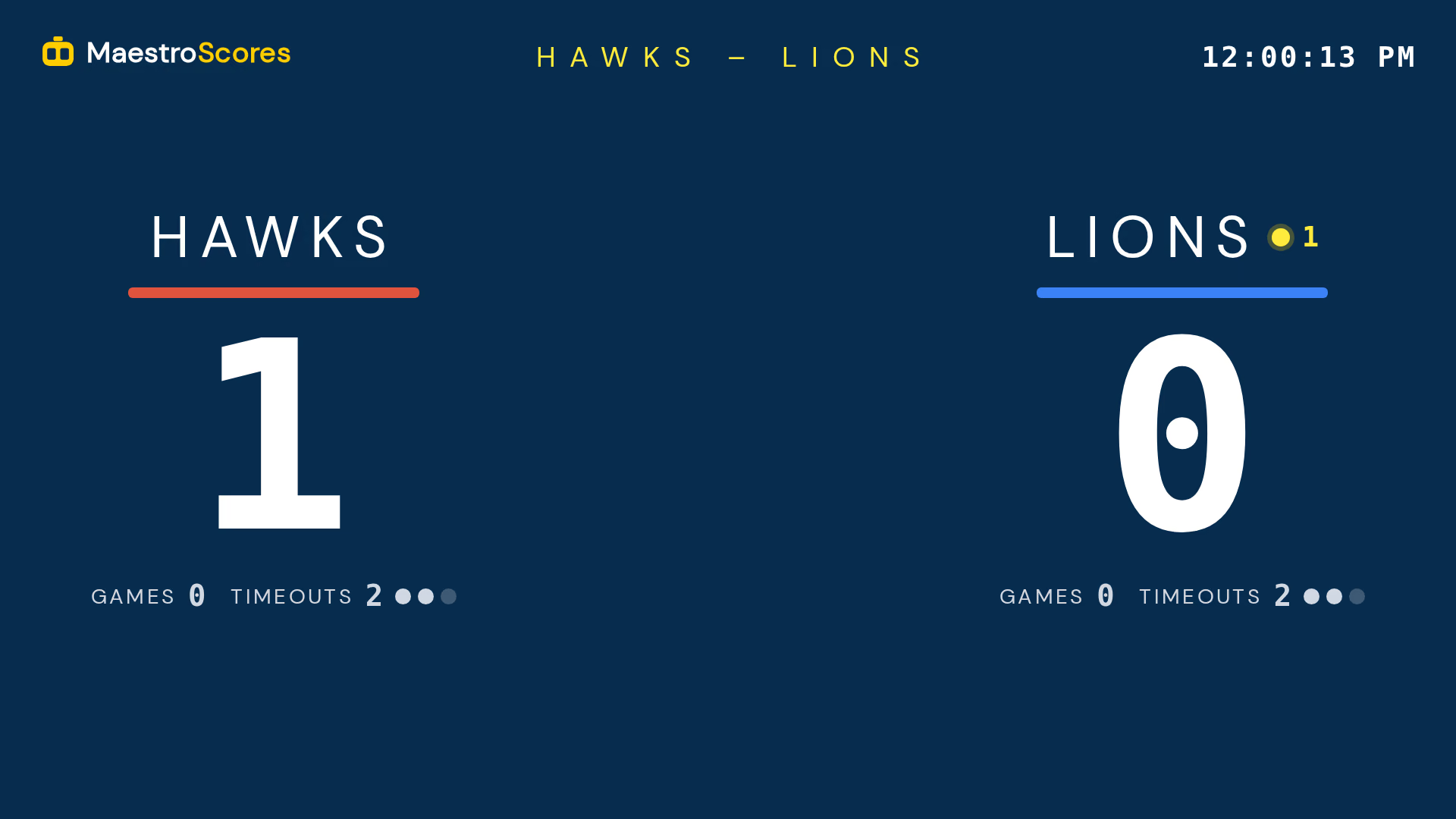

The ruleOnly the serving team scores; when it loses a rally on its last server, the serve passes to the other team in a side out.
The second server
After a side out, each partner of the new serving team serves in turn. When the first server loses a rally, the partner serves next, and the server number changes from 1 to 2. When the second server loses a rally too, the serve passes back to the other team.
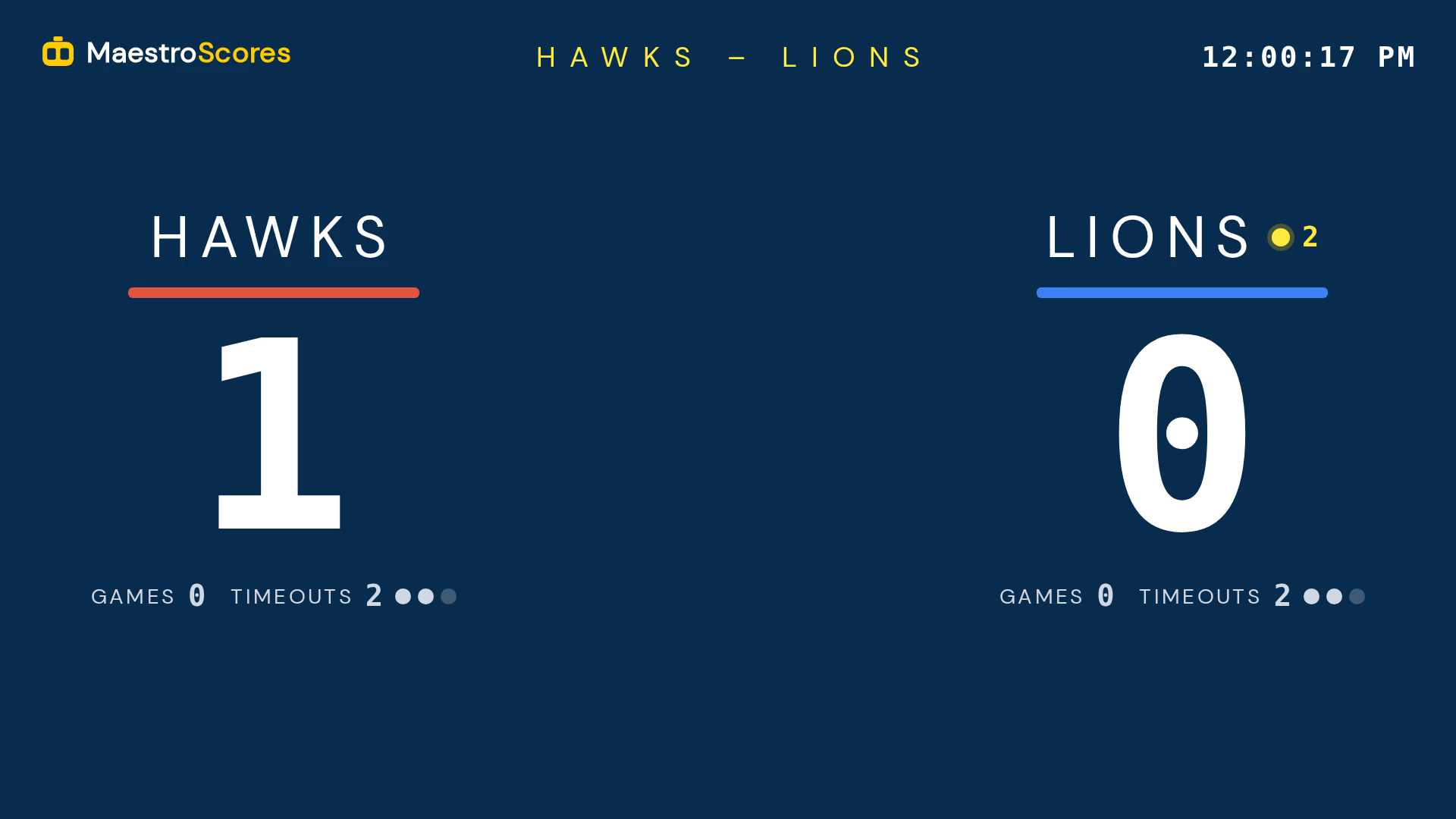

The ruleWhen the first server loses a rally, the partner serves next, and the server number changes from 1 to 2.
Winning a game: 11 points and a lead of 2
A game ends when a team has at least 11 points and a lead of 2. At 10-10 neither team can win with the next point: 11-10 plays on, and the game goes on until one team leads by 2.
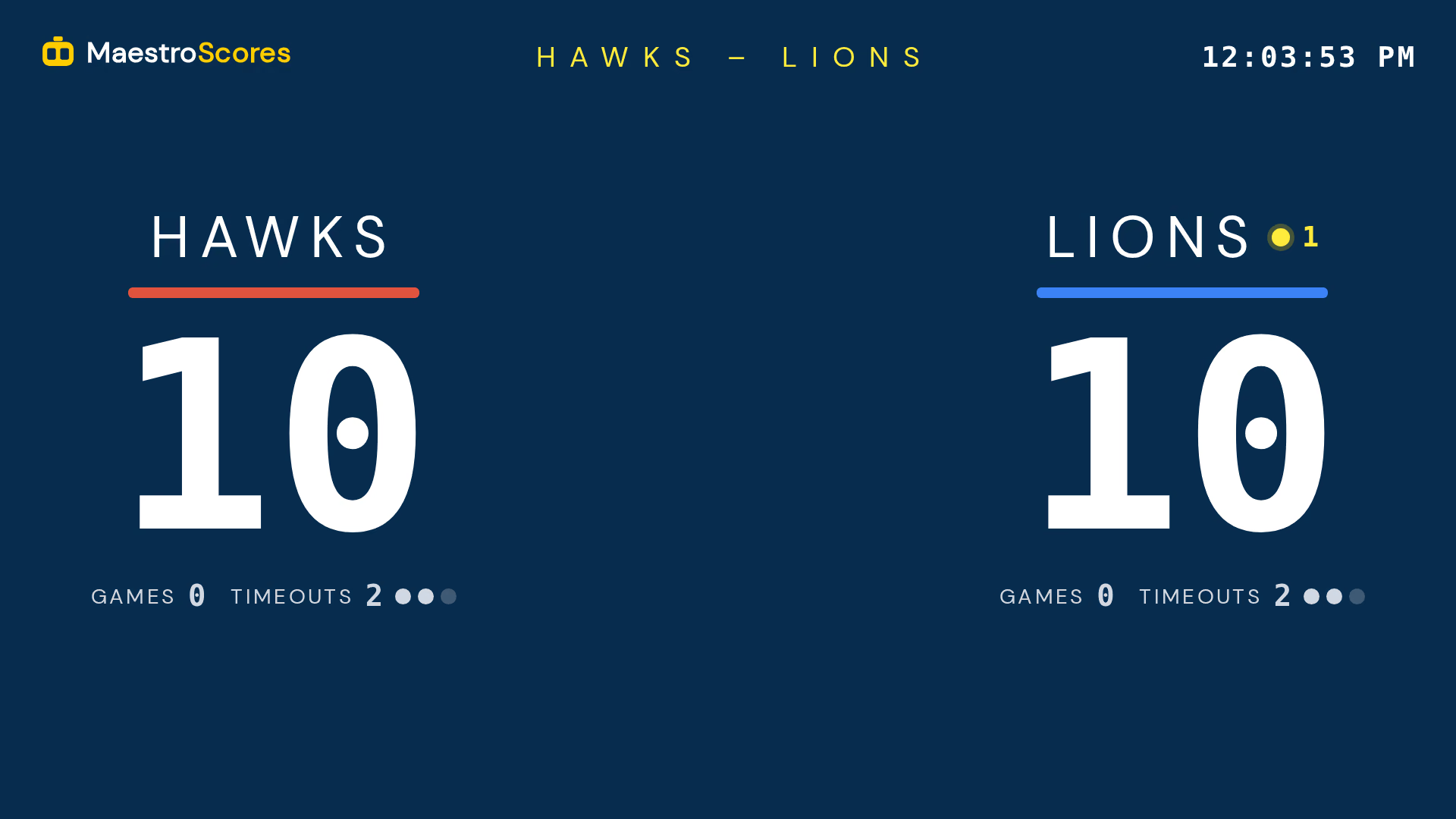

The ruleA game is played to 11 points and must be won by 2: from 10-10 it goes on until one team leads by 2.
The next game
When a game ends, the teams Change of ends: The teams swap sides of the court: after each game, and in a single-game match or a deciding game when the leading team reaches 6 points in a game to 11. All terms and the other team serves first in the next game. The new game starts again at 0-0-2. The board records the score of the finished game and starts the count of games won.
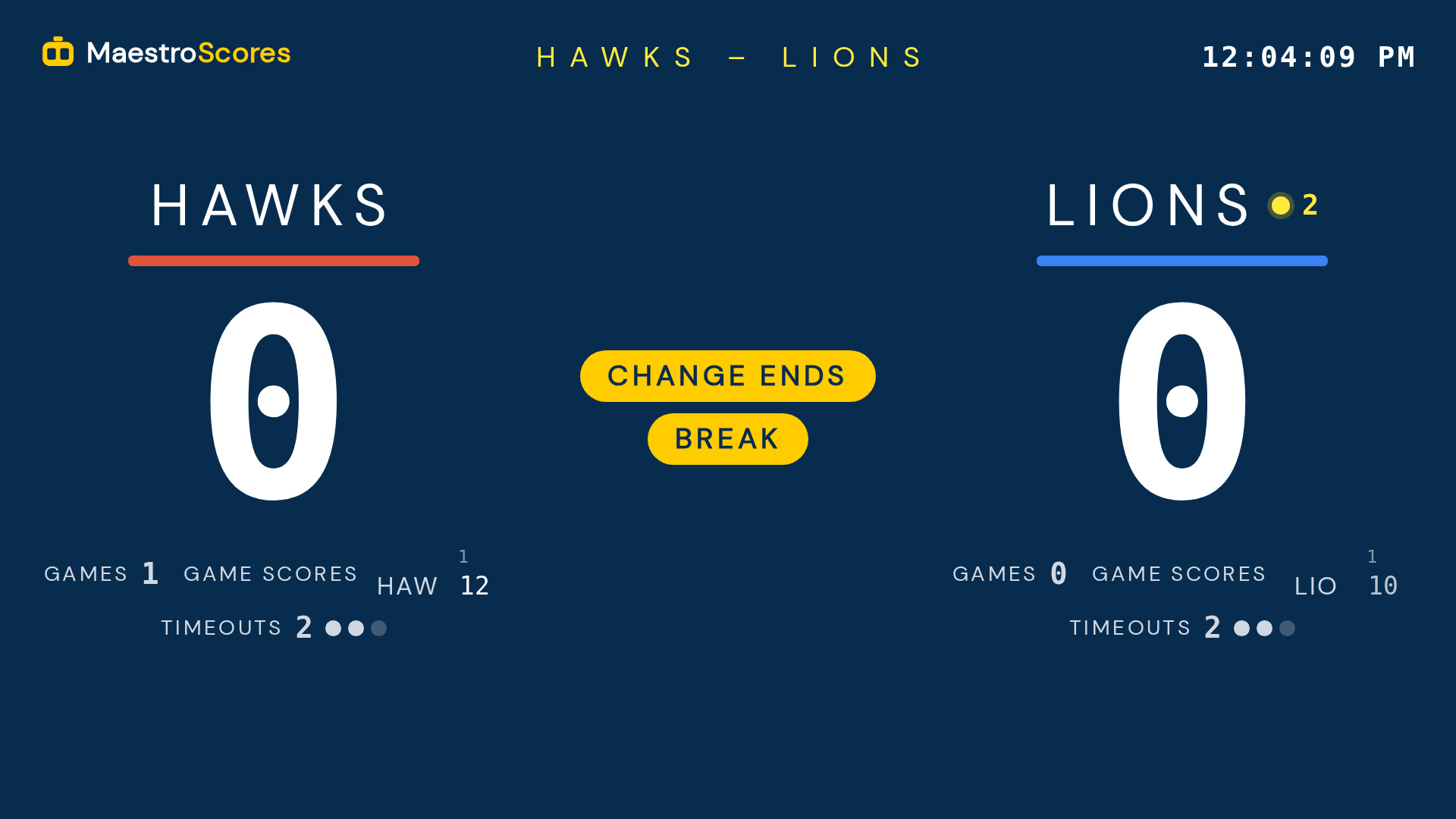

The ruleWhen a game ends, the teams change ends and the other team serves first in the next game, again at 0-0-2.
Winning the match: best of three games
The standard match is the best of three games to 11, and the first team to win two games wins the match. A match can also be one game to 15 or one game to 21, each won by 2.
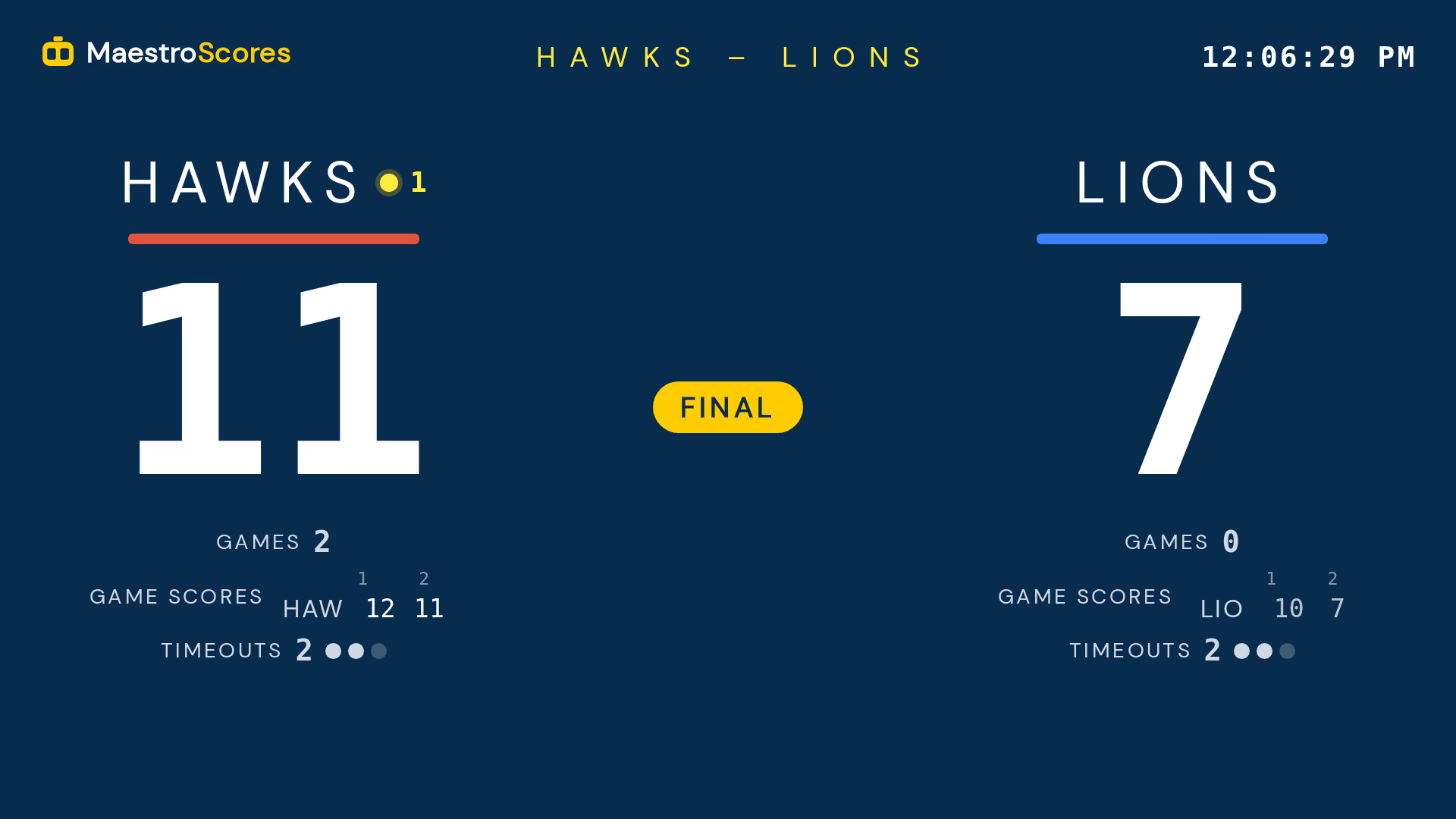

The ruleA standard match is the best of three games to 11: the first team to win two games wins it.
Time-outs and changing ends
Each team has two Time-out: A break a team may call, up to one minute long: two a game in games to 11 or 15 points, three in games to 21. All terms in a game to 11 or 15 points and three in a game to 21, each up to one minute long. In a single-game match or a Deciding game: The third game of a best-of-three match, played when each team has won one game. All terms, the teams change ends when the leading team reaches 6 points in a game to 11, 8 in a game to 15, or 11 in a game to 21. The same player serves after the change of ends.
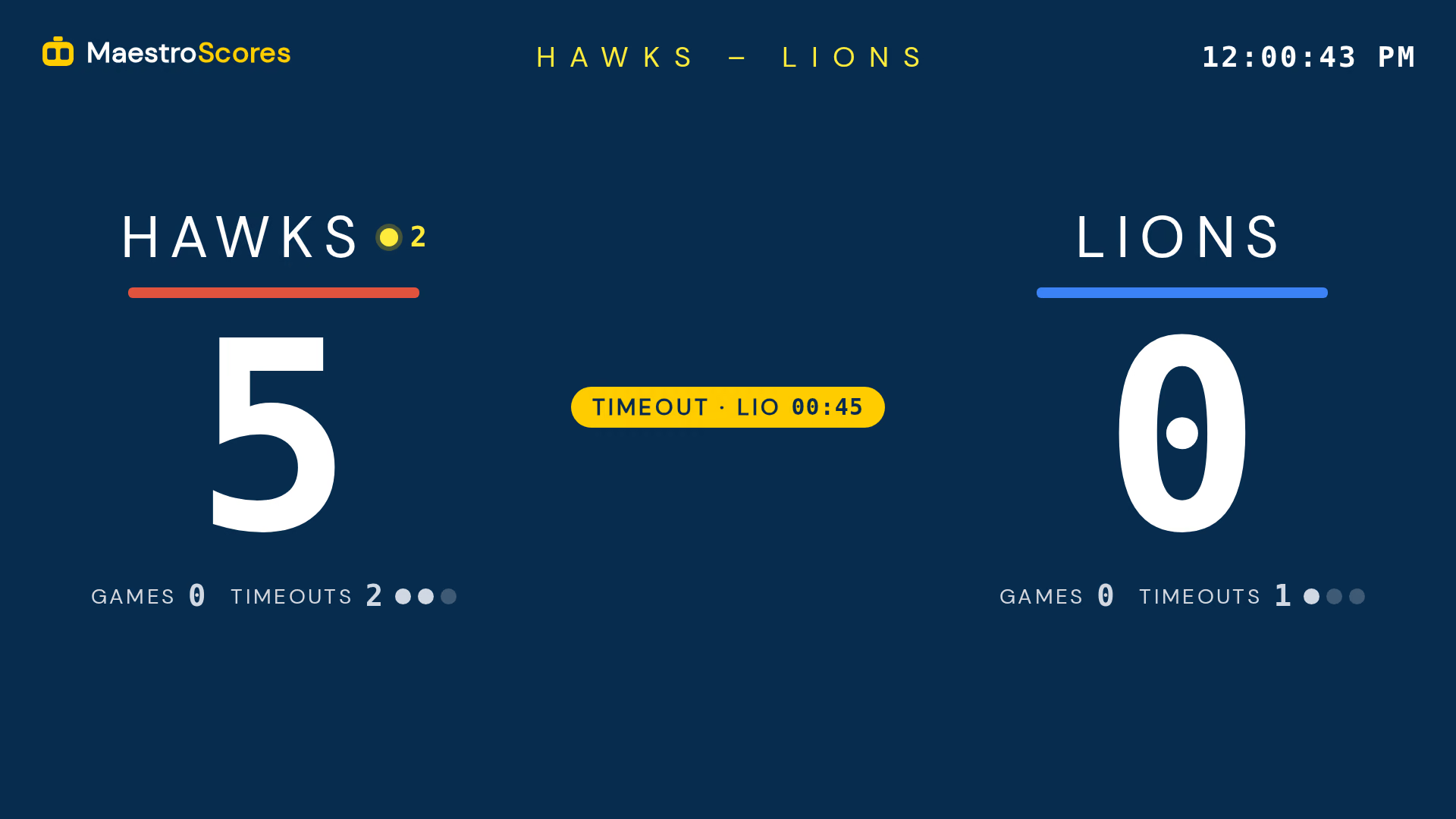

The ruleEach team has two time-outs in a game to 11 points, each up to one minute long.
Other formats: games to 15 or 21, and rally scoring
USA Pickleball also allows a match of one game to 15 or one game to 21, both won by 2. Rally scoring: A provisional option in the USA Pickleball rulebook: the team that wins a rally scores a point, whether it served or not. All terms is a provisional option in the rulebook. With rally scoring, the team that wins a rally scores a point, whether it served or not, and the score is called as two numbers. In Singles: A game of one player a side. The score is called as two numbers, the server's and then the receiver's, and the serve passes to the opponent when the server loses a rally. All terms the score is called as two numbers, the server's score and then the receiver's, starting at 0-0; there is no second server, so the serve passes to the opponent each time the server loses a rally. On MaestroScores, you choose these rules when you create the board.
FAQ
How many points is a pickleball game?
A standard game is played to 11 points and must be won by 2. Tournaments also use one game to 15 or one game to 21, both won by 2.
What does 0-0-2 mean in pickleball?
It is the score call at the start of a doubles game: 0 for the serving team, 0 for the receiving team, and 2 for the server number. The first server of the game counts as the second server, so the team that serves first has only one server before the first side out.
Can you score a point when you are not serving?
Not under standard scoring: only the serving team scores. When the receiving team wins a rally, the serve moves to the server's partner or to the other team. Under rally scoring, the winner of every rally scores.
Do you have to win by 2 in pickleball?
Yes. A game to 11 needs a lead of 2, so at 10-10 the game goes on until one team is 2 points ahead, for example 12-10.
How many time-outs does each team get?
Two time-outs per game in games to 11 or 15 points, and three in games to 21. Each time-out lasts up to one minute.
Keep pickleball score on a board
Create a board with the USA Pickleball rules already chosen, tap the team that won each rally on your phone, and open the Scoreboard link on any screen at the court.
Pickleball terms
- 0-0-2
- The score call that starts every doubles game: no points for either team, and the first server counts as the second server.
- Best of three
- The standard match: the first team to win two games wins the match.
- Change of ends
- The teams swap sides of the court: after each game, and in a single-game match or a deciding game when the leading team reaches 6 points in a game to 11.
- Deciding game
- The third game of a best-of-three match, played when each team has won one game.
- Doubles
- A game of two players a side, in which both partners serve in turn before the serve passes to the other team.
- Non-volley zone
- The area of the court next to the net on each side, which players call the kitchen. Every volley must be hit from outside it; a player may stand in it to play a ball that has bounced.
- Rally
- The play from the serve until a fault ends it. The team that did not commit the fault wins the rally.
- Rally scoring
- A provisional option in the USA Pickleball rulebook: the team that wins a rally scores a point, whether it served or not.
- Receiving team
- The team that returns the serve. Under standard scoring a rally it wins scores no point: the serve moves instead.
- Second server
- The partner who serves after the first server of the team loses a rally. The team's serve ends when the second server loses a rally too.
- Server number
- In doubles, the last number of the score call: 1 while the team's first server serves, 2 once the partner serves.
- Service court
- The right or left half of each end of the court, between the non-volley zone and the baseline. The serve must land in the one diagonally opposite the server.
- Serving team
- The team whose player serves the rally. Under standard scoring it is the only team that can score a point.
- Side out
- The serve passing to the other team, when the serving team loses a rally on its last server.
- Singles
- A game of one player a side. The score is called as two numbers, the server's and then the receiver's, and the serve passes to the opponent when the server loses a rally.
- Standard scoring
- Pickleball's usual way of scoring, also called side-out scoring: only the serving team can score a point.
- Time-out
- A break a team may call, up to one minute long: two a game in games to 11 or 15 points, three in games to 21.
- Two-bounce rule
- The serve and the return of serve must each bounce before they are hit; only after that may players volley.
- Volley
- A hit of the ball before it bounces.
- Win by 2
- A game ends only when a team has reached the points the game is played to and leads by at least 2.
- 2026 USA Pickleball Official Rulebookusapickleball.org