A game of table tennis is won by the first player to reach 11 points, unless the score reaches 10-10; then a lead of 2 points wins it. Every Rally: The time the ball is in play. The player who wins it scores a point, whoever served. All terms scores a point, the Service: The stroke that starts a rally: the server throws the ball up from the open palm of the free hand and strikes it so that it touches the server's own court first and then the receiver's. All terms passes to the other player after every 2 points, and a match is the best of an odd number of games, often 5 or 7.
This page plays one singles match through under the ITTF Laws of Table Tennis in the 2026 ITTF Statutes, Best of 5: A match won by the first player to win 3 games. The Laws let a match be the best of any odd number of games. All terms games, on a MaestroScores scoreboard: the first serve, a point, Deuce: A score of 10-10 in a game. From then the serve changes after every point, and the first player to lead by 2 points wins the game. All terms at 10-10, the Deciding game: The last possible game of a match, the fifth in a best of 5. The players change ends in it when the first of them reaches 5 points. All terms and the end of the match. Each step shows the board at that moment. You tap the player who won each rally, and the board moves the serve and counts the games by itself.
How table tennis scoring works
In table tennis the player who wins a rally scores a point, whoever served. A player wins the rally when the opponent fails to make a correct service or return, for example when the ball misses the table or goes into the net. A player also loses the point by touching the ball before it has bounced on their own side while it is above the table or heading for it, by touching the top of the table with the Free hand: The hand that does not hold the racket. At the start of the service the ball rests on its open palm, which is still. All terms, by moving the table, or by touching the net. These are the rules of a singles match under the ITTF Laws:
- Every rally scores a point for the player who wins it.
- A game goes to 11 points. At 10-10 it goes on until one player leads by 2.
- A match is the best of an odd number of games. The board plays the best of 5, and you can choose the best of 7 or 3.
- The serve passes to the other player after every 2 points, and after every point from 10-10.
- The players Change ends: The players swap ends of the table: after each game, and in the deciding game when the first player reaches 5 points. All terms after each game, and in the deciding game when the first player reaches 5 points.
- Each player may take one Time-out: A break of up to 1 minute that each player or pair may claim once in a match, between rallies. All terms of up to 1 minute in a match.
Table tennis serve rules: how to serve correctly
The service has its own rules in the ITTF Laws, and a service that breaks them loses the point. A correct service goes like this:
- The ball rests freely on the open palm of the Server: The player due to strike the ball first in a rally. All terms's free hand, which is still.
- The server throws the ball nearly vertically upwards, without spin, so that it rises at least 16 cm (6.3 in).
- As the ball falls, the server strikes it so that it touches the server's own court first and then the Receiver: The player due to strike the ball second in a rally, after the service. All terms's court.
- From the start of the service until the ball is struck, the ball stays above the level of the table and behind the server's End line: The line along each end of the table. During the service the ball stays behind the server's end line until it is struck. All terms.
- The ball is never hidden from the receiver, by the server, a Doubles: A match between two pairs. The four players strike the ball in turn: the server, the receiver, the server's partner, then the receiver's partner. All terms partner or anything they wear or carry.
- As soon as the ball has been thrown, the server's free arm and hand leave the space between the ball and the net.
A let: when the rally is played again
A Let: A rally that scores no point and is played again, for example a service that touches the net and is otherwise correct. All terms is a rally that scores no point and is played again. A service that touches the net and is otherwise correct is a let. A rally is also a let when the receiver was not ready and did not try to return the ball, or when something outside the players' control disturbed play. On the board a let needs no tap: you tap only the player who wins the rally that counts.
The start of a match: who serves first
The right to choose is decided By lot: By chance, such as the toss of a coin: the winner chooses to serve or to receive first, or to start at a particular end. All terms. The winner chooses to serve or to receive first, or to start at a particular end, and the other player has the other choice. On the board you tap who serves first before the first rally, and the board moves the serve from then on.
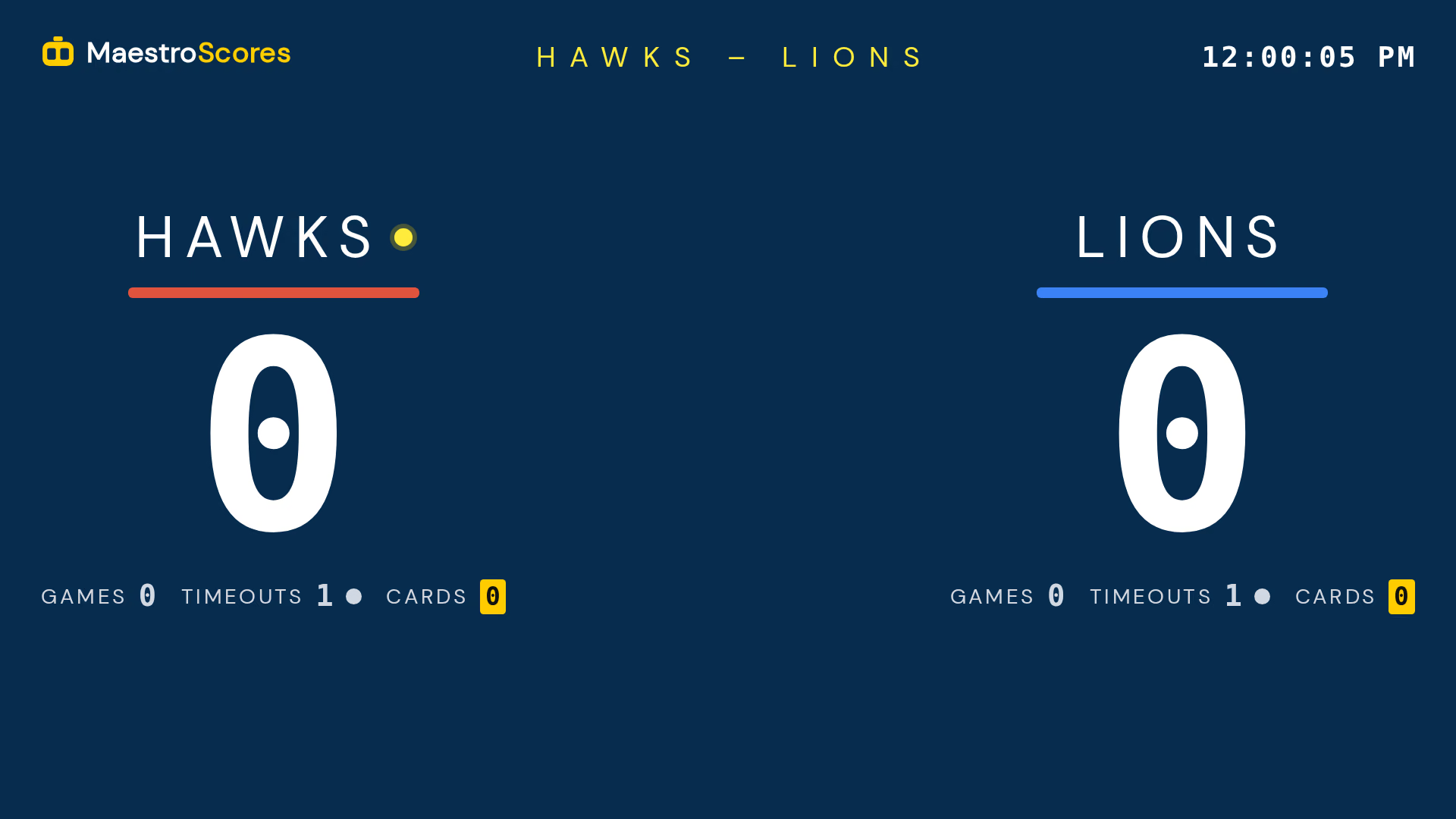
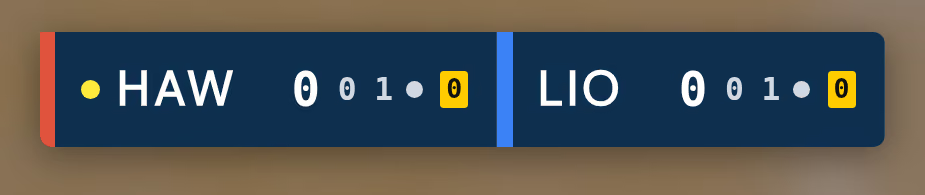
The ruleThe right to choose is decided by lot, and the winner chooses to serve or to receive first.
A point, and the serve every 2 points
The player who wins a rally scores a point. After every 2 points the receiver becomes the server, so each player serves twice in a row. On the Scorekeeper page you tap the player who won the rally, and the Scoreboard and the Scorebug show the new score and the serve at the same moment.
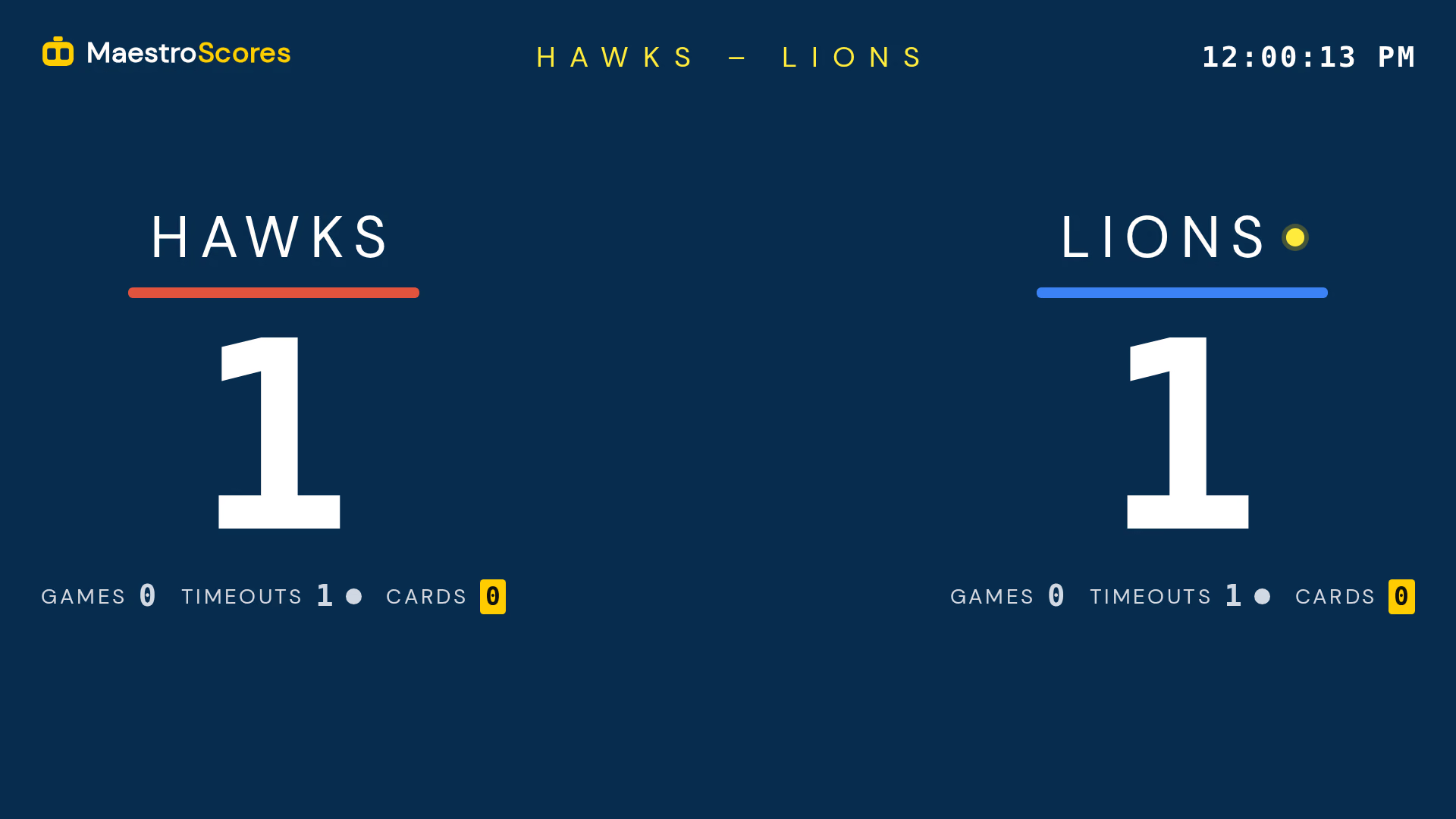
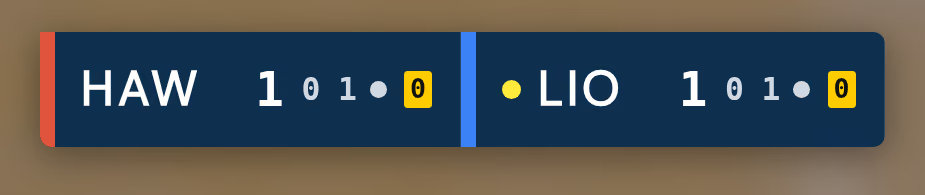
The ruleEvery rally scores a point for the player who wins it, and the serve passes to the other player after every 2 points.
10-10: one serve each, and a lead of 2
At 10-10 the game does not end at 11. The serve then changes after every point, and the first player to lead by 2 points wins the game, at 12-10, 13-11 or later. The player who served first in a game receives first in the next one, and the players change ends between games, with a rest of up to 1 minute. The board does all this by itself when the game is won.
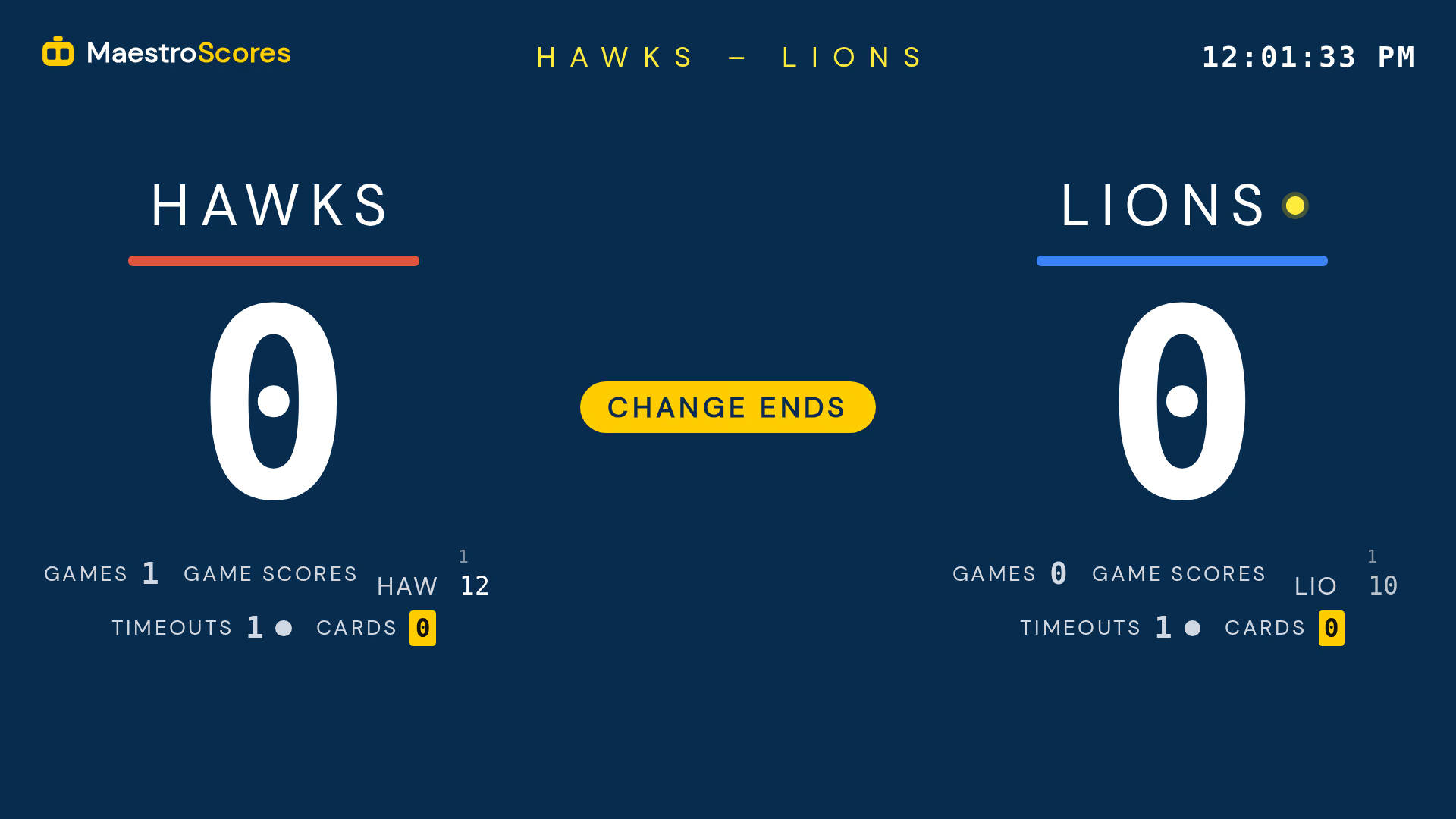

The ruleFrom 10-10 the serve changes after every point, and the first player to lead by 2 points wins the game.
The deciding game: change ends at 5
In the last possible game of a match, the fifth game of a best of 5, the players change ends when the first of them reaches 5 points. Players may also take a short break to use a towel after every 6 points of a game. On the board the change of ends in the deciding game comes by itself.
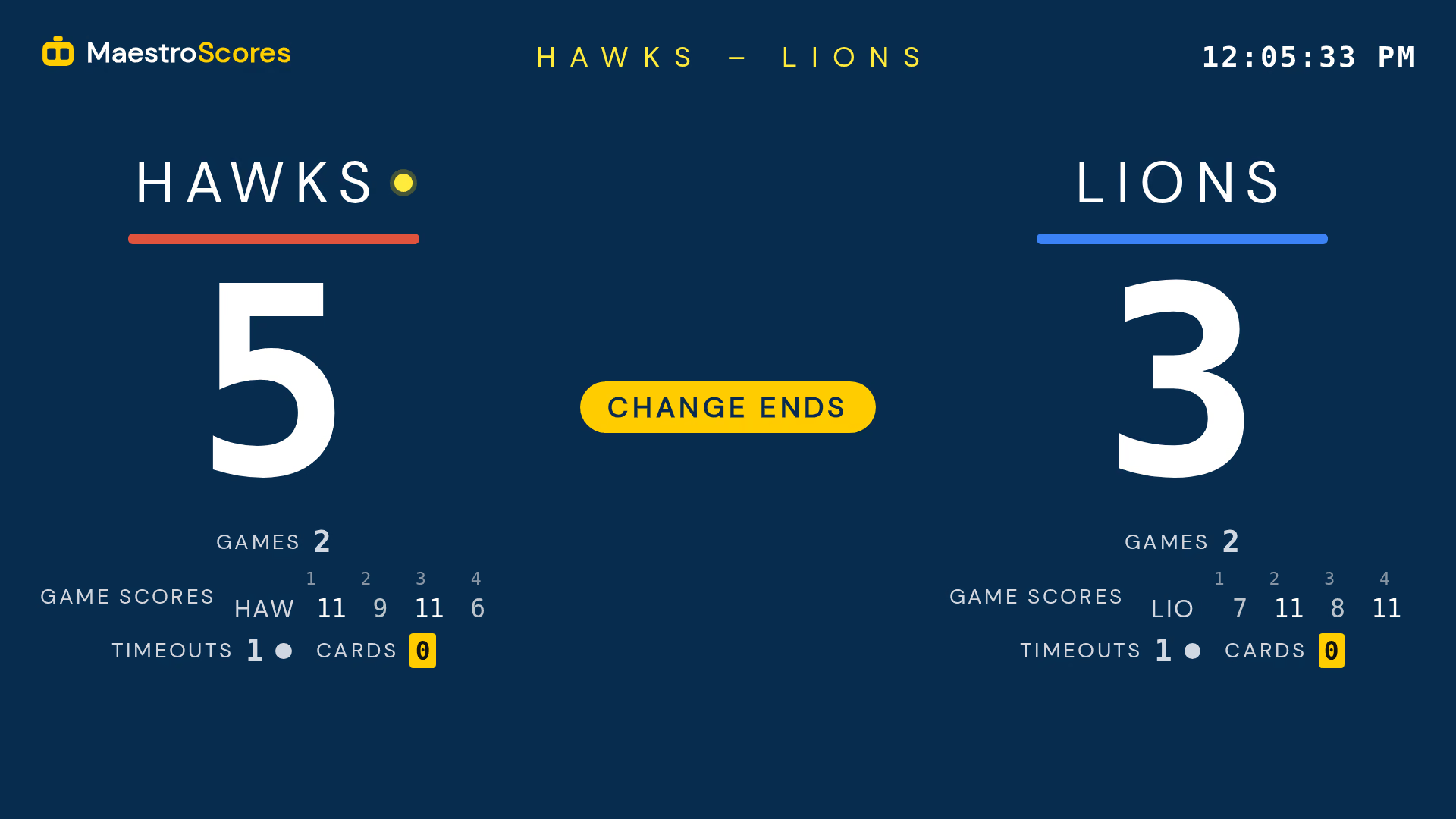

The ruleIn the deciding game the players change ends when the first of them reaches 5 points.
Winning the match
A best-of-5 match is won by the first player to win 3 games. When the last point is won, the board ends the match by itself and shows Final, and the Scoreboard keeps the score of every game.
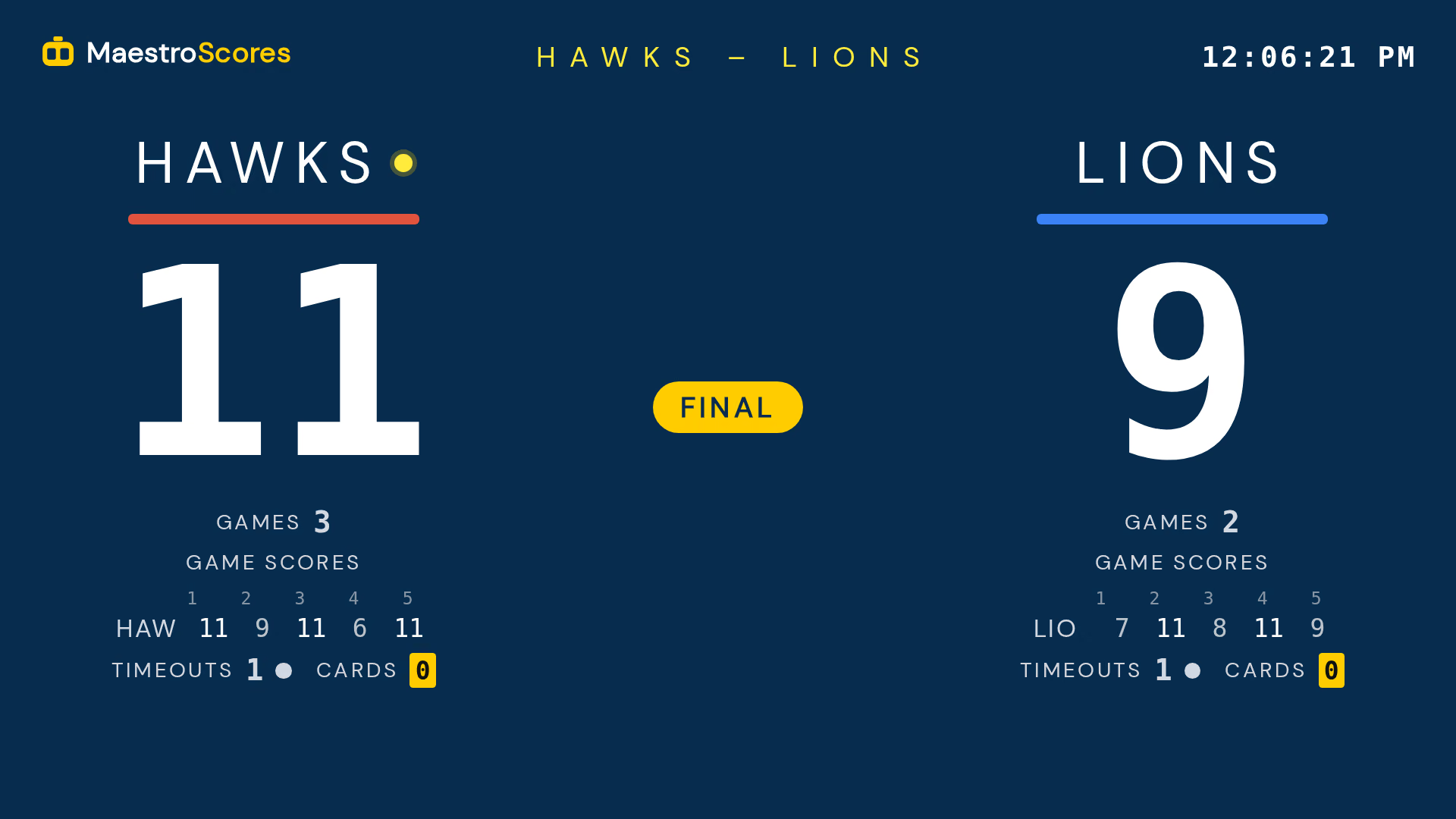

The ruleA best-of-5 match is won by the first player to win 3 games.
Time-outs and the expedite system
Each player or pair may claim one time-out of up to 1 minute in a match, between rallies. On the board you tap Timeout for that player, and the screens show it.
A game that is not finished after 10 minutes of play goes under the Expedite system: The rule for a game not finished after 10 minutes of play, unless at least 18 points have been scored: each player serves for 1 point in turn, and the receiver wins the point after 13 correct returns. All terms, unless at least 18 points have been scored. Each player then serves for 1 point in turn, and the receiver wins the point after 13 correct returns in a rally. The board keeps the expedite system as an option, with a clock that counts each game's playing time.
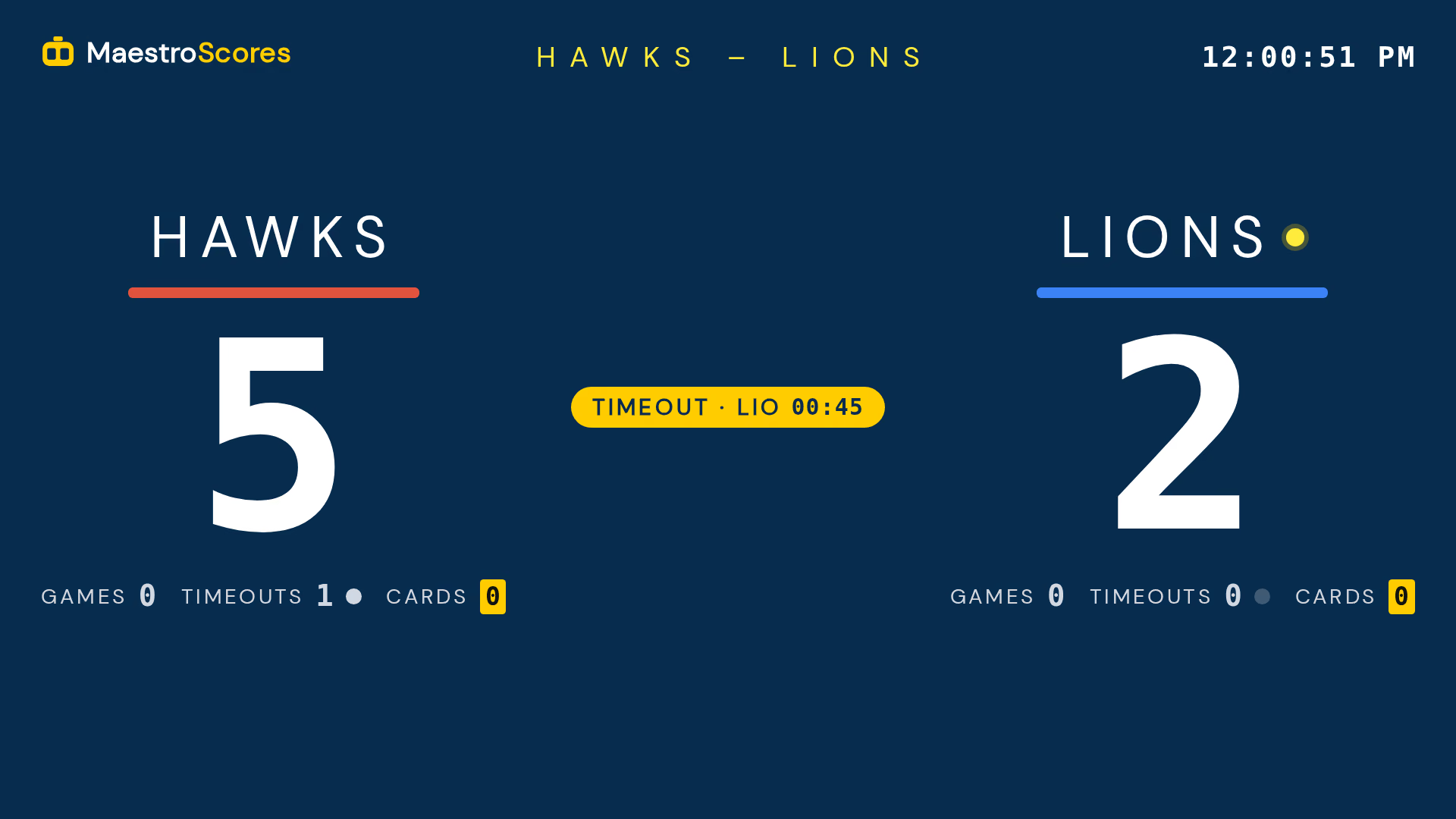

The ruleEach player may claim one time-out of up to 1 minute in a match, between rallies.
Doubles rules: the serve and the order of play
In doubles the service must touch the Half court: In doubles each court is divided into two halves by a centre line; the service touches the server's right half court and then the receiver's. All terms of the server and then the right half court of the receiver. After the service the four players strike the ball in turn: the server, the receiver, the server's partner, then the receiver's partner. At each change of service the previous receiver becomes the server, and the partner of the previous server becomes the receiver. On the board you tap the pair that won each rally, as in singles, and the screens show which pair serves.
Other formats: best of 7, best of 3 and team leagues
The ITTF Laws let a match be the best of any odd number of games. The board's ITTF rules play the best of 5, and you can choose the best of 7 or the best of 3 instead.
Some leagues play their own formats. In Japan's T.League, a game ends when a player reaches 11, with no deuce, except in the last game of each match, which starts at 6-6 and needs a lead of 2. In Major League Table Tennis (US) all three games of a matchup are played, and at 10-10 the next point wins the game 11-10. The board's Ultimate Table Tennis (India) rules also play three games with one deciding point at 10-10. You choose these rules when you create the board.
FAQ
How many points is a game of table tennis?
11 points. If both players reach 10, the game goes on until one player leads by 2, for example 12-10.
How often do you switch serve in table tennis?
After every 2 points. From 10-10, and under the expedite system, each player serves for 1 point in turn.
How high must the ball be thrown on a serve?
At least 16 cm (6.3 in), nearly vertically and without spin, from the open palm of the free hand. The server strikes it as it falls, behind the end line and above the level of the table.
Is table tennis played to 21 points?
No. Under the ITTF Laws a game is won by the first player to reach 11 points, and from 10-10 by the first player to lead by 2. A match is the best of an odd number of games.
Does the serve have to bounce on both sides?
Yes. The served ball must touch the server's court first and then the receiver's court. In doubles it must touch the right half court on each side.
Keep table tennis score on a board
Create a table tennis board with the rules you play, tap the player who won each rally on your phone, and open the Scoreboard link on any screen at the table.
Table tennis terms
- Best of 5
- A match won by the first player to win 3 games. The Laws let a match be the best of any odd number of games.
- By lot
- By chance, such as the toss of a coin: the winner chooses to serve or to receive first, or to start at a particular end.
- Change ends
- The players swap ends of the table: after each game, and in the deciding game when the first player reaches 5 points.
- Deciding game
- The last possible game of a match, the fifth in a best of 5. The players change ends in it when the first of them reaches 5 points.
- Deuce
- A score of 10-10 in a game. From then the serve changes after every point, and the first player to lead by 2 points wins the game.
- Doubles
- A match between two pairs. The four players strike the ball in turn: the server, the receiver, the server's partner, then the receiver's partner.
- End line
- The line along each end of the table. During the service the ball stays behind the server's end line until it is struck.
- Expedite system
- The rule for a game not finished after 10 minutes of play, unless at least 18 points have been scored: each player serves for 1 point in turn, and the receiver wins the point after 13 correct returns.
- Free hand
- The hand that does not hold the racket. At the start of the service the ball rests on its open palm, which is still.
- Half court
- In doubles each court is divided into two halves by a centre line; the service touches the server's right half court and then the receiver's.
- Let
- A rally that scores no point and is played again, for example a service that touches the net and is otherwise correct.
- Rally
- The time the ball is in play. The player who wins it scores a point, whoever served.
- Receiver
- The player due to strike the ball second in a rally, after the service.
- Server
- The player due to strike the ball first in a rally.
- Service
- The stroke that starts a rally: the server throws the ball up from the open palm of the free hand and strikes it so that it touches the server's own court first and then the receiver's.
- Time-out
- A break of up to 1 minute that each player or pair may claim once in a match, between rallies.
- The International Table Tennis Federation Statutes 2026documents.ittf.sport
- Tリーグについて | 【公式】卓球Tリーグ公式サイト (T.League)tleague.jp
- How Major League Table Tennis Works (MLTT)mltt.com