In 8-ball each player must pocket a Group: In 8-ball, the seven balls a player must pocket before the 8-ball: the solids or the stripes. The player who first legally pockets a called ball takes that group, and the opponent takes the other. All terms of seven balls, the solids 1 to 7 or the stripes 9 to 15, and then The 8-ball: The ball numbered 8. In 8-ball it is pocketed last, on a called shot once the player's group is off the table, and it wins the rack. All terms to win the Rack: One game within a match, from the break until a player wins it. Also the triangle the balls are set up in. All terms. Every shot after the Break: The first shot of a rack, which spreads the racked balls. In 8-ball, 9-ball and 10-ball the break alternates between the players. All terms Called shot: A shot for which the player names the ball, and the pocket when they are not obvious, before shooting. In 8-ball and 10-ball every shot after the break is called. All terms, a Foul: A shot that breaks the rules. It ends the turn, and the opponent comes to the table with the cue-ball in hand, or in blackball with a free shot. All terms gives the opponent the Cue-ball in hand: After a foul, the opponent may place the cue-ball anywhere on the table before shooting. After a foul on the 8-ball break it goes behind the head string instead. All terms, and a player who pockets the 8-ball too early or on a foul loses the rack.
This page goes through what 8-ball plays differently, under the WPA Rules of Play effective 15 September 2025, and shows each step on a MaestroScores scoreboard with the 8-ball rules chosen.
The 8-ball rack and the break
The fifteen balls are racked tightly in a triangle, with the front ball on the foot spot, the 8-ball in the middle, and a solid and a stripe in the two back corners. The breaker plays from behind the Head string: The line across the table near the head cushion. The breaker plays from behind it, with the cue-ball in hand. All terms with the cue-ball in hand, and calls no ball.
A break that pockets no ball must drive at least four balls to a cushion. Otherwise it is an Illegal break: A break that does not spread the balls as the game requires: in 8-ball too few balls reach a cushion, in 9-ball too few are pocketed or cross the head string. The opponent then chooses how play goes on. All terms, and the opponent chooses to play the table as it lies, to re-rack and break, or to have the breaker break again. A ball pocketed on a legal break keeps the breaker at the table, and the table stays open. Pocketing the 8-ball on a legal break is not a foul: the breaker chooses to spot it and play on, or to break again. Unless the 8-ball goes into a pocket on it, a Scratch: A foul in which the cue-ball goes into a pocket. All terms or any other foul on the break, a ball driven off the table included, gives the opponent the choice of the table as it lies or the cue-ball in hand behind the head string, not anywhere on the table.
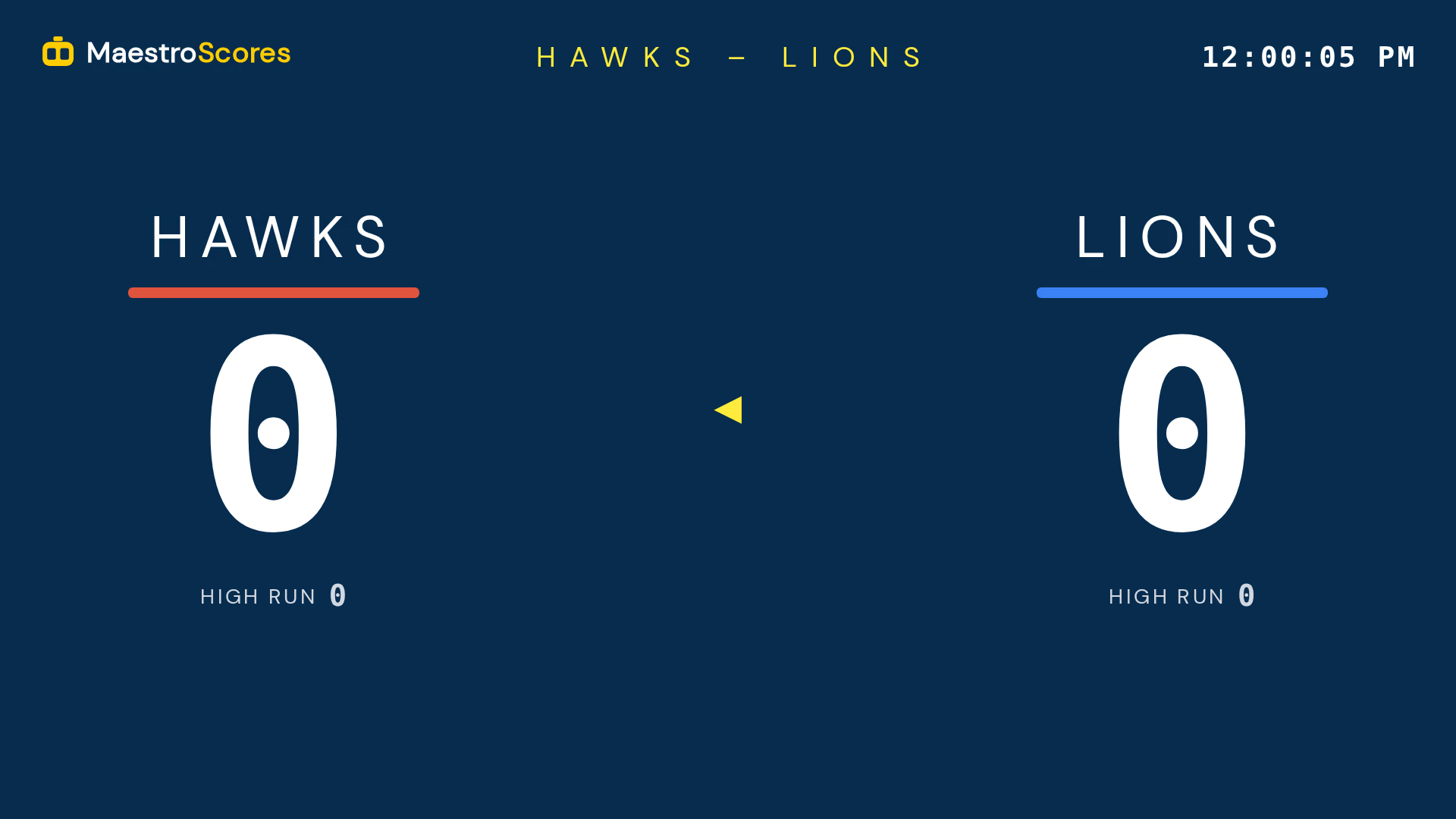
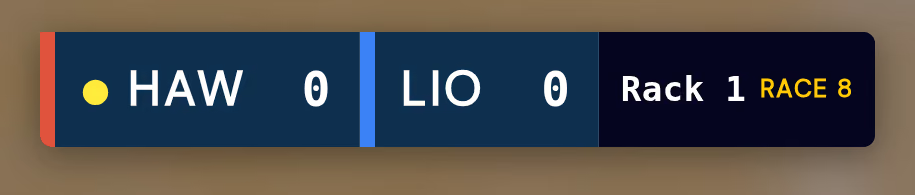
The ruleThe breaker plays the first shot of the rack from behind the head string, with the cue-ball in hand, and calls no ball.
The open table and the groups
After the break the table is open: before each shot the player calls a ball, and any ball except the 8-ball may be hit first. The player who legally pockets a called ball takes that group, solids or stripes, and the opponent takes the other. The board does not keep the groups: who has solids and who has stripes is not on the screens.
Called shots and the safety
Every shot after the break is called. The player names the ball and the pocket when they are not obvious, and only one ball is called on each shot. Balls of the player's group are called until the group is off the table, and then the 8-ball. The player may call Safety: In 8-ball, a call a player may make instead of a ball: the turn ends after the shot, and a ball pocketed on it stays down. 10-ball has no safety call. All terms instead: the turn then ends after the shot, and a ball pocketed on it stays down.
Winning the rack: the 8-ball last
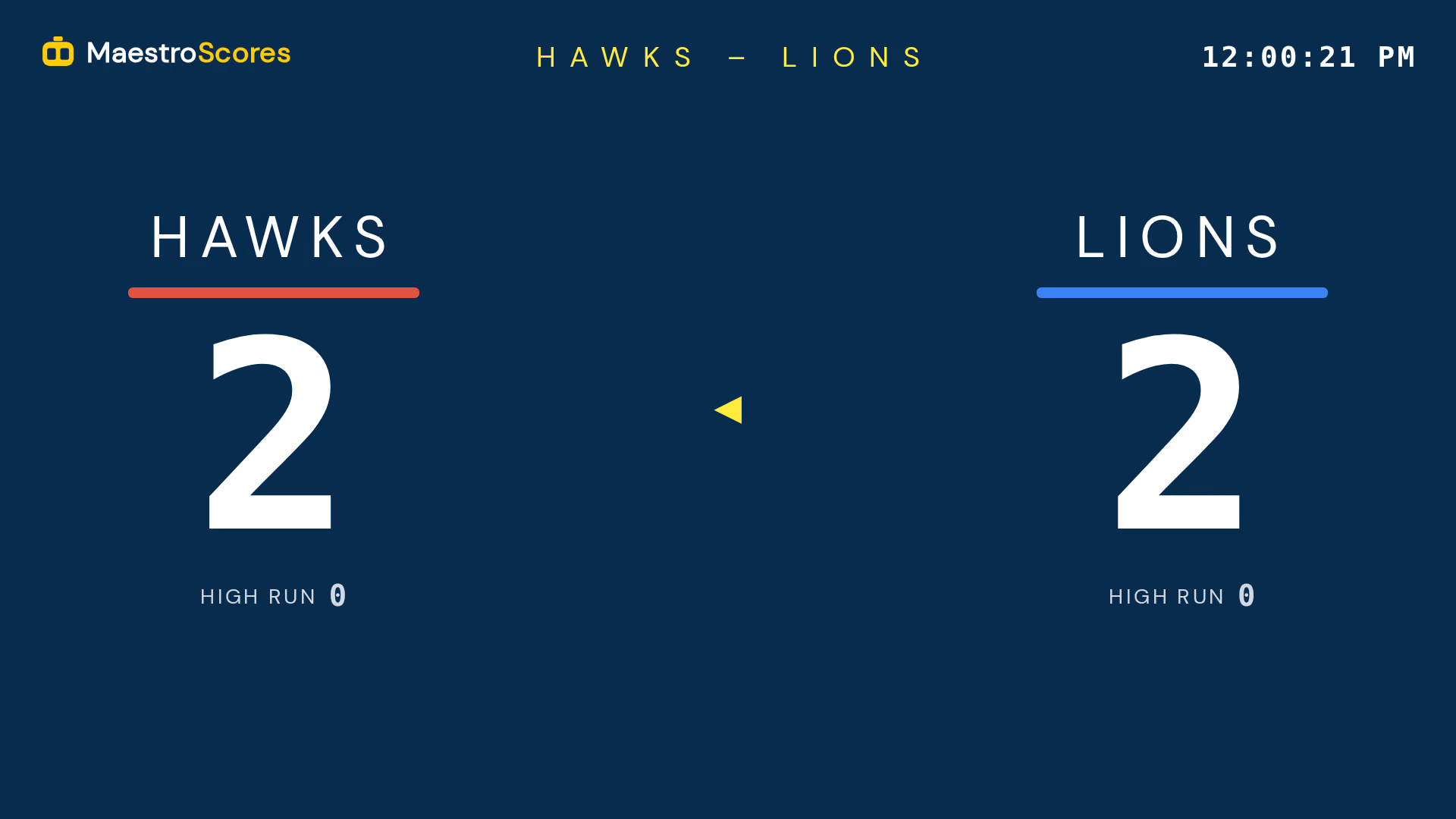
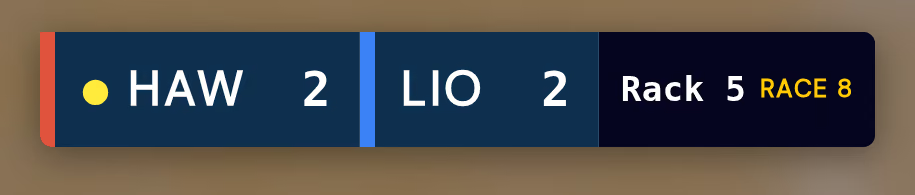
The player stays at the table while balls of the group go down legally, and wins the rack by pocketing the 8-ball on a called shot once the group is off the table. On the board you tap Rack under the player who won it: the score goes up by one, and the break passes to the other player, because 8-ball alternates the break rack by rack.
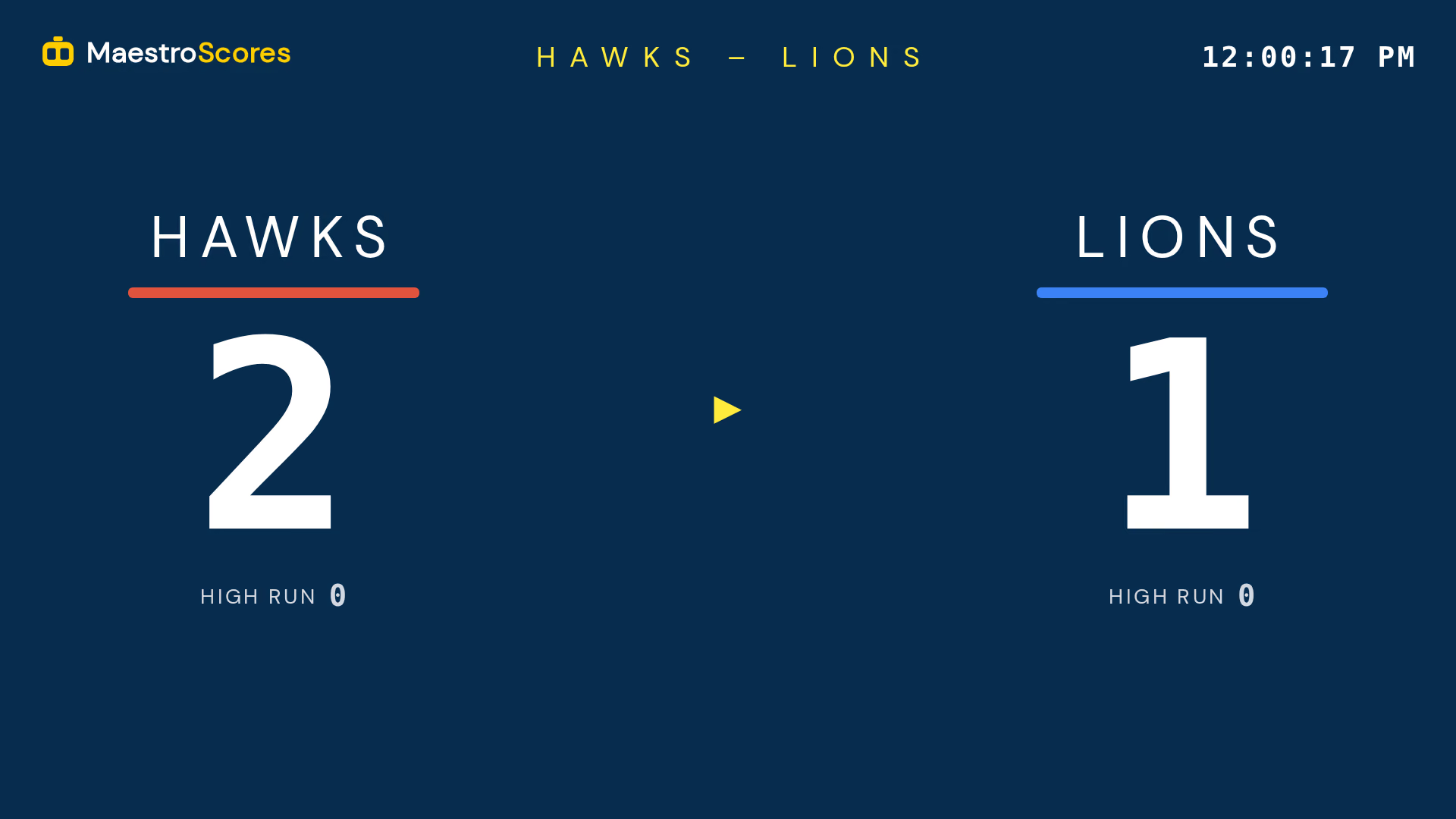
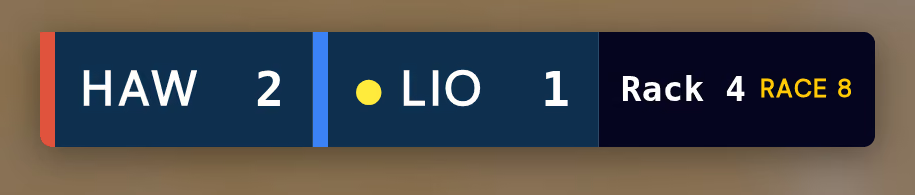
The ruleThe player who pockets the 8-ball on a called shot once the group is off the table wins the rack, and the break passes to the other player.
Losing the rack on the 8-ball
A player loses the rack, and the opponent wins it, by pocketing the 8-ball on a foul, before the group is off the table or in a pocket that was not called, or by driving the 8-ball off the table. None of these applies to the break. However the rack was won, you tap Rack under its winner.
The ruleA player who pockets the 8-ball on a foul, too early or in a pocket not called loses the rack, and the opponent wins it.
Fouls in 8-ball: the cue-ball in hand
After a standard foul the turn passes, and the opponent has the cue-ball in hand anywhere on the table. The standard fouls include the scratch, a first hit on a ball of the other group, no ball reaching a cushion after the hit when nothing was pocketed, and a ball driven off the table. A ball pocketed on a foul stays down, and so does a ball driven off the table: the only ball 8-ball ever puts back on the table is the 8-ball, when it goes in or off the table on the break and the balls are not racked again.
8-ball has no Three fouls in a row: In 9-ball and 10-ball, a player who fouls on three shots in a row in the same rack, with no legal shot between, loses the rack. 8-ball has no such rule. All terms rule: fouls in a row never lose the rack. So a foul changes nothing on the board, and the 8-ball board has no Foul key: you go on tapping Rack under the winner of each rack.
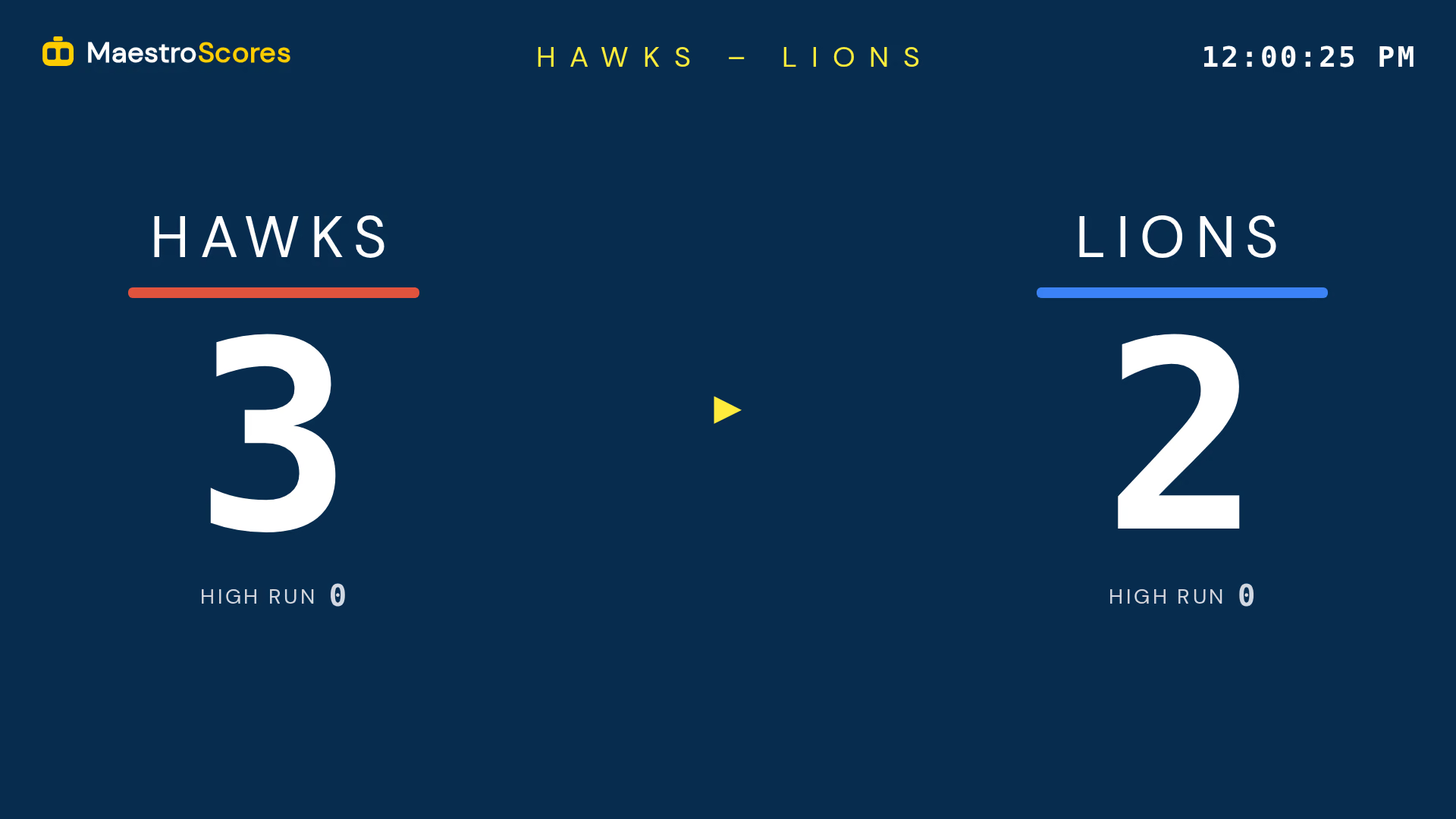
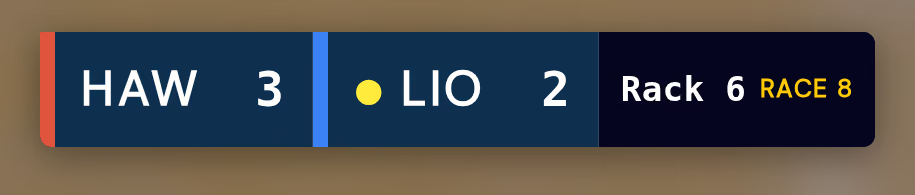
The rule8-ball has no three-foul rule: fouls in a row never lose the rack, so you tap Rack only under the winner of each rack.
The race: how many racks win an 8-ball match
An 8-ball match is a Race: How a match is won: the first player to win the number of racks the event sets takes the match. All terms to a number of racks the event sets, and at WPA world championships each division has its own races. The board starts 8-ball at a race to 8 and also offers races to 6, 7, 9 and 10. When both players are one rack from the race, the board marks both with Hill: the next rack wins the match.
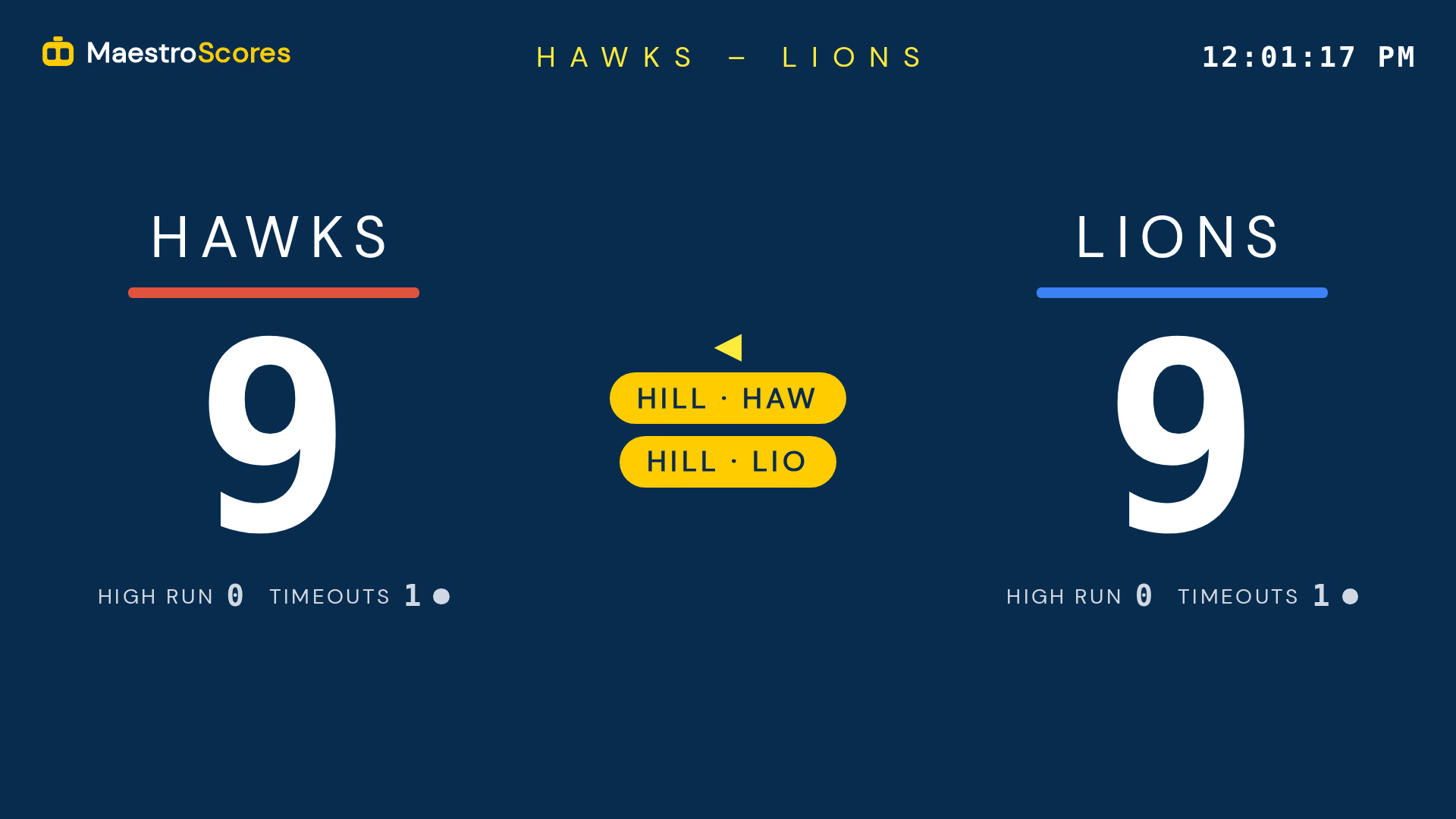

The ruleA player one rack from the race is On the hill: One rack away from winning the race. All terms; at 9-9 in a race to 10 the next rack wins the match.
| Division | Race to |
|---|---|
| Men | 8 or 10 racks |
| Women | 7 or 9 racks |
| Under 17 | 6 or 8 racks |
| Under 19 | 7 or 9 racks |
How the board keeps an 8-ball match
On MaestroScores you tap Breaks for the player who breaks first, then Rack under the winner of each rack. The board moves the break to the other player after every rack, shows Hill when a player is one rack from the race, and ends the match at the race with Final. The groups, the called shots and the cue-ball in hand stay with the players and the referee: no screen shows them.
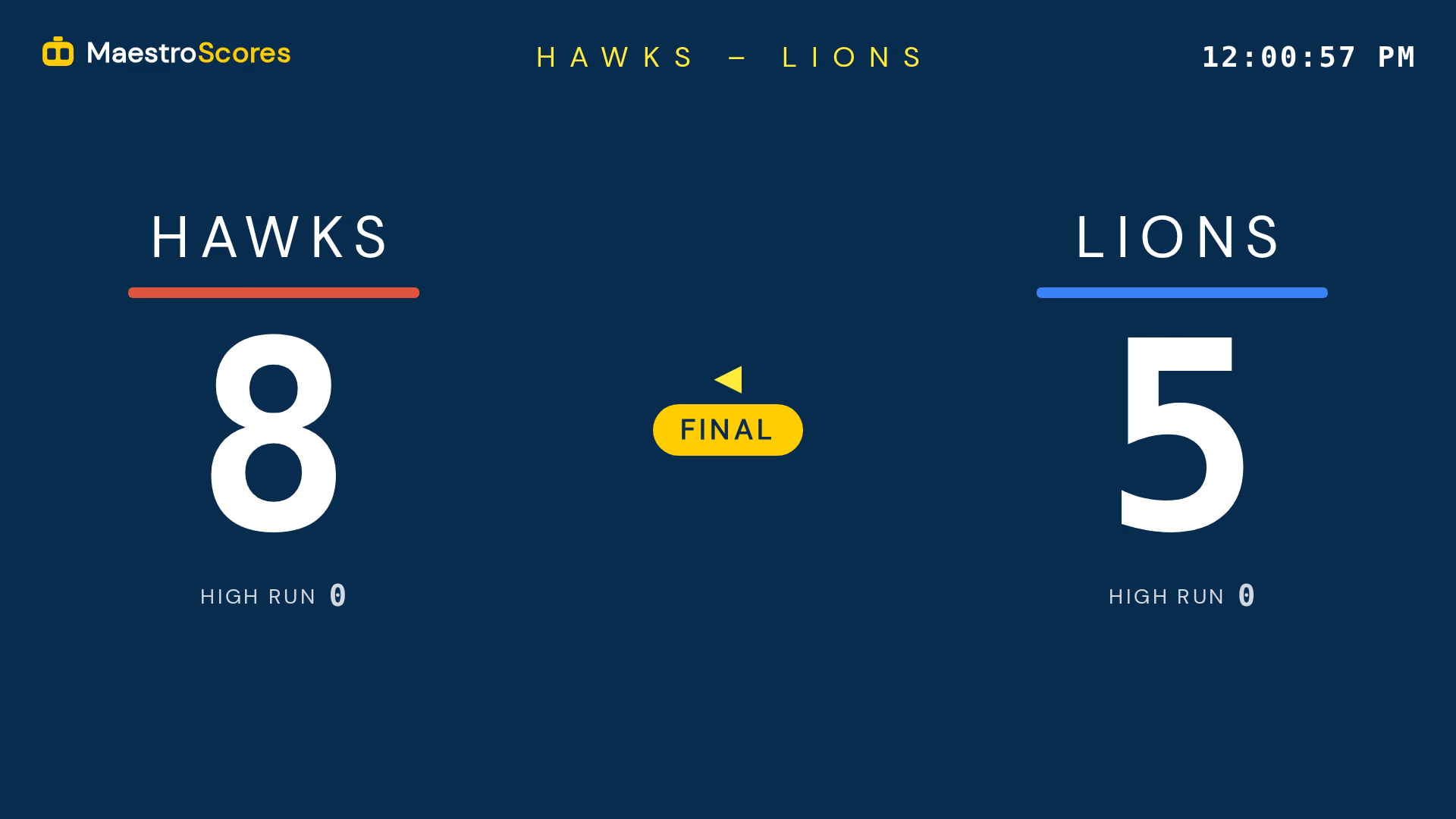

The ruleThe first player to win the race's number of racks wins the match, and the board ends it with Final.
FAQ
What are the rules of 8-ball pool?
Each player pockets a group of seven balls, solids or stripes, and then the 8-ball on a called shot to win the rack. A foul gives the opponent the cue-ball in hand, and pocketing the 8-ball early or on a foul loses the rack.
What happens if you pocket the 8-ball on the break?
On a legal break it is not a foul: the breaker chooses to spot the 8-ball and play on, or to break again. If the breaker fouls on that shot, the opponent chooses instead.
Do you lose if you scratch on the 8-ball?
Only if the 8-ball goes in, and never on the break. A player who pockets the 8-ball and fouls on the same shot, a scratch included, loses the rack. A scratch that leaves the 8-ball on the table is a standard foul: the opponent has the cue-ball in hand, and the rack goes on.
Do you have to call the pocket for the 8-ball?
Yes. Every shot after the break is called, and a player who pockets the 8-ball in a pocket that was not called loses the rack.
Is there a three-foul rule in 8-ball?
No. Under the WPA rules fouls in a row do not lose the rack in 8-ball, unlike 9-ball and 10-ball.
Keep 8-ball score on a board
Create a pool board, choose the 8-ball rules and the race, tap the winner of each rack on your phone, and open the Scoreboard link on any screen in the room.
Pool terms
- Break
- The first shot of a rack, which spreads the racked balls. In 8-ball, 9-ball and 10-ball the break alternates between the players.
- Called shot
- A shot for which the player names the ball, and the pocket when they are not obvious, before shooting. In 8-ball and 10-ball every shot after the break is called.
- Cue-ball in hand
- After a foul, the opponent may place the cue-ball anywhere on the table before shooting. After a foul on the 8-ball break it goes behind the head string instead.
- Extension
- Extra time a player may add to the shot clock, as often as the rules allow: in 10-ball once per player and rack.
- Foul
- A shot that breaks the rules. It ends the turn, and the opponent comes to the table with the cue-ball in hand, or in blackball with a free shot.
- Free shot
- Blackball's answer to a foul: the opponent plays on with an extra visit to the table.
- Group
- In 8-ball, the seven balls a player must pocket before the 8-ball: the solids or the stripes. The player who first legally pockets a called ball takes that group, and the opponent takes the other.
- Head string
- The line across the table near the head cushion. The breaker plays from behind it, with the cue-ball in hand.
- Illegal break
- A break that does not spread the balls as the game requires: in 8-ball too few balls reach a cushion, in 9-ball too few are pocketed or cross the head string. The opponent then chooses how play goes on.
- Lag
- Both players shoot a ball to the foot cushion and back at about the same time; the one whose ball stops closer to the head cushion chooses who breaks.
- Lowest-numbered ball
- The ball with the lowest number left on the table. In 9-ball and 10-ball the cue-ball must hit it first on every shot.
- On the hill
- One rack away from winning the race.
- Push out
- In 9-ball and 10-ball, a shot the player may announce right after a legal break: it need not hit the lowest-numbered ball first or drive a ball to a cushion, and the opponent then chooses who shoots next.
- Race
- How a match is won: the first player to win the number of racks the event sets takes the match.
- Rack
- One game within a match, from the break until a player wins it. Also the triangle the balls are set up in.
- Safety
- In 8-ball, a call a player may make instead of a ball: the turn ends after the shot, and a ball pocketed on it stays down. 10-ball has no safety call.
- Scratch
- A foul in which the cue-ball goes into a pocket.
- Shot clock
- A countdown for each shot, used when an official asks for one.
- Straight pool
- Also called 14.1 continuous: every ball pocketed legally is a point, and a match is played to a set number of points.
- The 8-ball
- The ball numbered 8. In 8-ball it is pocketed last, on a called shot once the player's group is off the table, and it wins the rack.
- Three fouls in a row
- In 9-ball and 10-ball, a player who fouls on three shots in a row in the same rack, with no legal shot between, loses the rack. 8-ball has no such rule.
- WPA Rules of Play (effective 2025-09-15)wpapool.com
- The WPA Sports Regulationswpapool.com