Pool is played on a table with six pockets: each player uses a cue to strike the white cue-ball into the object-balls and drive them into the pockets. In 8-ball, 9-ball and 10-ball each game is a Rack: One game within a match, from the break until a player wins it. Also the triangle the balls are set up in. All terms, the player who wins a rack scores one point, and a match is a Race: How a match is won: the first player to win the number of racks the event sets takes the match. All terms to a number of racks. The Lag: Both players shoot a ball to the foot cushion and back at about the same time; the one whose ball stops closer to the head cushion chooses who breaks. All terms decides who breaks first, and after that the Break: The first shot of a rack, which spreads the racked balls. In 8-ball, 9-ball and 10-ball the break alternates between the players. All terms alternates.
This page plays one 8-ball match through under the WPA Rules of Play, effective 15 September 2025, on a MaestroScores scoreboard. You tap the player who won each rack on your phone, and the board keeps the score, moves the break and ends the match at the race. What 8-ball, 9-ball and 10-ball each play differently is on the game's own page.
How pool scoring works: racks and a race
Pool is scored by the rack: the player who wins a rack scores one point, however many balls each player pocketed in it. These are the rules most games of pool share in the WPA Rules of Play:
- A player who pockets a ball legally stays at the table and shoots again. A miss or a Foul: A shot that breaks the rules. It ends the turn, and the opponent comes to the table with the cue-ball in hand, or in blackball with a free shot. All terms passes the turn to the opponent.
- The player who wins the lag chooses who breaks the first rack. After that the break alternates between the players.
- Each rack won counts one point.
- A match is a race: the first player to win the number of racks the event sets wins the match.
The start of a match: the lag and the first break
The lag decides who breaks first. Both players shoot a ball from the head of the table to the foot cushion and back at about the same time, and the player whose ball stops closer to the head cushion wins the lag and chooses who breaks. On the board you tap Breaks for the player who breaks the first rack.
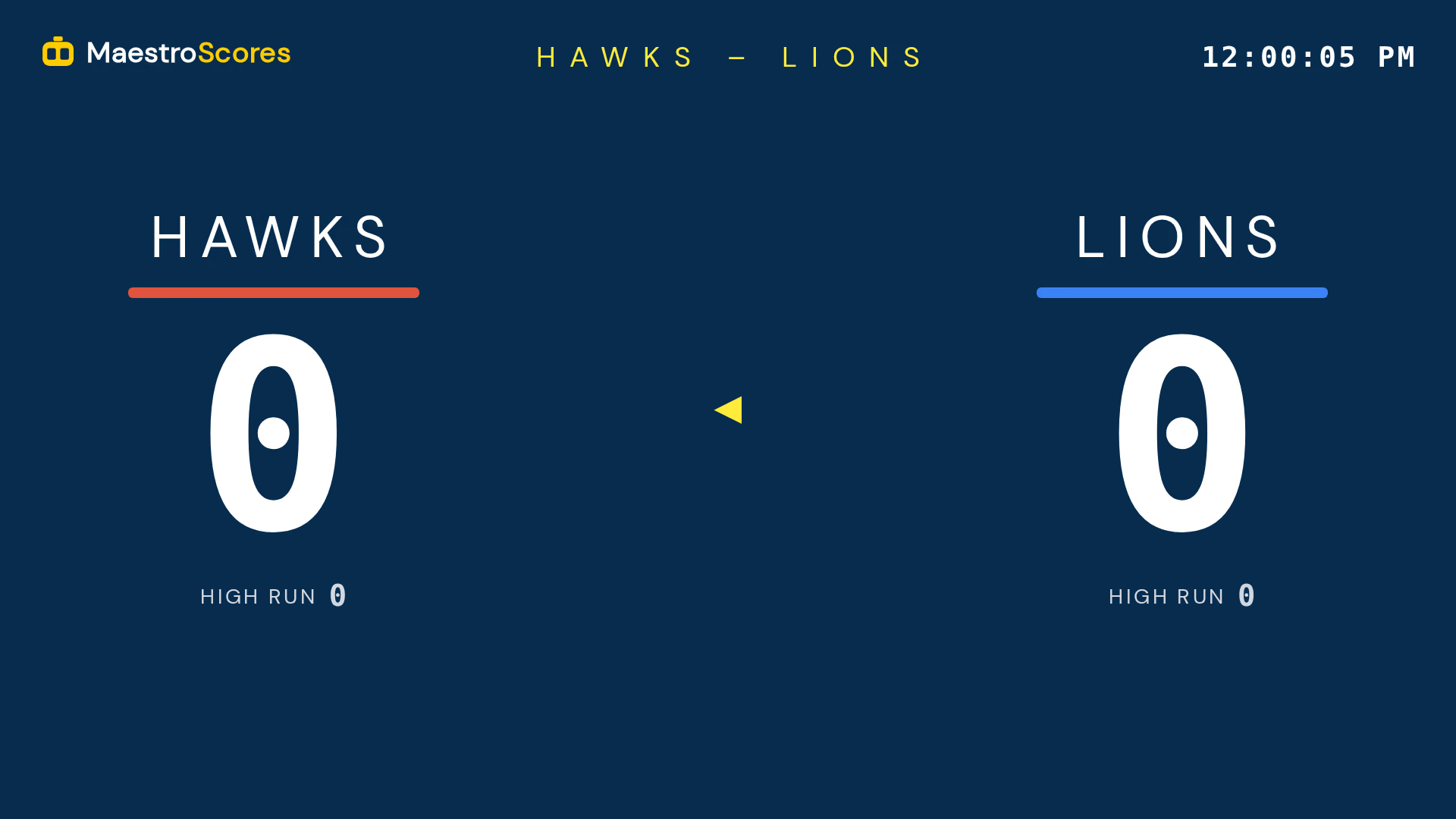
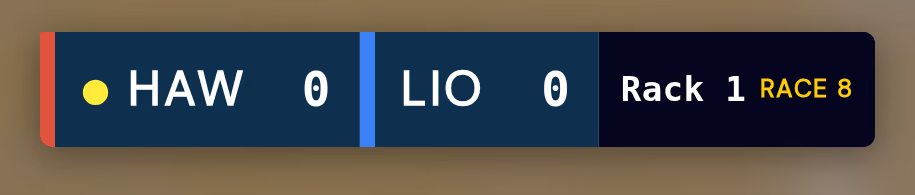
The ruleThe player who wins the lag chooses who breaks the first rack; after that the break alternates.
A rack won: one point, and the break passes
A rack ends when a player wins it under the game's rules, in 8-ball by pocketing The 8-ball: The ball numbered 8. In 8-ball it is pocketed last, on a called shot once the player's group is off the table, and it wins the rack. All terms after the player's own Group: In 8-ball, the seven balls a player must pocket before the 8-ball: the solids or the stripes. The player who first legally pockets a called ball takes that group, and the opponent takes the other. All terms of seven balls. The winner of the rack scores one point, and the other player breaks the next rack. On the board you tap Rack under the player who won it: the score goes up by one on every screen, and the break passes to the other player by itself.
A player can also lose the rack. In 8-ball a player who pockets the 8-ball before the group is off the table, on a foul or in a pocket that was not called, or drives it off the table, loses the rack, except on the break. You then tap Rack under the opponent, who won it.
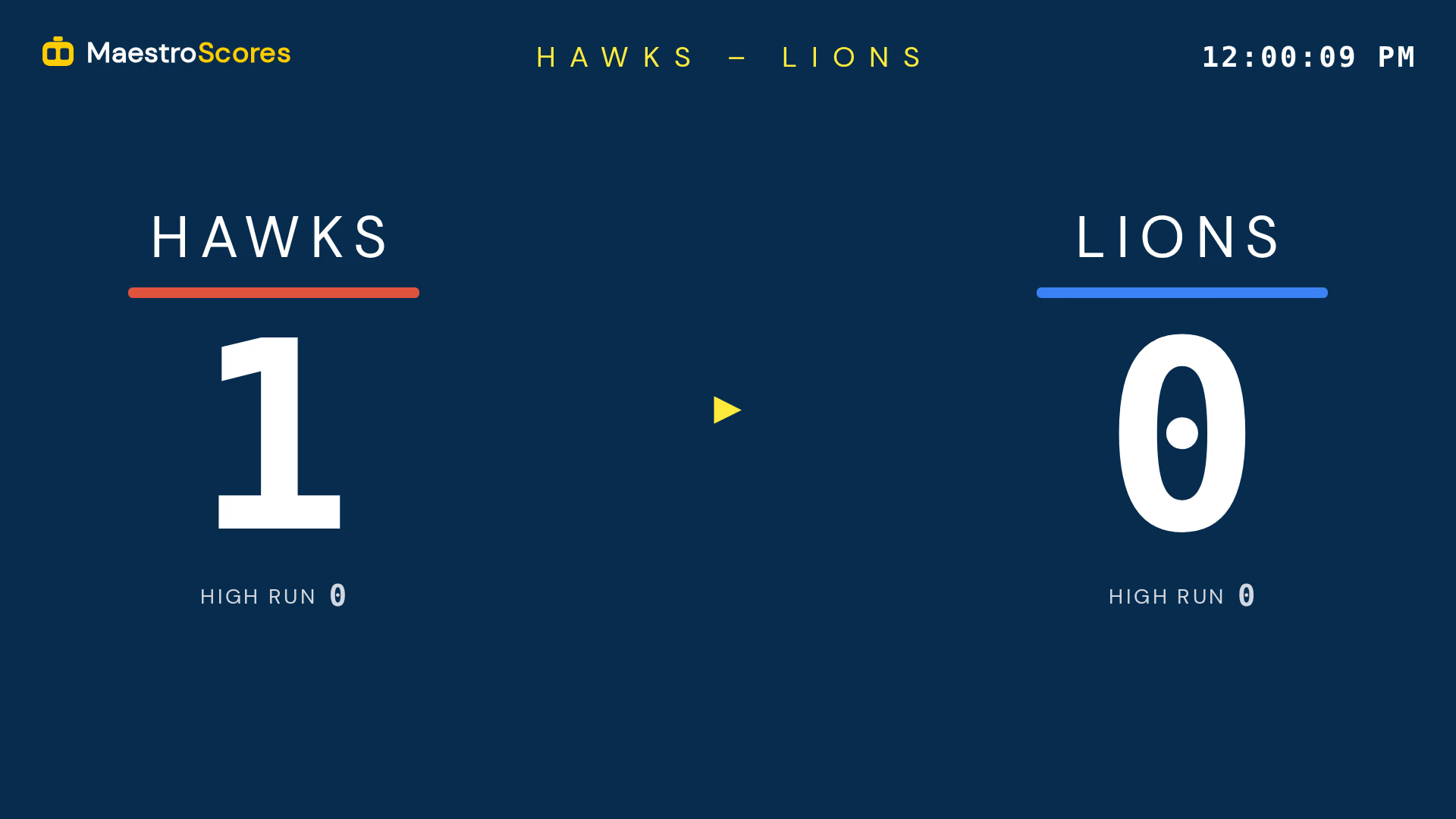
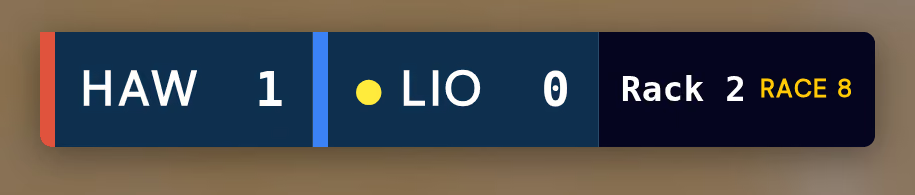
The ruleEach rack won counts one point, and the break passes to the other player.
Fouls and the scratch: the cue-ball in hand
A foul ends the player's turn. In 8-ball, 9-ball and 10-ball the opponent then comes to the table with the Cue-ball in hand: After a foul, the opponent may place the cue-ball anywhere on the table before shooting. After a foul on the 8-ball break it goes behind the head string instead. All terms and may place it anywhere on the table, except after a Scratch: A foul in which the cue-ball goes into a pocket. All terms on the break in 8-ball, when it goes behind the Head string: The line across the table near the head cushion. The breaker plays from behind it, with the cue-ball in hand. All terms. The most common foul is the scratch, a shot on which the cue-ball goes into a pocket. Other standard fouls are a first hit on a ball the player may not hit first, a shot on which nothing is pocketed and no ball reaches a cushion after the hit, and a ball driven off the table.
In 9-ball and 10-ball Three fouls in a row: In 9-ball and 10-ball, a player who fouls on three shots in a row in the same rack, with no legal shot between, loses the rack. 8-ball has no such rule. All terms lose the rack, and the board counts them when you tap Foul; 8-ball has no such rule. Blackball plays fouls its own way: the opponent gets a Free shot: Blackball's answer to a foul: the opponent plays on with an extra visit to the table. All terms.
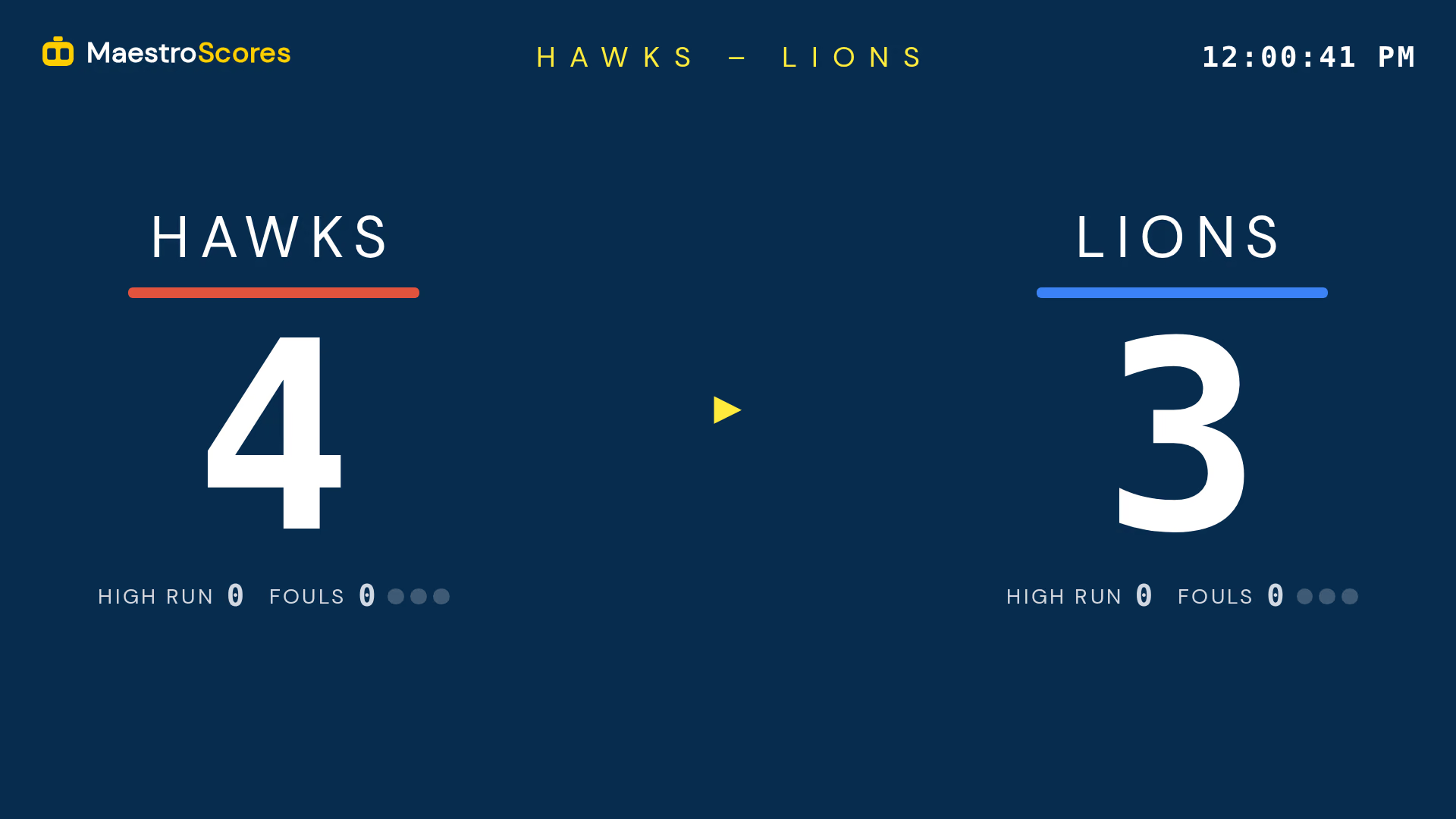
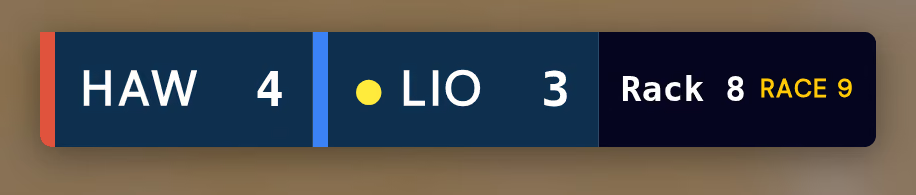
The ruleA foul gives the opponent the cue-ball in hand; in 9-ball and 10-ball three fouls in a row lose the rack.
One rack from the match: the hill
A player who needs one more rack to win the match is On the hill: One rack away from winning the race. All terms. In a race to 8 that is a player with 7 racks, and at 7 all the next rack decides the match. The board marks it by itself and shows Hill for the player, or for both.
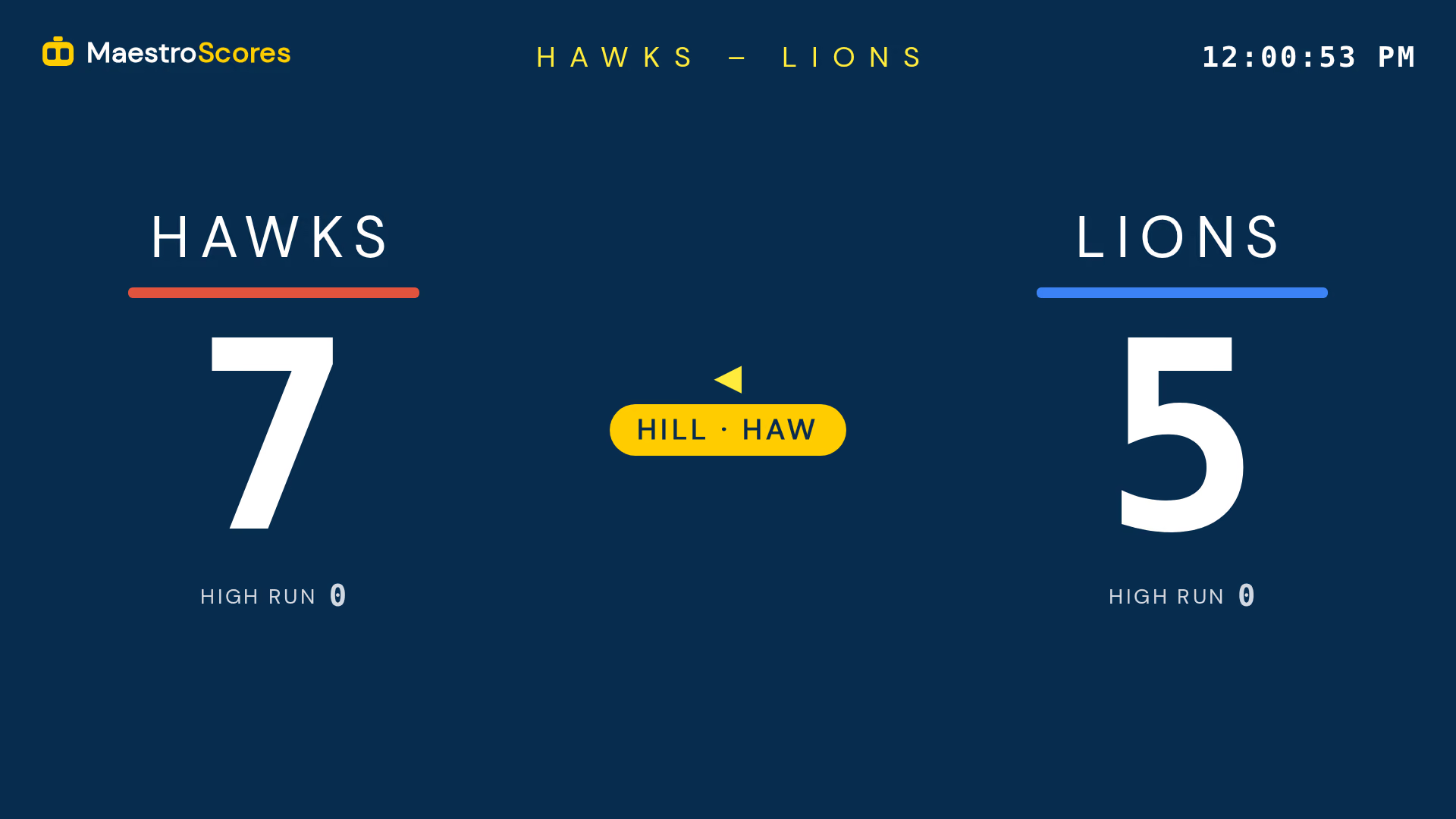

The ruleA player one rack from winning the race is on the hill.
Winning the match: the first to 8 racks
The match ends the moment a player wins the last rack of the race. The board ends it by itself and shows Final, and Reset this game starts the next match on the same screens.
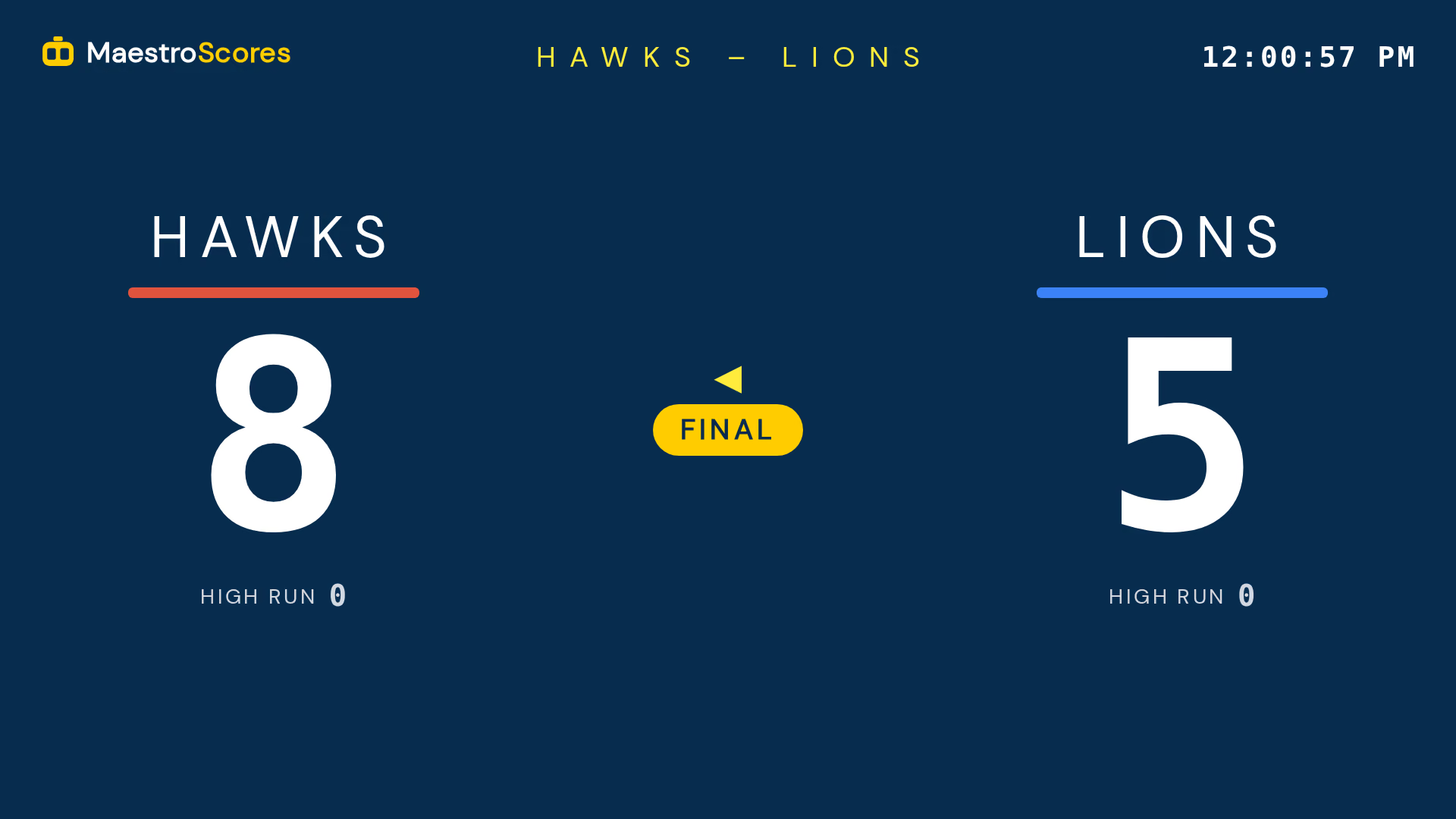

The ruleThe first player to win the race's number of racks wins the match.
Time-outs and shot clocks
Time-outs and shot clocks are tournament rules. The WPA Playing Regulations give each player one time-out of five minutes, taken between racks, in matches played over 9 racks at 8-ball and over 13 racks at 9-ball and 10-ball. A Shot clock: A countdown for each shot, used when an official asks for one. All terms is used only when an official asks for one, and the WPA recommends 35 seconds a shot with one 25-second Extension: Extra time a player may add to the shot clock, as often as the rules allow: in 10-ball once per player and rack. All terms per player and rack.
On MaestroScores the rules of 8-ball give that time-out in a race to 9 racks or more, the 9-ball and 10-ball rules in a race to 13 or more, and the 10-ball rules' Time-out in every match rule gives one per player and match in any race. The 10-ball rules also carry a shot clock you can switch on, heyball's rules always run a shot clock, and blackball offers one.
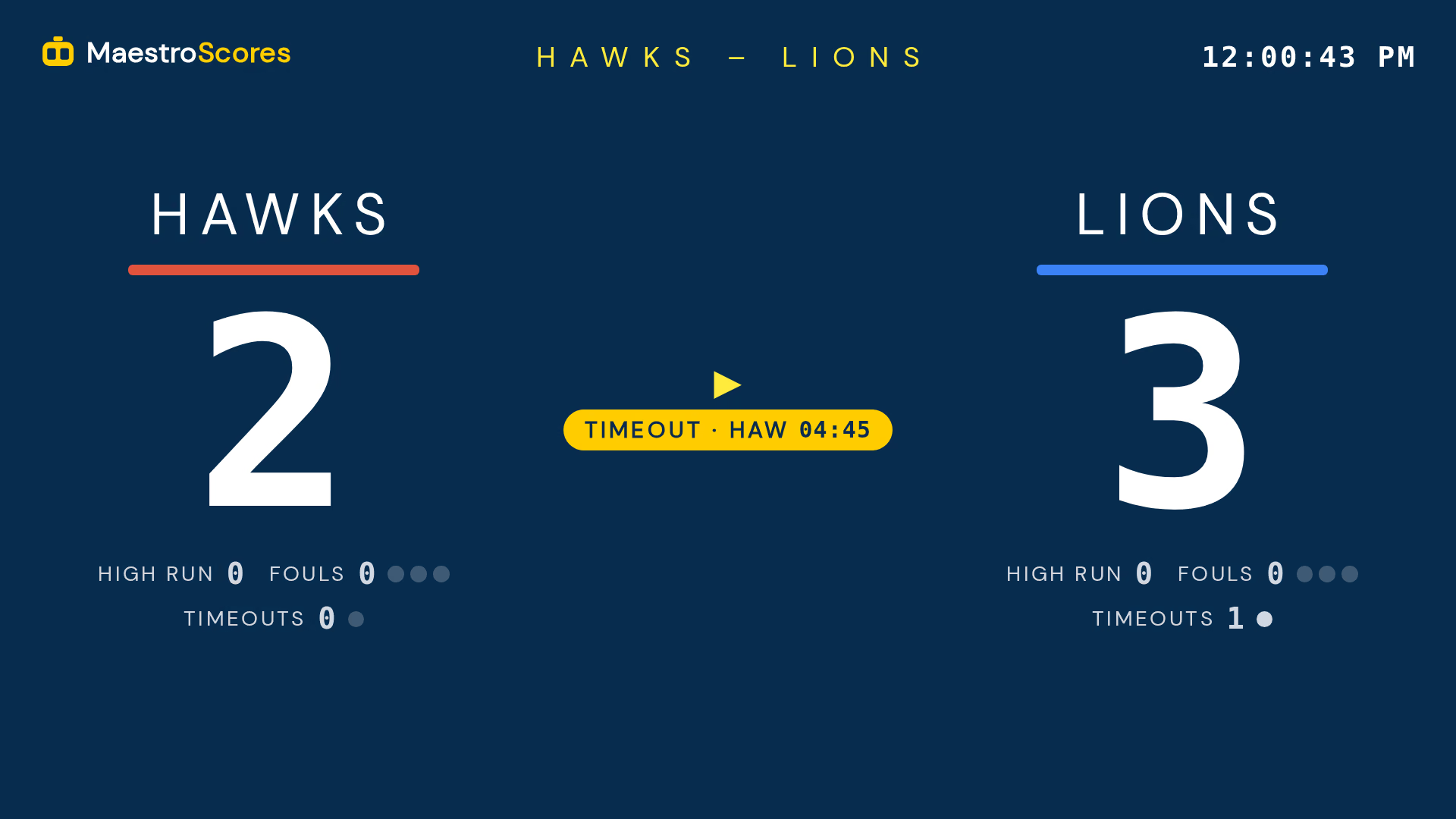

The ruleA time-out is taken between racks, one per player and match where the rules give it.
The games of pool on the board
MaestroScores carries seven games of pool, each from its own rulebook, and you choose one when you create the board. Straight pool: Also called 14.1 continuous: every ball pocketed legally is a point, and a match is played to a set number of points. All terms and Russian pyramid count points instead of racks.
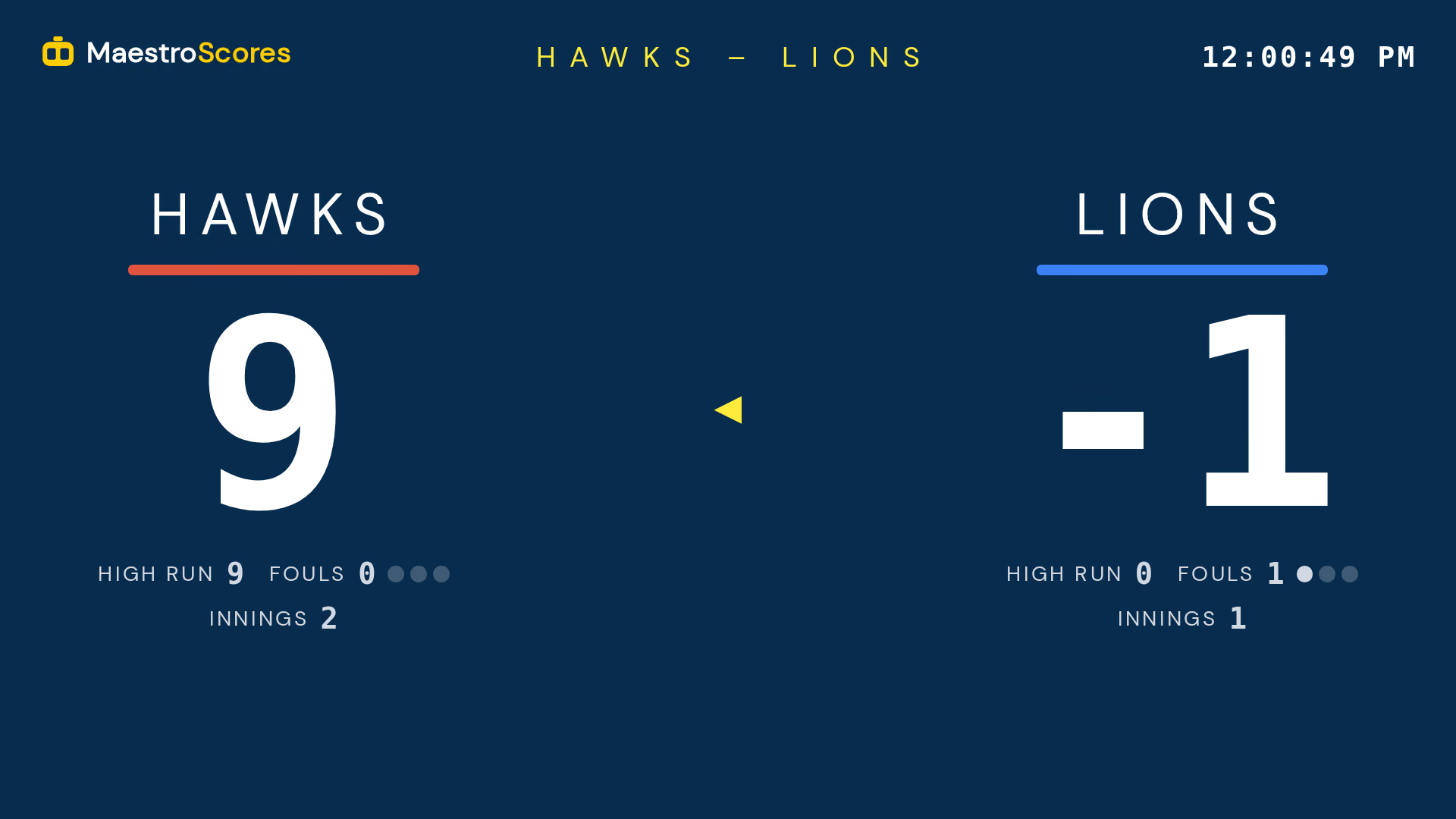

The ruleStraight pool counts balls, not racks: each ball pocketed legally is a point, and a foul costs one.
| Game | How a rack or game is won | On the board |
|---|---|---|
| 8-ball | Pocket your group, solids or stripes, then the 8-ball on a called shot | A race to 8 racks |
| 9-ball | Hit the lowest-numbered ball first; the 9-ball wins the rack on any legal shot | A race to 9 racks; three fouls in a row lose the rack |
| 10-ball | Call every shot; the 10-ball wins only as the last ball on the table | A race to 8 racks; three fouls in a row lose the rack |
| Blackball | Reds and yellows: pocket your group, then the black; shots are not called, and a foul gives the opponent a free shot | Frames with alternating breaks, and a 45-second shot clock if you switch it on |
| Heyball | Pocket your group, then the 8-ball | A race to 5 racks with alternating breaks and a 45-second shot clock |
| Russian pyramid (free pyramid) | Any ball may serve as the cue-ball; the first to 8 points wins the game, and a foul gives the opponent a point | Games won, with the points of the game in play under each score, and the break alternating game by game |
| Straight pool (14.1) | Each called ball pocketed scores a point; a foul costs 1 point and a breaking foul 2 | Points to 100, 125 or 150, and a score can go below zero |
FAQ
What are the basic rules of pool?
Players take turns at the table, and a player who pockets a ball legally shoots again. In 8-ball, 9-ball and 10-ball the winner of each rack scores one point, the break alternates, and the first player to the agreed number of racks wins the match.
Who breaks first in pool?
The winner of the lag chooses who breaks the first rack. After that the break alternates between the players, rack by rack.
What happens when you scratch in pool?
A scratch, the cue-ball going into a pocket, is a foul, and the turn passes to the opponent. In 8-ball, 9-ball and 10-ball the opponent then has the cue-ball in hand anywhere on the table, except after a scratch on the break in 8-ball, when the cue-ball in hand goes behind the head string. In 8-ball a scratch loses the rack only if the 8-ball goes in on the same shot, and never on the break.
How many racks are in a pool match?
The event sets the race. WPA world championships race men to 8 or 10 racks at 8-ball and 10-ball, and to 9, 11 or 13 racks at 9-ball.
How do you keep score in pool?
Count the racks each player wins, or the points in straight pool. On MaestroScores you tap the player who won each rack on your phone, and the board keeps the score, the break and the end of the match on every screen.
Keep pool score on a board
Create a pool board, choose the game and the race, tap the player who won each rack on your phone, and open the Scoreboard link on any screen in the room.
Pool terms
- Break
- The first shot of a rack, which spreads the racked balls. In 8-ball, 9-ball and 10-ball the break alternates between the players.
- Called shot
- A shot for which the player names the ball, and the pocket when they are not obvious, before shooting. In 8-ball and 10-ball every shot after the break is called.
- Cue-ball in hand
- After a foul, the opponent may place the cue-ball anywhere on the table before shooting. After a foul on the 8-ball break it goes behind the head string instead.
- Extension
- Extra time a player may add to the shot clock, as often as the rules allow: in 10-ball once per player and rack.
- Foul
- A shot that breaks the rules. It ends the turn, and the opponent comes to the table with the cue-ball in hand, or in blackball with a free shot.
- Free shot
- Blackball's answer to a foul: the opponent plays on with an extra visit to the table.
- Group
- In 8-ball, the seven balls a player must pocket before the 8-ball: the solids or the stripes. The player who first legally pockets a called ball takes that group, and the opponent takes the other.
- Head string
- The line across the table near the head cushion. The breaker plays from behind it, with the cue-ball in hand.
- Illegal break
- A break that does not spread the balls as the game requires: in 8-ball too few balls reach a cushion, in 9-ball too few are pocketed or cross the head string. The opponent then chooses how play goes on.
- Lag
- Both players shoot a ball to the foot cushion and back at about the same time; the one whose ball stops closer to the head cushion chooses who breaks.
- Lowest-numbered ball
- The ball with the lowest number left on the table. In 9-ball and 10-ball the cue-ball must hit it first on every shot.
- On the hill
- One rack away from winning the race.
- Push out
- In 9-ball and 10-ball, a shot the player may announce right after a legal break: it need not hit the lowest-numbered ball first or drive a ball to a cushion, and the opponent then chooses who shoots next.
- Race
- How a match is won: the first player to win the number of racks the event sets takes the match.
- Rack
- One game within a match, from the break until a player wins it. Also the triangle the balls are set up in.
- Safety
- In 8-ball, a call a player may make instead of a ball: the turn ends after the shot, and a ball pocketed on it stays down. 10-ball has no safety call.
- Scratch
- A foul in which the cue-ball goes into a pocket.
- Shot clock
- A countdown for each shot, used when an official asks for one.
- Straight pool
- Also called 14.1 continuous: every ball pocketed legally is a point, and a match is played to a set number of points.
- The 8-ball
- The ball numbered 8. In 8-ball it is pocketed last, on a called shot once the player's group is off the table, and it wins the rack.
- Three fouls in a row
- In 9-ball and 10-ball, a player who fouls on three shots in a row in the same rack, with no legal shot between, loses the rack. 8-ball has no such rule.
- WPA Rules of Play (effective 2025-09-15)wpapool.com
- The WPA Sports Regulationswpapool.com
- WPA Playing Regulations (effective 2025-09-15)wpapool.com
- WPA Rules of Heyballwpapool.com
- WPA Pyramid General Ruleswpapool.com
- WEPF International Eightball Rules (Revision 2c)wepf.org