A soccer match is played by two teams of up to 11 players, one of them the goalkeeper, over two Half: One of the two equal parts of a match. The teams change ends for the second half. All terms of 45 minutes. A team scores a goal when the whole of the ball passes over the Goal line: The line at each end of the field. A goal is scored when the whole of the ball passes over it, between the goalposts and under the crossbar. All terms, between the posts and under the crossbar. The team with more goals at the end wins, and equal goals make a Draw: A match that ends with both teams on the same number of goals, or none. In a league the draw stands. All terms.
This page plays one match through under the IFAB Laws of the Game 2026/27, from the Kick-off: The kick that starts each half and each period of extra time, and restarts play after a goal. All terms to the final whistle, on a MaestroScores scoreboard. Each step shows the board at that moment. You tap Goal for the team that scored on your phone, and the screens show it at once.
How soccer scoring works
Soccer has one way to score: the goal, and each goal counts one. A goal is scored when the whole of the ball has passed over the goal line, between the goalposts and under the crossbar, and the scoring team has committed no offence. These are the basic rules of a match under the IFAB Laws of the Game:
- Two teams of up to 11 players each, and one player in each team is the goalkeeper.
- Two halves of 45 minutes, with a Half-time: The interval between the two halves, when the players may rest. All terms interval of up to 15 minutes.
- The referee adds time at the end of each half for time lost, for example to substitutions, injuries and goal celebrations.
- The team with more goals wins. Equal goals, or no goals, make a draw.
- Extra time: Two equal periods of no more than 15 minutes each, played when a level match must have a winner. Both are played in full. All terms and a Penalty shoot-out: Kicks from the penalty mark, taken after a level match has ended when a winner is needed: five each, taken alternately, then one each until one team leads. All terms are played only when a competition needs a winner.
The start of the match: the kick-off
A kick-off starts each half of the match, and play restarts with a kick-off after every goal. Before the match the referee tosses a coin. The team that wins the toss chooses which goal to attack in the first half, or to take the kick-off. The other restarts are the throw-in, when the whole of the ball goes out over a touchline, the long side line, and the team that did not touch it last throws it back in; the goal kick, when the ball goes out over the goal line, not into the goal, after an attacker touched it last; and the Corner kick: A restart for the attacking team, kicked from the corner of the field, when the ball goes out over the goal line last touched by a defender, without a goal being scored. All terms, when it goes out over the goal line after a defender touched it last. On the board, you start the match clock at the referee's whistle for the kick-off.
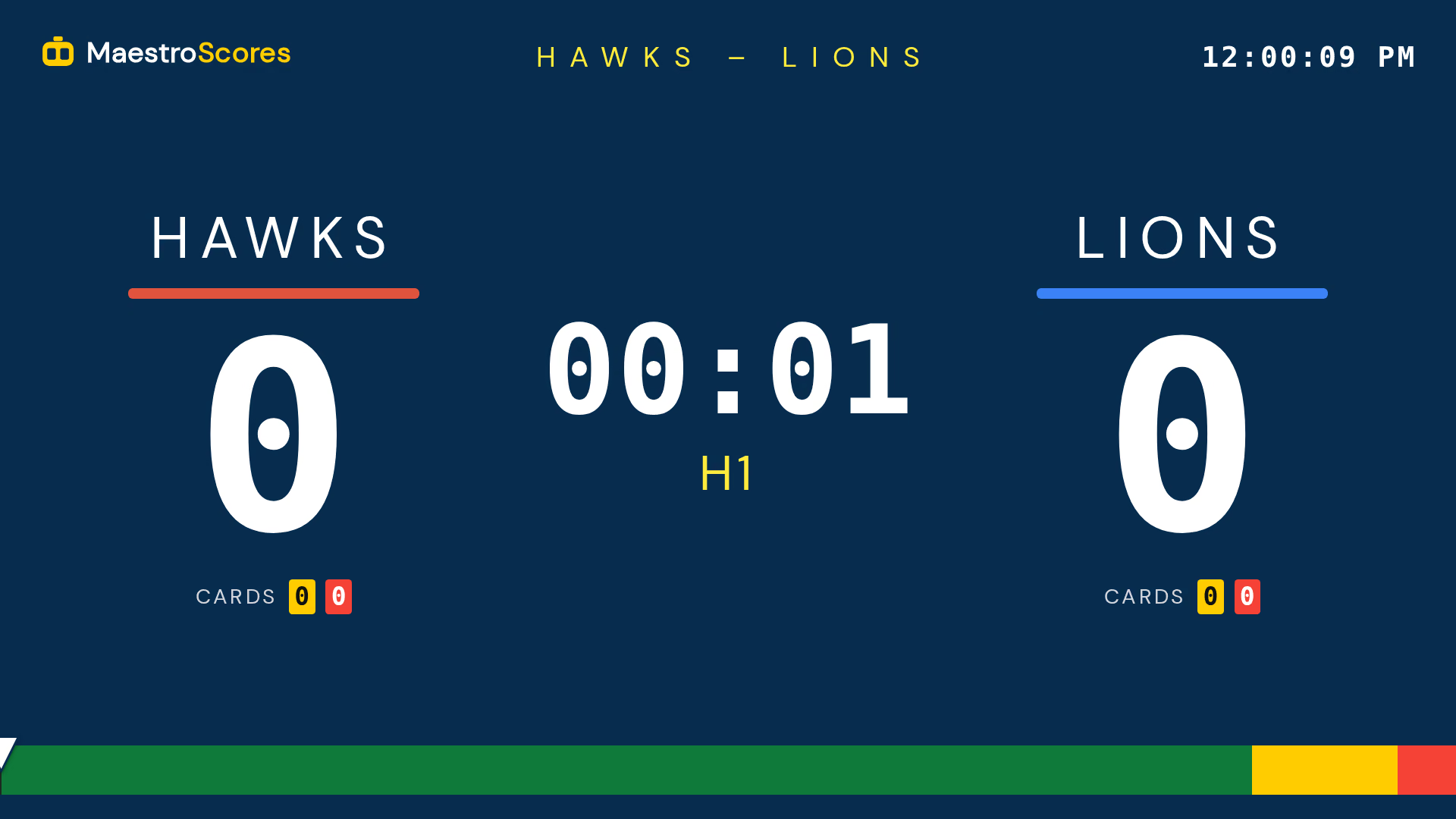

The ruleA kick-off starts each half, and play restarts with a kick-off after every goal.
A goal: the whole ball over the goal line
A goal counts only when the whole of the ball is over the goal line. A ball on the line, or only partly over it, is not a goal yet. After a goal, the team that conceded it takes the kick-off. On the Scorekeeper page you tap Goal under the team that scored, and the Scoreboard and the Scorebug show the new score at the same moment.
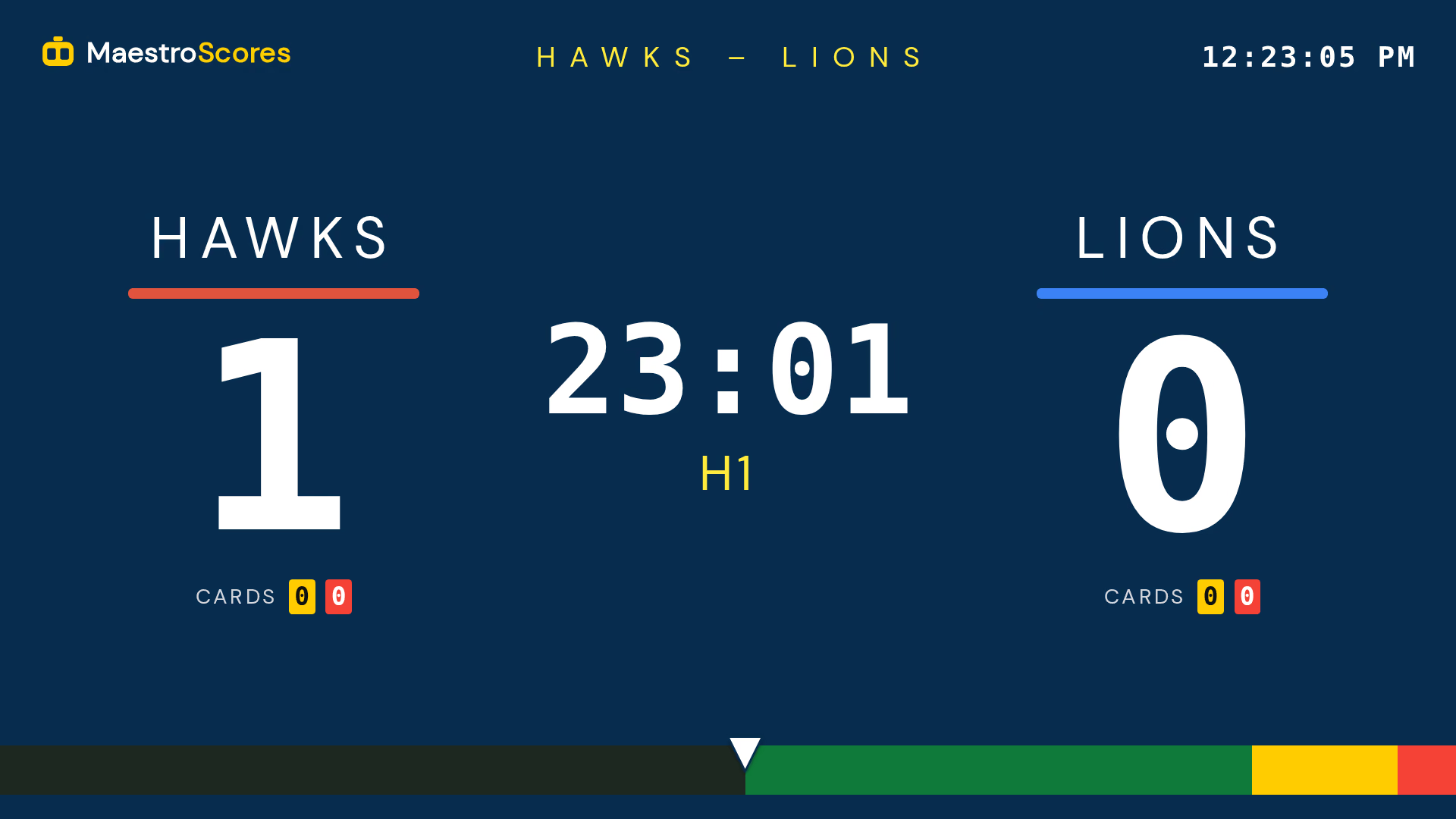

The ruleA goal counts only when the whole of the ball is over the goal line, and each goal counts one.
Half-time and the second half
The first half ends when the referee blows the whistle after the Added time: Time the referee adds at the end of a half for playing time lost, for example to substitutions, injuries and goal celebrations. All terms. The players then have a half-time interval of up to 15 minutes. On the board, you tap Next period at the whistle, and the screens show Halftime.
For the second half the teams change ends and attack the other goal. The team that did not take the first kick-off starts the second half. You start the clock again at the kick-off, and the second half begins.
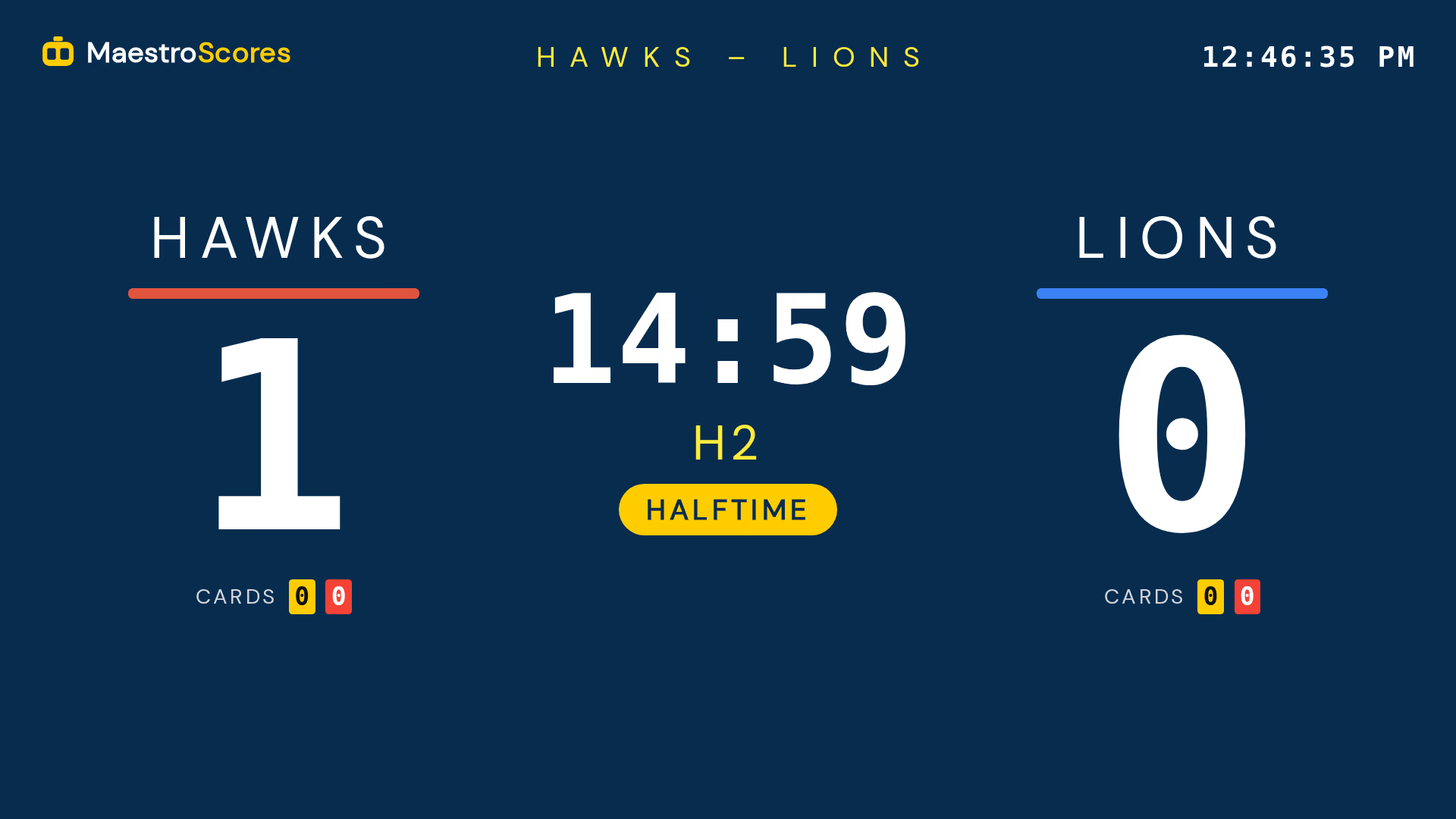

The ruleThe first half ends at the referee's whistle after the added time, and a half-time interval of up to 15 minutes follows.
Full time: a win or a draw
The match ends when the referee blows the final whistle after the second half and its added time. The team with more goals wins the match. When both teams have scored the same number of goals, or none, the match is a draw. On the board, you tap Final, and every screen shows the result.
A cup match that must have a winner does not end level. After a draw it goes on to extra time, two periods of up to 15 minutes, and then to kicks from the penalty mark if the score is still level.
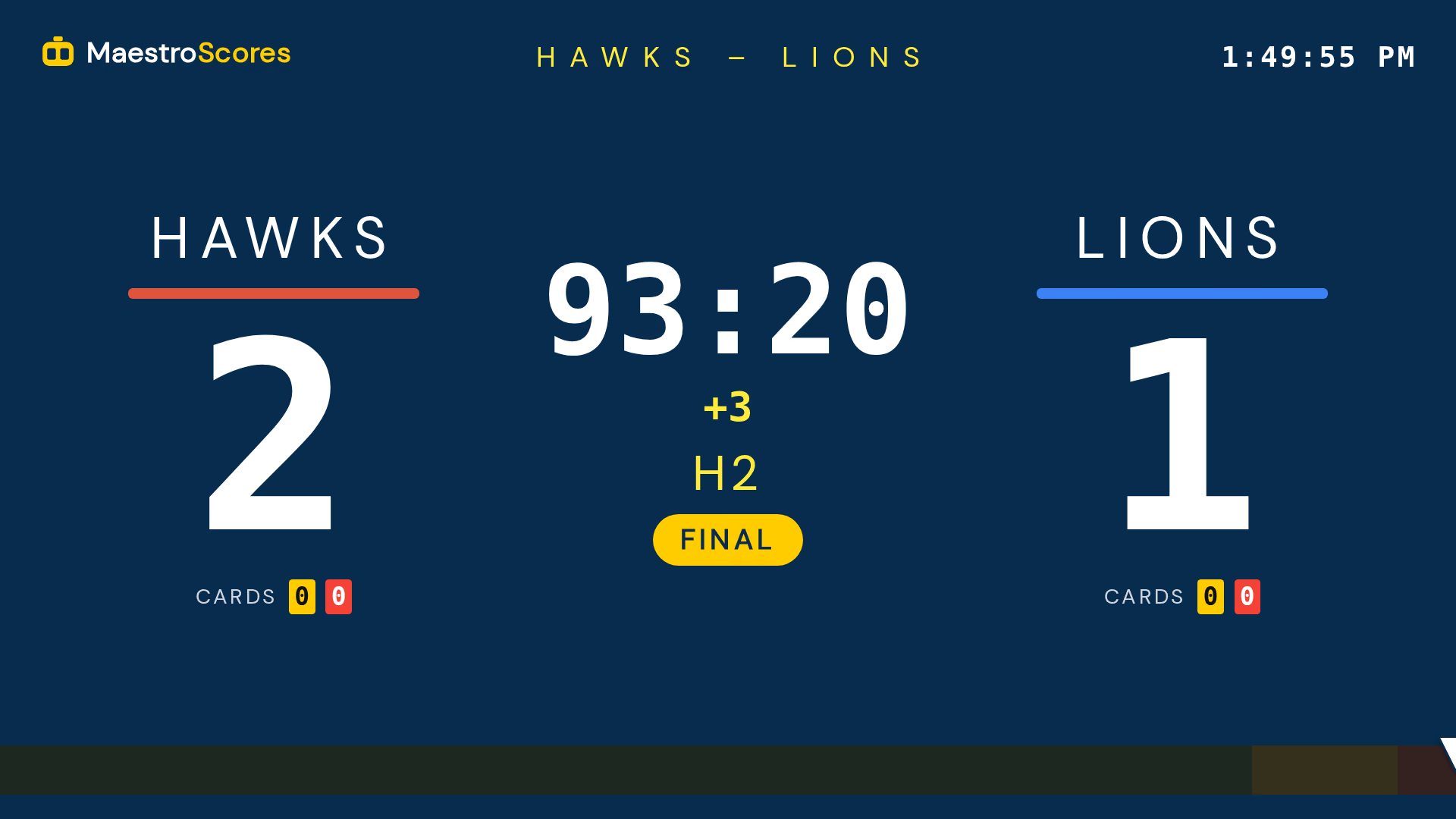

The ruleThe team with more goals at the final whistle wins the match; equal goals make a draw.
Fouls and cards
A foul gives the other team a Free kick: The kick a foul gives the other team. A direct free kick is given for fouls such as kicking, tripping, pushing or holding an opponent, or a handball offence; an indirect free kick for lesser offences, such as playing in a dangerous manner. All terms. A direct free kick is given when a player kicks, trips, pushes or charges an opponent carelessly, recklessly or with excessive force, holds an opponent, or commits a Handball: Touching the ball with a hand or arm in a way the Laws forbid. It is a direct free kick offence for every player except the goalkeeper inside their own penalty area. All terms offence. An indirect free kick is given for lesser offences, such as playing in a dangerous manner or impeding an opponent without contact. When a player commits a direct free kick offence inside their own Penalty area: The marked area in front of each goal. A direct free kick offence there by the defending team gives a penalty kick, and inside it the goalkeeper may handle the ball. All terms, the other team gets a Penalty kick: A kick at goal from the penalty mark, awarded when a player commits a direct free kick offence inside their own penalty area. All terms instead. Handball is an offence for every player except the goalkeeper inside their own penalty area.
The referee shows a Yellow card: The card the referee shows for a caution. A second yellow card in the same match is a sending-off. All terms for a Caution: A formal warning the referee gives a player, shown with a yellow card. All terms and a Red card: The card the referee shows for a sending-off. All terms for a Sending-off: A player ordered off for the rest of the match, shown with a red card. A player sent off after the kick-off cannot be replaced. All terms. A second yellow card in the same match is a sending-off too. A player sent off after the kick-off cannot be replaced, so the team plays on with one player fewer. In an official competition a team may use up to five substitutes, as the competition decides, and a match may not start or go on if either team has fewer than seven players. The board's own page and the Scorekeeper page count each team's yellow and red cards, and the Scoreboard and the Scorebug show them for each team.
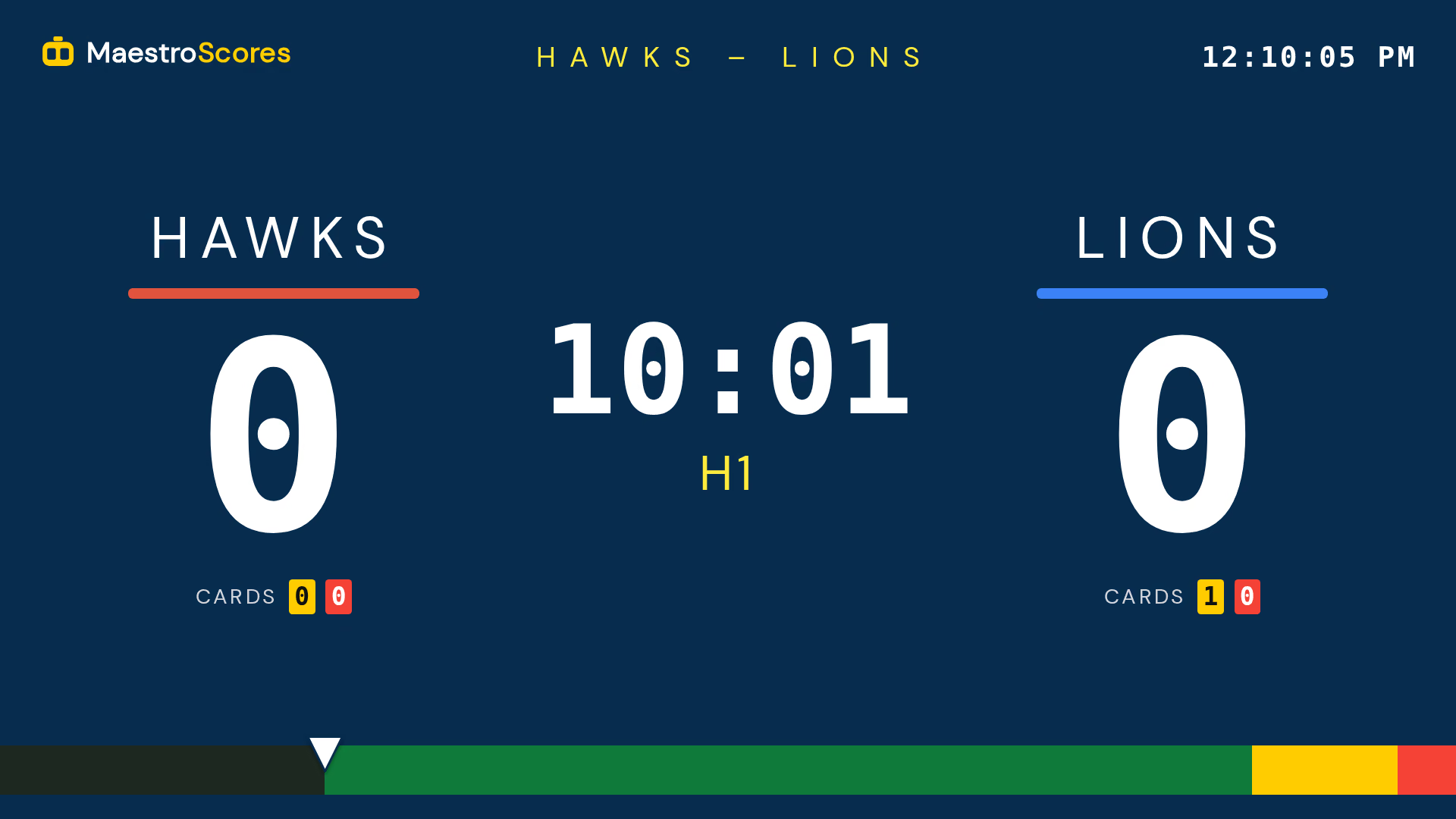

The ruleA yellow card is a caution and a red card a sending-off; a second yellow card in the same match is a sending-off too.
Offside: ahead of the ball and the second-last opponent
A player is in an Offside: A player in the opponents' half nearer to the opponents' goal line than both the ball and the second-last opponent is in an offside position. It is an offence only when the player becomes involved in active play after a team-mate plays the ball, and gives the other team an indirect free kick. All terms position when any part of their head, body or feet is in the opponents' half and nearer to the opponents' goal line than both the ball and the second-last opponent. A player level with the second-last opponent is not in an offside position, and being in an offside position is not an offence in itself.
It becomes an offence only when a team-mate plays or touches the ball and the player in the offside position then becomes involved in active play: by playing the ball, by interfering with an opponent, or by gaining an advantage from being there. There is no offside offence when a player receives the ball directly from a goal kick, a throw-in or a corner kick. For an offside offence the referee gives the other team an indirect free kick. Offside does not change the score, so there is nothing to tap on the board.
Other soccer rules: high school, college, beach and youth
US high school soccer (NFHS) plays two halves of 40 minutes, or four quarters of 20 minutes, with a 10-minute half-time unless the coaches agree otherwise. College soccer (NCAA) plays two halves of 45 minutes, with a 15-minute half-time. Under both rules the clock stops after a goal, a penalty kick and a card. On the board, these two rule sets count each half down and stop the clock by themselves at those moments.
Beach soccer under the FIFA Beach Soccer Laws plays three periods of 12 minutes of playing time, with breaks of up to 3 minutes between them. The board's youth rule sets play 9 against 9 in two halves of 30 minutes, or 7 against 7 in two halves of 25 minutes, each with a 10-minute half-time. You choose the rule set when you create the board.
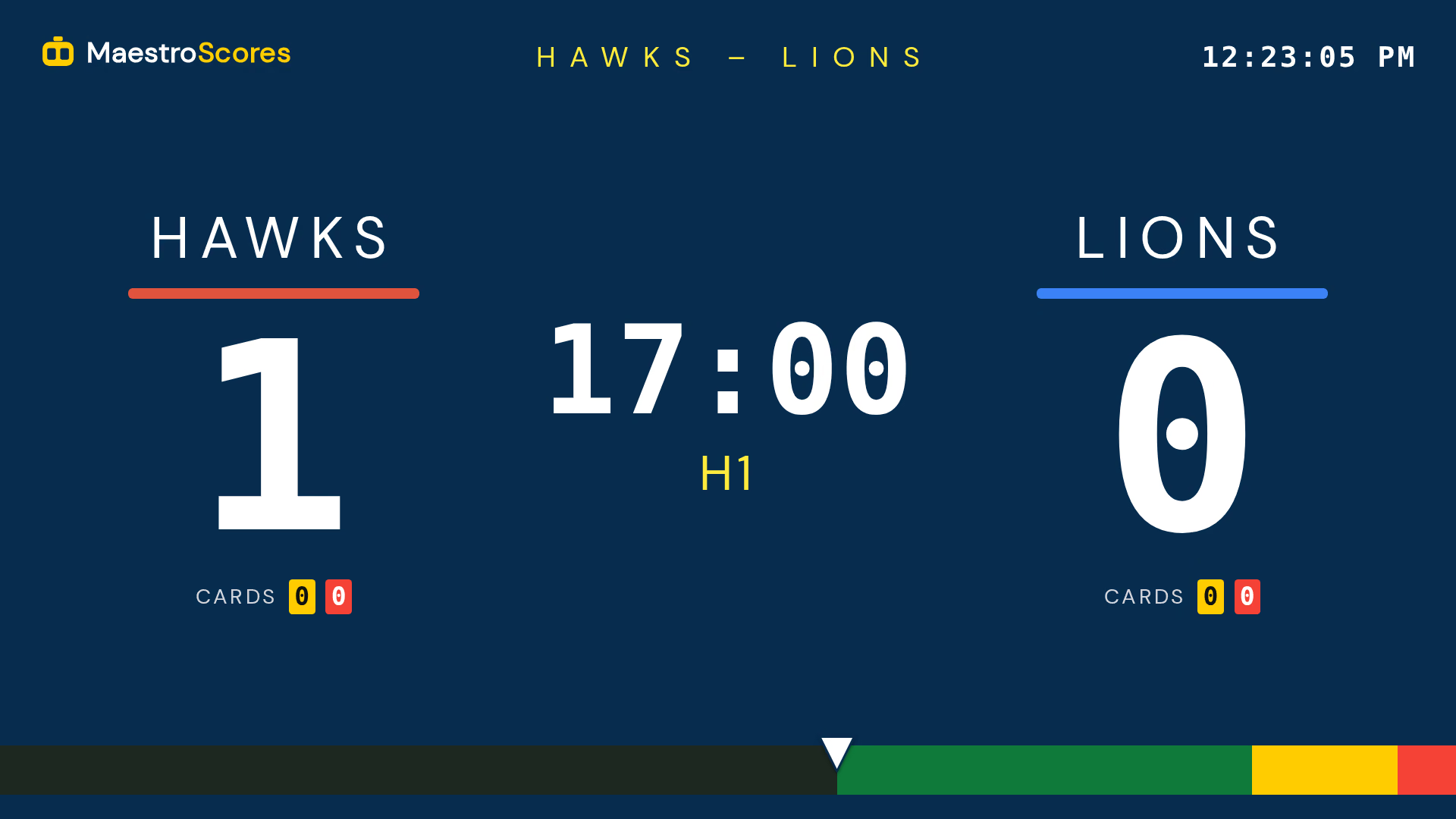

The ruleUnder US high school and college rules the clock counts each half down and stops after a goal.
FAQ
How many minutes is a soccer game?
A match has 90 minutes of playing time: two halves of 45 minutes. The referee adds time at the end of each half for time lost, and the players have a half-time interval of up to 15 minutes.
How many players are on a soccer team?
Each team has up to 11 players on the field, and one of them is the goalkeeper. Small-sided youth games are played 9 against 9 or 7 against 7.
What happens if a soccer game ends in a tie?
In a league match, a tie at full time is a draw. When the competition needs a winner, the teams play extra time, two periods of up to 15 minutes, and then a penalty shoot-out if the score is still level.
Does a ball on the line count as a goal?
No. The whole of the ball must pass over the goal line, between the goalposts and under the crossbar. A ball that is on the line, or only partly over it, is not a goal.
What does a red card mean in soccer?
A red card sends a player off for the rest of the match. A second yellow card in the same match is a sending-off too, and a player sent off after the kick-off cannot be replaced.
Keep soccer score on a board
Create a soccer board with the rules you play, tap each goal on your phone, and open the Scoreboard link on any screen at the field.
Soccer terms
- Added time
- Time the referee adds at the end of a half for playing time lost, for example to substitutions, injuries and goal celebrations.
- Away goals rule
- A way to settle a tie of two matches, home and away: with the goals level over both, the team that scored more goals away from home goes through.
- Caution
- A formal warning the referee gives a player, shown with a yellow card.
- Corner kick
- A restart for the attacking team, kicked from the corner of the field, when the ball goes out over the goal line last touched by a defender, without a goal being scored.
- Draw
- A match that ends with both teams on the same number of goals, or none. In a league the draw stands.
- Drinks break
- A short pause of up to one minute, which the players may have between the periods of extra time.
- Extra time
- Two equal periods of no more than 15 minutes each, played when a level match must have a winner. Both are played in full.
- Fourth official
- The match official beside the field who, at the end of each half, shows the minimum added time the referee has decided. The referee may add more, but not less.
- Free kick
- The kick a foul gives the other team. A direct free kick is given for fouls such as kicking, tripping, pushing or holding an opponent, or a handball offence; an indirect free kick for lesser offences, such as playing in a dangerous manner.
- Goal line
- The line at each end of the field. A goal is scored when the whole of the ball passes over it, between the goalposts and under the crossbar.
- Golden goal
- A goal in extra time that ends the match at once. The IFAB Laws have none: both periods of extra time are played in full.
- Half
- One of the two equal parts of a match. The teams change ends for the second half.
- Half-time
- The interval between the two halves, when the players may rest.
- Handball
- Touching the ball with a hand or arm in a way the Laws forbid. It is a direct free kick offence for every player except the goalkeeper inside their own penalty area.
- Kick-off
- The kick that starts each half and each period of extra time, and restarts play after a goal.
- Knockout
- A round or a cup game that must have a winner, so a level game goes on to extra time and penalties.
- Offside
- A player in the opponents' half nearer to the opponents' goal line than both the ball and the second-last opponent is in an offside position. It is an offence only when the player becomes involved in active play after a team-mate plays the ball, and gives the other team an indirect free kick.
- Penalty area
- The marked area in front of each goal. A direct free kick offence there by the defending team gives a penalty kick, and inside it the goalkeeper may handle the ball.
- Penalty kick
- A kick at goal from the penalty mark, awarded when a player commits a direct free kick offence inside their own penalty area.
- Penalty shoot-out
- Kicks from the penalty mark, taken after a level match has ended when a winner is needed: five each, taken alternately, then one each until one team leads.
- Red card
- The card the referee shows for a sending-off.
- Sending-off
- A player ordered off for the rest of the match, shown with a red card. A player sent off after the kick-off cannot be replaced.
- Sudden-victory overtime
- College soccer's overtime (NCAA): the first team to score wins the game.
- Yellow card
- The card the referee shows for a caution. A second yellow card in the same match is a sending-off.
- Law 3 - The Players (IFAB)theifab.com
- Law 7 - The Duration of the Match (IFAB)theifab.com
- Law 8 - The Start and Restart of Play (IFAB)theifab.com
- Law 10 - The Outcome of a Match (IFAB)theifab.com
- Law 11 - Offside (IFAB)theifab.com
- Law 12 - Fouls and Misconduct (IFAB)theifab.com
- Law 14 - The Penalty Kick (IFAB)theifab.com
- Law 15 - The Throw-in (IFAB)theifab.com
- Law 16 - The Goal Kick (IFAB)theifab.com
- Law 17 - The Corner Kick (IFAB)theifab.com
- A Comparative Study of Rules and Laws: 2026-27 Soccer Guide (NFHS)assets.nfhs.org
- 2026 and 2027 NCAA Men's and Women's Soccer Rulesncaaorg.s3.amazonaws.com
- Beach Soccer Laws of the Game 2025-26 (FIFA)digitalhub.fifa.com