A tennis match is played as the Best of three, best of five: How many sets a match can last. In the best of three the first player to win two sets wins the match; in the best of five, the first to win three. All terms sets or the best of five sets. A player needs two sets to win a best-of-three match and three sets to win a best-of-five match. Each Set: A run of games, won by the first player to win six games with a lead of two. In a tie-break set, a tie-break decides it at six games all. All terms goes to the first player to win six games with a lead of two, and a Tie-break: One game that decides a set at six games all. Its points are counted one by one, and the first player to seven points with a lead of two wins it and the set, 7-6. All terms decides a set at six games all.
This page plays the formats through on a MaestroScores scoreboard under the 2026 ITF Rules of Tennis: a best-of-three match, a set won in a tie-break, the best of five played at the Grand Slam tournaments, the Match tie-break: A tie-break to 10 points with a lead of two, played at one set all in place of the deciding set. Its winner wins the match. All terms that replaces a third set, and two shorter formats.
Best of three or best of five sets
The ITF rules allow a match of the best of three sets or the best of five. ATP Tour singles are the best of three tie-break sets, so the first player to win two sets wins the match. At the four Grand Slam tournaments, the championships of Australia, France, Great Britain and the United States, men’s singles in the main draw are the best of five, and the other matches are the best of three unless the tournament decides otherwise.
A match stops as soon as one player has won the sets needed. A best-of-three match lasts two or three sets, and a best-of-five match three, four or five.
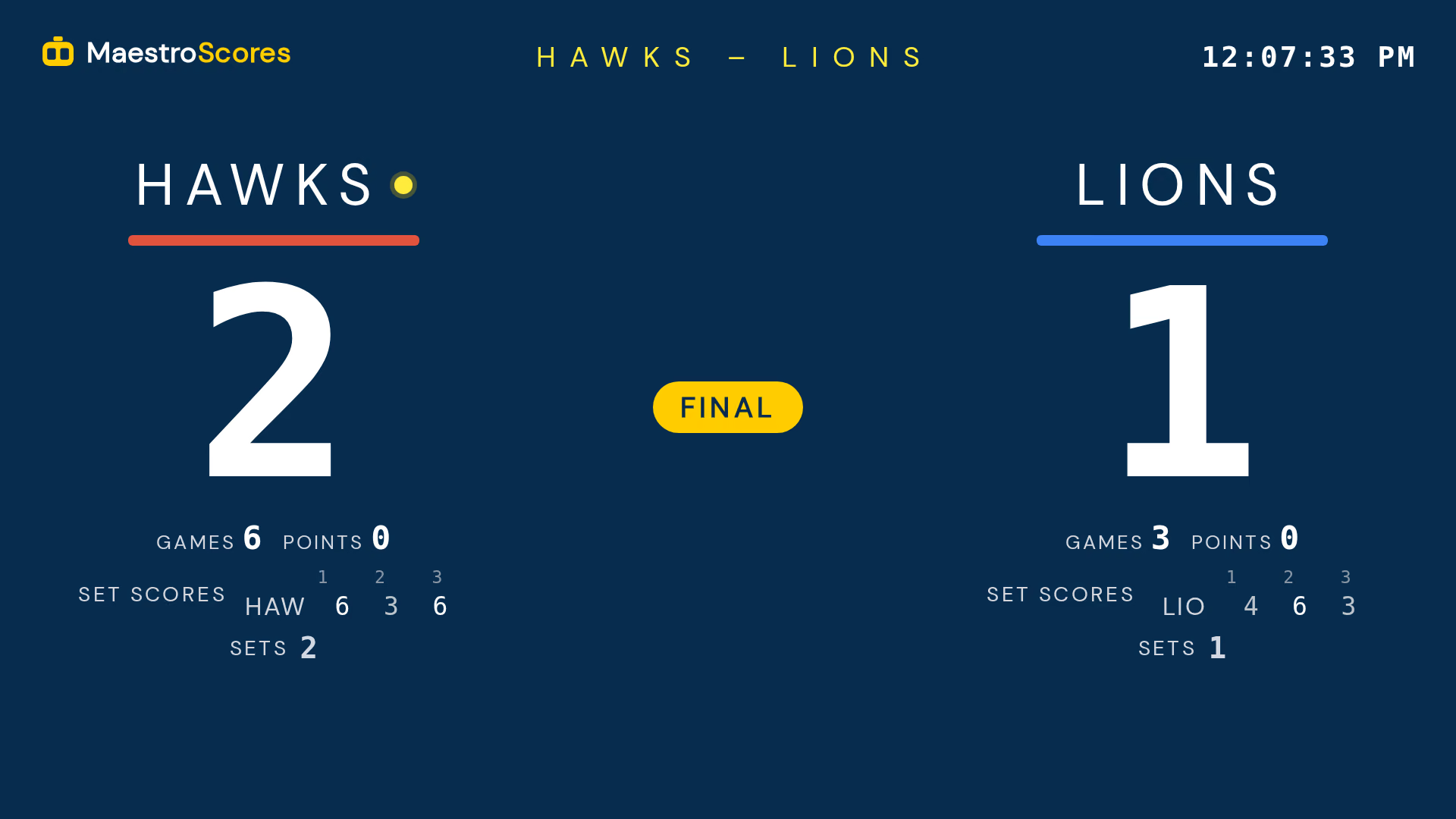

The ruleIn the best of three, the first player to win two sets wins the match, and the match stops there.
How many games in a set: six, with a lead of two
A set goes to the first player to win six games with a lead of at least two games. A set can end 6-4, but not 6-5: at 6-5 the set goes on, and 7-5 wins it. In a tie-break set, a tie-break is played at six games all, and it counts as the Game: A run of points served by one player, won by the first player to win four points with a lead of two. All terms that makes the set 7-6.
The rules also allow an Advantage set: A set with no tie-break: it goes on until one player leads by two games. All terms, with no tie-break: it goes on until one player leads by two games. An event announces the method in advance, and it may play only the final set as an advantage set. The tennis rules on the board play tie-break sets.
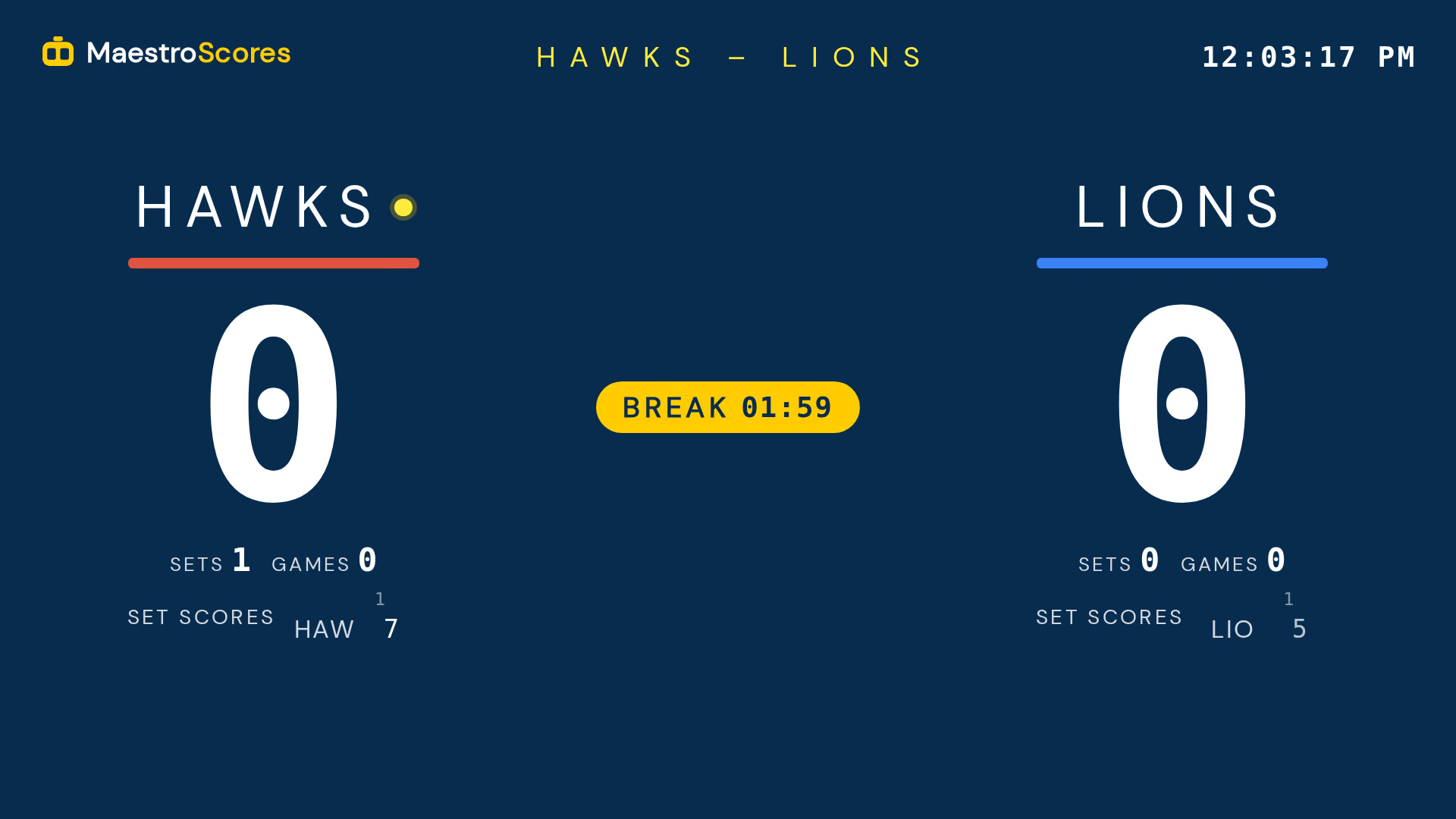

The ruleA set goes to six games with a lead of two: at 6-5 the set goes on, and 7-5 wins it.
The tie-break at six games all: first to seven points
A tie-break is one game that decides the set. Its points are counted one by one, and the first player to seven points with a lead of two wins the tie-break and the set. At six points all it goes on until one player leads by two.
The player whose turn it is serves the first point. The opponent serves the next two points, and from then on each player serves two points in turn. The players Change of ends: The players swap ends of the court after the first game, the third and every odd game of a set, and after every six points of a tie-break. All terms after every six points, and the player who served first in the tie-break receives in the first game of the next set.
On the board you go on tapping the player who won each point. The board counts the tie-break points, passes the serve and records the set as 7-6.
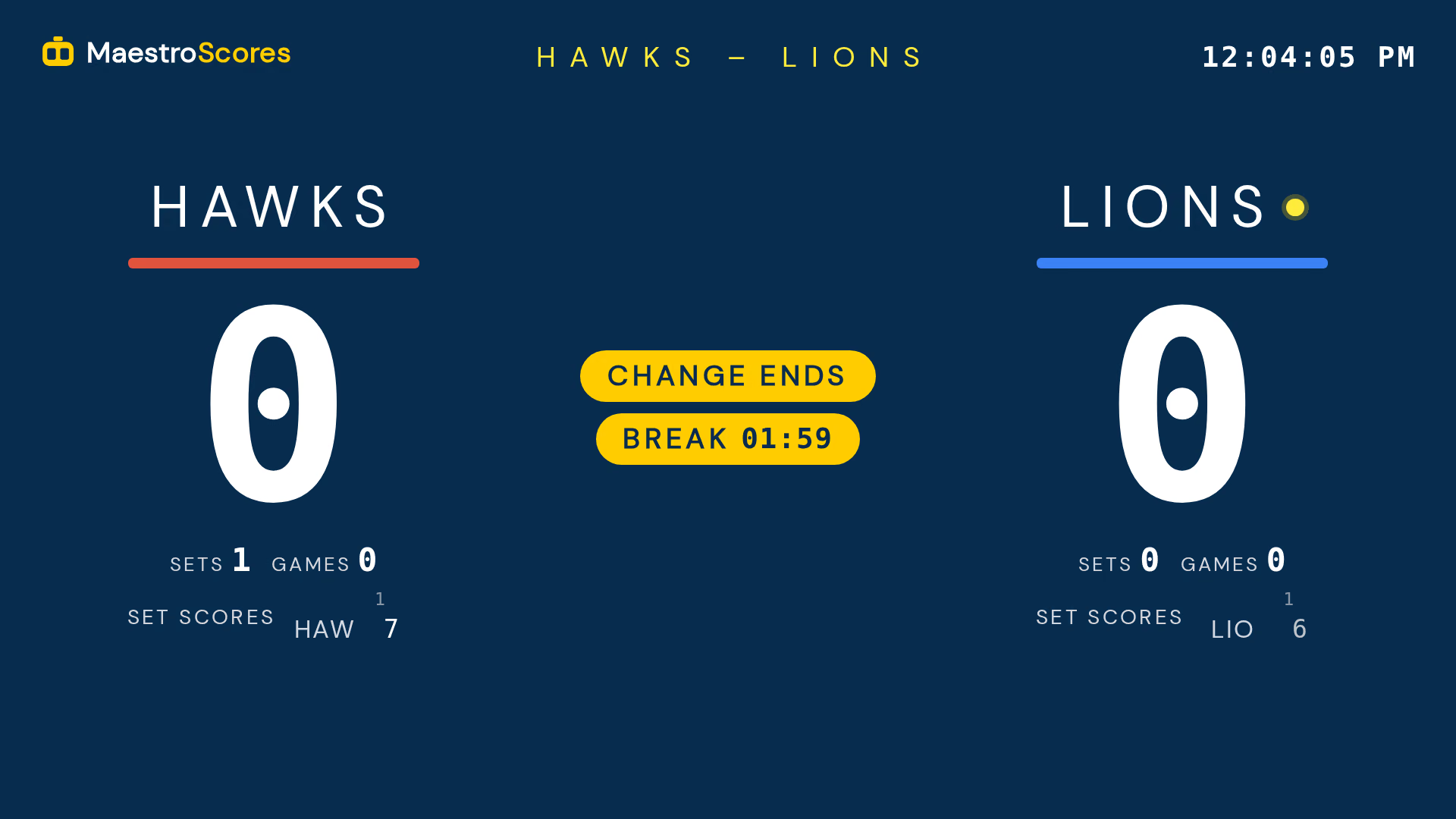

The ruleThe first player to seven points with a lead of two wins the tie-break, and the set 7-6.
Best of five at the Grand Slams, with a 10-point final-set tie-break
Men’s singles at the Grand Slam tournaments are the best of five sets, so a player needs three sets to win. Every set but the last has a tie-break to seven points at six games all. If the final set reaches six games all, a tie-break to 10 points decides the match, again with a lead of two. At the Grand Slams every match ends its final set with this 10-point tie-break, women’s matches and doubles included; those are the best of three sets unless a tournament decides otherwise.
On MaestroScores this format is its own set of rules, and the board plays the 10-point tie-break only in the final set.
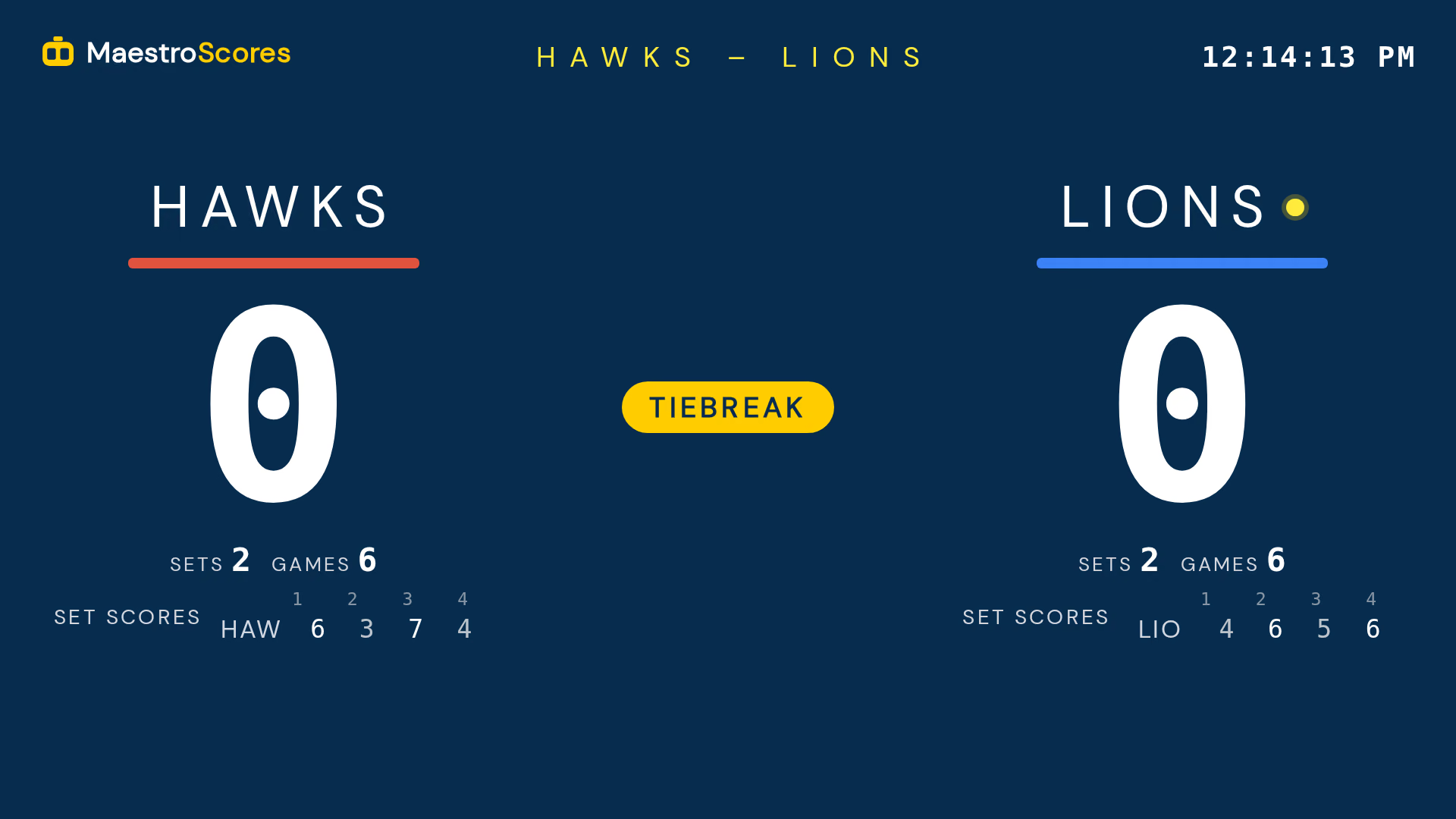

The ruleIn the best of five at the Grand Slams, a tie-break to 10 points with a lead of two decides the final set at six games all.
Two sets and a match tie-break instead of a third set
Some events replace the deciding set with a match tie-break. At one set all, the players play one tie-break to 10 points with a lead of two, and its winner wins the match. Men’s doubles on the ATP Tour are played this way: two tie-break sets with No-Ad: A way of scoring games without advantage: at deuce one deciding point is played, and its winner wins the game. All terms games, then a match tie-break to 10 at one set all.
USTA League play on Long Island, for one, is the best of three sets with a match tie-break to 10 in place of a third set, and enters the match tie-break as a set won 1-0. A new tennis board in the United States starts on this format.
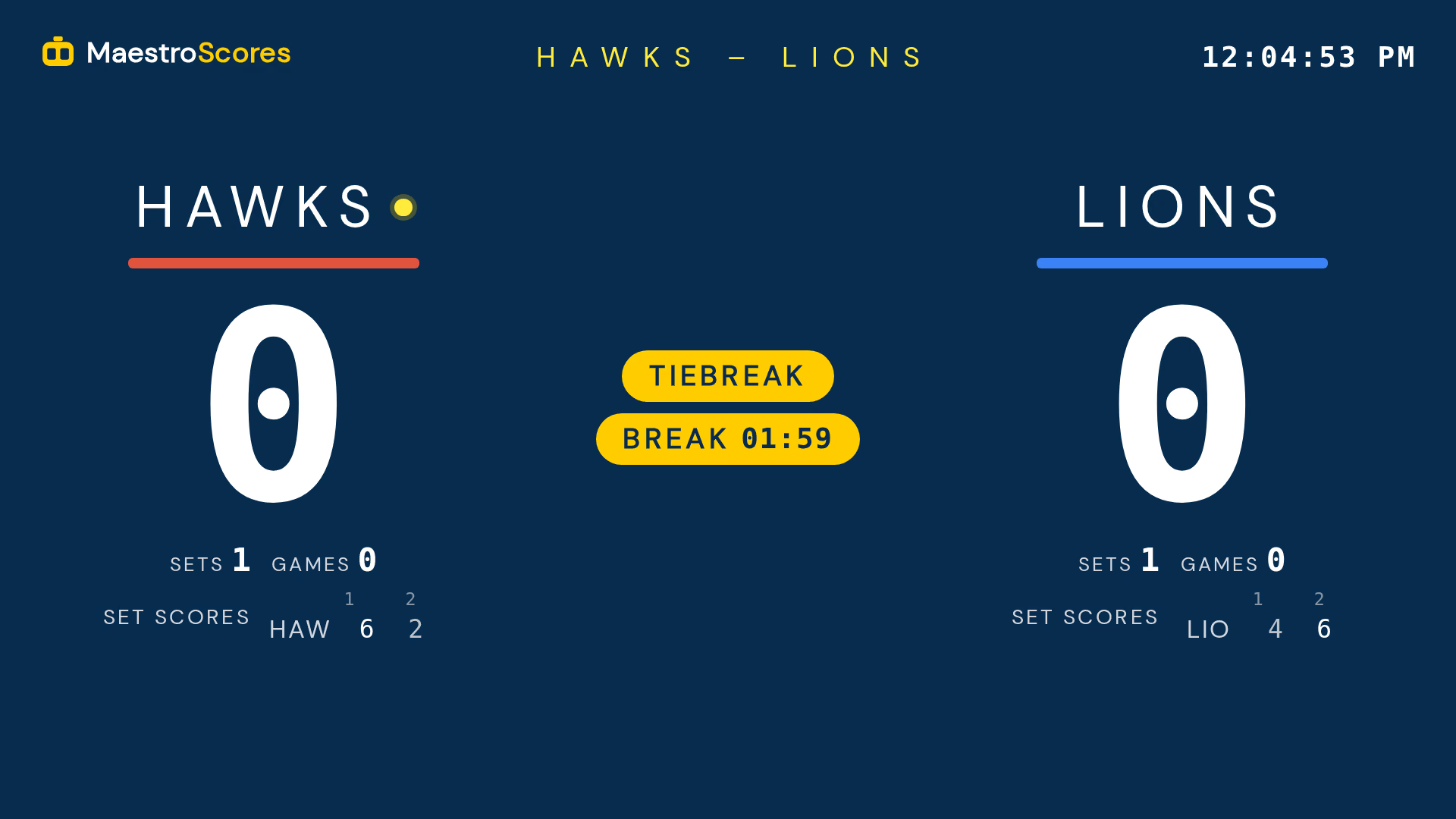

The ruleAt one set all, a match tie-break to 10 points with a lead of two replaces the third set.
Shorter formats: short sets and FAST4
Short sets go to four games instead of six, with a lead of two. A tie-break is played at four games all, or at three games all if the event chooses. The short sets rules on the board play the tie-break at four games all.
FAST4: A short format of Tennis Australia: sets to four games, No-Ad games, and a tie-break at three games all. All terms, a format of Tennis Australia, plays sets to four games with No-Ad games and a tie-break at three games all. Its tie-break goes to five points, with one Deciding point: Under No-Ad scoring, the one point played at deuce. The receiving player or team chooses to receive it in the right or the left half of the court. All terms at four points all.
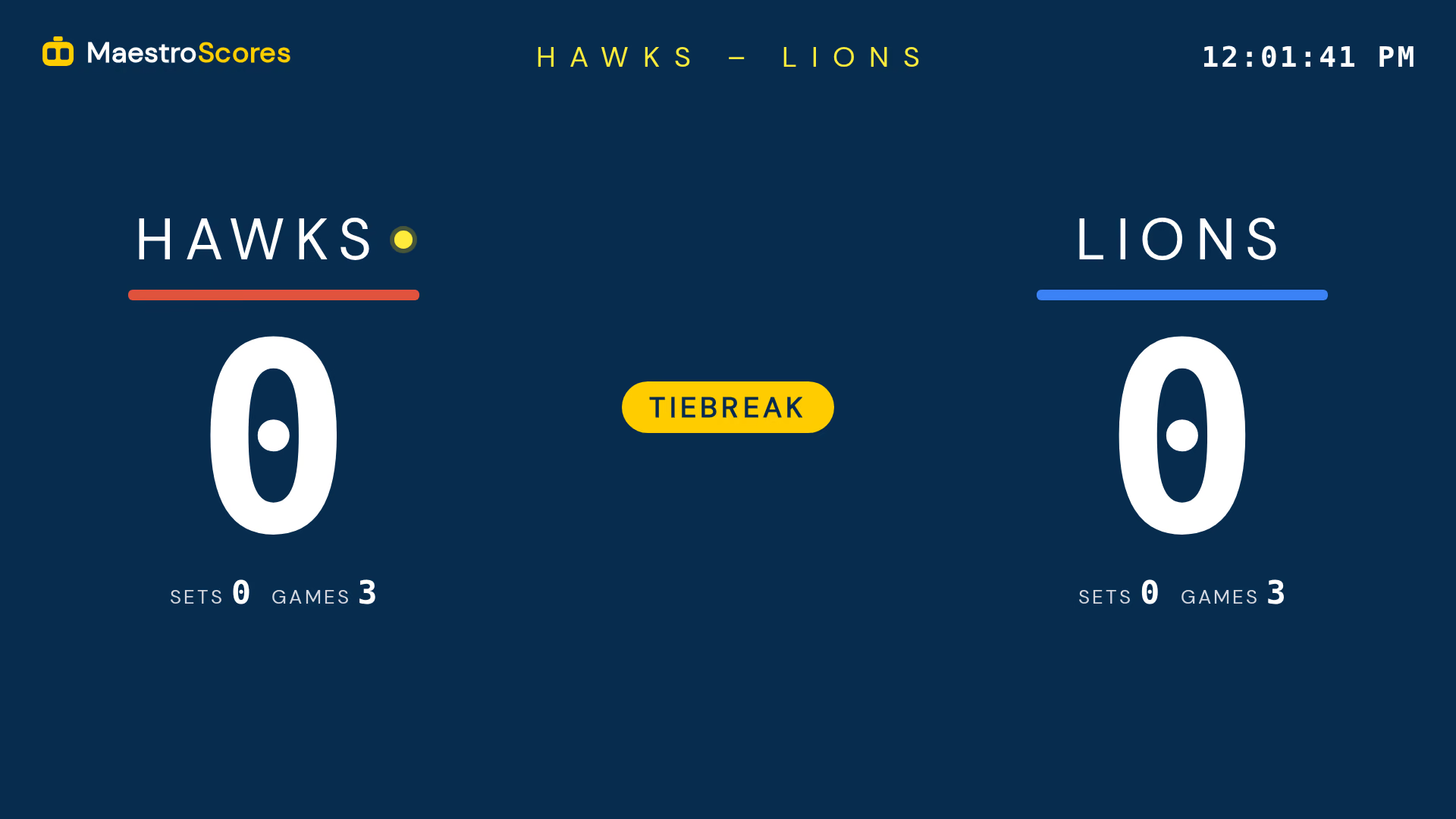

The ruleFAST4 plays sets to four games, with No-Ad games and a tie-break at three games all.
How the scoreboard keeps sets and games
On MaestroScores you choose the format when you create the board, then tap the player who won each point. The board counts the games, starts each tie-break at the score its rules give, records every finished set and ends the match when one player has won the sets needed. The Scoreboard shows the sets won and the scores of the finished sets.
FAQ
How many sets are in a tennis match?
A match is the best of three sets or the best of five. A player needs two sets to win the best of three, and three sets to win the best of five.
How many games are in a set of tennis?
A set goes to six games with a lead of two. At six games all a tie-break decides it, so a tie-break set ends 7-6 at most.
How many sets do men play at the Grand Slams?
The best of five, so a player needs three sets to win. The other matches there are the best of three unless the tournament decides otherwise.
What is a match tie-break in tennis?
A tie-break to 10 points with a lead of two that replaces the deciding set at one set all. Its winner wins the match.
How many points is a tie-break?
Seven, with a lead of two, at six games all in a set. A match tie-break and the Grand Slams’ final-set tie-break go to 10 points.
Keep tennis score on a board
Create a tennis board with the format you play, from the best of five to FAST4, and tap the player who won each point on your phone. A new board starts on the rules usual in your country.
Tennis terms
- Advantage
- The point after deuce: its winner wins the game with the next point, and losing that point brings the score back to deuce. Scoreboards show it as Ad.
- Advantage set
- A set with no tie-break: it goes on until one player leads by two games.
- Alleys
- The strips between the singles and the doubles sidelines. In doubles they are in for every shot after the serve.
- Best of three, best of five
- How many sets a match can last. In the best of three the first player to win two sets wins the match; in the best of five, the first to win three.
- Change of ends
- The players swap ends of the court after the first game, the third and every odd game of a set, and after every six points of a tie-break.
- Deciding point
- Under No-Ad scoring, the one point played at deuce. The receiving player or team chooses to receive it in the right or the left half of the court.
- Deuce
- The score when both players have won three points in a game, 40-40. A player then needs two points in a row to win the game.
- Double fault
- Two faults in a row on the same point, which lose the point.
- FAST4
- A short format of Tennis Australia: sets to four games, No-Ad games, and a tie-break at three games all.
- Fault
- A serve that breaks the rules, most often one that does not land in the service court diagonally opposite. After a first fault the server serves again.
- Foot fault
- A fault the server makes with the feet while serving: touching the baseline or the court with either foot before the racket meets the ball, or walking or running.
- Game
- A run of points served by one player, won by the first player to win four points with a lead of two.
- Let
- A serve that touches the net and still lands in the right service court. It does not count and is served again, but it does not cancel a fault served before it.
- Love
- No points, or no games. A game's points are called love, 15, 30 and 40, and love-all is no points each.
- Match point
- A point that wins the match for the player who leads, if that player wins it.
- Match tie-break
- A tie-break to 10 points with a lead of two, played at one set all in place of the deciding set. Its winner wins the match.
- No-Ad
- A way of scoring games without advantage: at deuce one deciding point is played, and its winner wins the game.
- Service court
- The area across the net, diagonally opposite the server, that a serve must land in. It ends at the singles sideline, in doubles too.
- Set
- A run of games, won by the first player to win six games with a lead of two. In a tie-break set, a tie-break decides it at six games all.
- Set break
- The rest the players may take at the end of each set.
- Set point
- A point that wins the set for the player who leads, if that player wins it.
- Tie-break
- One game that decides a set at six games all. Its points are counted one by one, and the first player to seven points with a lead of two wins it and the set, 7-6.
- Toss
- Before the warm-up, a toss decides who serves first: its winner chooses to serve or to receive, or chooses an end and leaves that choice to the opponent.
- ITF Rules of Tennisitftennis.com
- 2026 Official Grand Slam Rule Bookitftennis.com
- ATP Circuit Regulationsatptour.com
- USTA Long Island 2026 Local Rules and Regulationsusta.com